
 EN
 English
 Español
 عربى
Content
- 1 What a DSP Marine Amplifier Actually Does
- 2 Why DSP Matters More on Water Than on Land
- 3 Specifications That Separate a Good Marine DSP Amp From a Great One
- 4 Matching Channel Count to the Boat
- 5 Integration Details That Catch Buyers Out
- 6 Working With a DSP Marine Amplifier Supplier
- 7 A Practical Look at Our Marine DSP Range
- 8 Bringing the Selection Together
If you have spent any time on the water, you already know how quickly a boat audio system can fall apart. Wind noise, engine drone, spray, and sun all work against clean sound. That is why DSP marine amplifiers have moved from a niche upgrade to a standard request for builders, integrators, and distributors. This guide walks through what these amplifiers actually do, which specifications matter, and how to choose a DSP marine amplifiers supplier you can build a long-term program with.
What a DSP Marine Amplifier Actually Does
A conventional marine amplifier boosts a signal and sends it to the speakers. A DSP marine amplifier does that plus far more. Inside, a digital signal processor handles equalization, time alignment, crossovers, gain matching, and output limiting before the audio ever reaches the amplifier stage. Instead of wiring passive crossover networks into each speaker line, the installer configures everything in software, and the settings are stored in the amplifier's memory.
In practice, this changes the whole job. Each speaker can get its own EQ curve. Delay can be set per channel so sound from a bow speaker and a helm speaker arrives at the listener at the same moment. Output limiting protects tweeters and small coaxial speakers from clipped signals during long, loud sessions. For a boat with several listening zones, this level of control is not a luxury; it is the only practical way to make a system sound consistent from the swim platform to the helm.
Why DSP Matters More on Water Than on Land
In a car, the cabin does half the acoustic work for you. On a boat, there is no cabin. Speakers sit in open air, mounted in fiberglass, upholstery, or hardtop structures that reflect sound in unpredictable ways. Add wind at speed, engine and drivetrain noise, and the rush of water along the hull, and the effective dynamic range of the system shrinks dramatically.
A well-tuned DSP marine amplifier compensates for this. Time alignment pulls the soundstage forward instead of letting it sit at the transom. Targeted EQ lifts the vocal band above wind noise without making the system harsh at anchor. Limiting keeps the amplifier from clipping when the volume goes up to fight engine noise. These are real, audible benefits that a buyer will notice in the first five minutes on the water.
Specifications That Separate a Good Marine DSP Amp From a Great One
When comparing suppliers, look past the headline wattage. The numbers that decide whether a product survives three seasons on the water are usually buried a little deeper.
- Channel count and power per channel at 4 and 2 ohms: Confirm the rated power at the impedance you will actually wire, not just a peak figure.
- DSP resolution and processing blocks: Parametric EQ bands per channel, crossover slopes, per-channel delay, and whether presets can be stored and recalled.
- Ingress protection: An IPX rating should be tested, documented, and consistent across production batches, not just claimed on a data sheet.
- Board-level protection: Conformal coating, sealed connectors, and corrosion-resistant hardware matter as much as the enclosure rating once humidity cycles begin.
- Input flexibility: Low-level RCA, high-level input, and optional Bluetooth input all widen the range of boats a single model can serve.
- Thermal behaviour: Class D efficiency helps, but heatsink mass, mounting orientation, and thermal shutdown thresholds decide real-world reliability.
Salt air is unforgiving, and the differences between a genuinely marine-rated design and a car amplifier in a sealed box show up fast. We covered the specifics in our look at what makes a marine amplifier safe for saltwater environments, which is worth reading before you shortlist any supplier.
Matching Channel Count to the Boat
Most marine DSP amplifier programs can be planned around a handful of typical system layouts. The table below is the starting point we use when talking with integrators about a new build.
| System Layout | Typical Channels | Suggested Configuration | Notes |
|---|---|---|---|
| Compact runabout | 4 | 2 front + 2 rear | Simple EQ and limiting |
| Bowrider with tower | 6 | 2 front + 2 rear + 2 tower | Tower channels need independent delay |
| Multi-zone cruiser | 8 | Cabin, cockpit, bow, and subwoofer zones | Separate presets for anchor and cruise |
| Subwoofer-heavy build | 1 + 4 or 6 | Dedicated mono block plus full-range amplifier | Keep sub gain under DSP control |
Integration Details That Catch Buyers Out
Even a well-specified amplifier can disappoint if the installation plan has gaps. Power delivery is the first one. Many larger boats run 24V house systems while the audio equipment expects 12V, which is where a dedicated step-down converter belongs in the bill of materials. Grounding is the second. Long cable runs on a fiberglass hull invite ground loops, and a ground loop isolator often solves noise problems that no amount of DSP tuning can remove.
Tuning access matters as well. Decide early whether the installer will use a laptop interface, a wired remote, or a panel-mounted controller, because the answer affects which models belong in your catalogue. It is also worth standardising on one DSP platform across a product line. Dealers who only have to learn a single tuning interface will specify your amplifiers far more readily than one that forces them to relearn the software for every model.
Working With a DSP Marine Amplifier Supplier
The supplier side of this category is where projects quietly succeed or fail. Ask how incoming boards are inspected, whether every unit runs an acoustic test before packing, and whether burn-in is done on 100 per cent of production or on samples only. Ask for the IP test method, not just the rating. Ask what happens to the coating process when a new component is introduced.
We have been building car and marine amplifiers at our Hangzhou facility since 1997, with additional production in Deqing and Cambodia, and a combined floor area of roughly 37,000 square metres. Our lines run SMT placement, AOI inspection, wave soldering, AP testing, and full burn-in on finished amplifiers. That is not a sales pitch so much as a practical answer to the questions above: the checks exist because marine products get returned for reasons that start long before the customer turns the dial.
For buyers planning a private-label or OEM program, the useful questions are about tooling ownership, enclosure finishes, connector standards, and how firmware updates are handled over the life of the model. Clear answers early save months later.
A Practical Look at Our Marine DSP Range
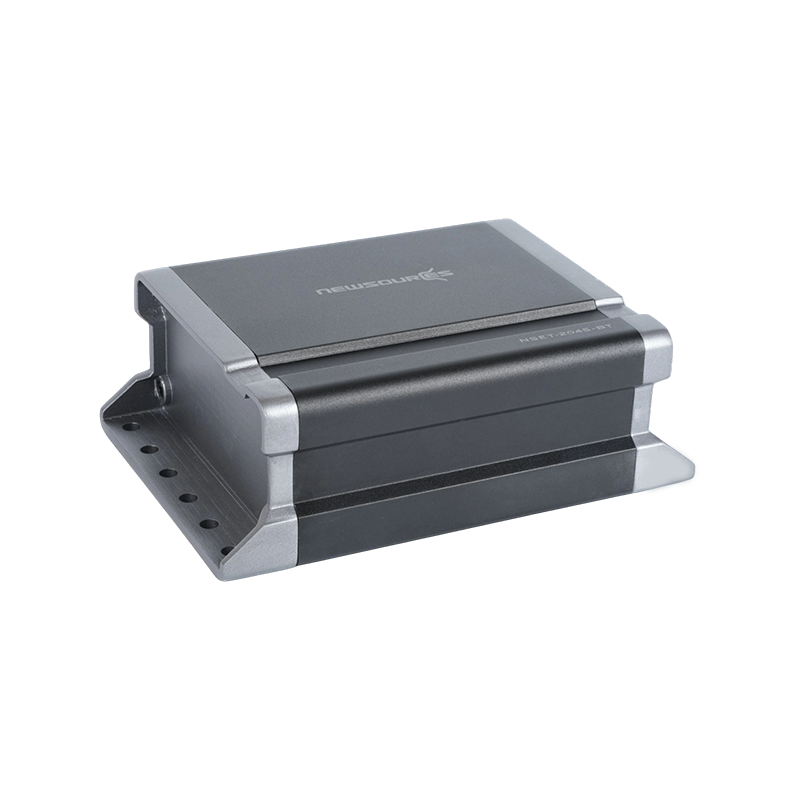
Our own marine line is built around the same platform logic described above, so dealers can scale from a single four-channel DSP unit up to an eight-channel system without changing tuning software.
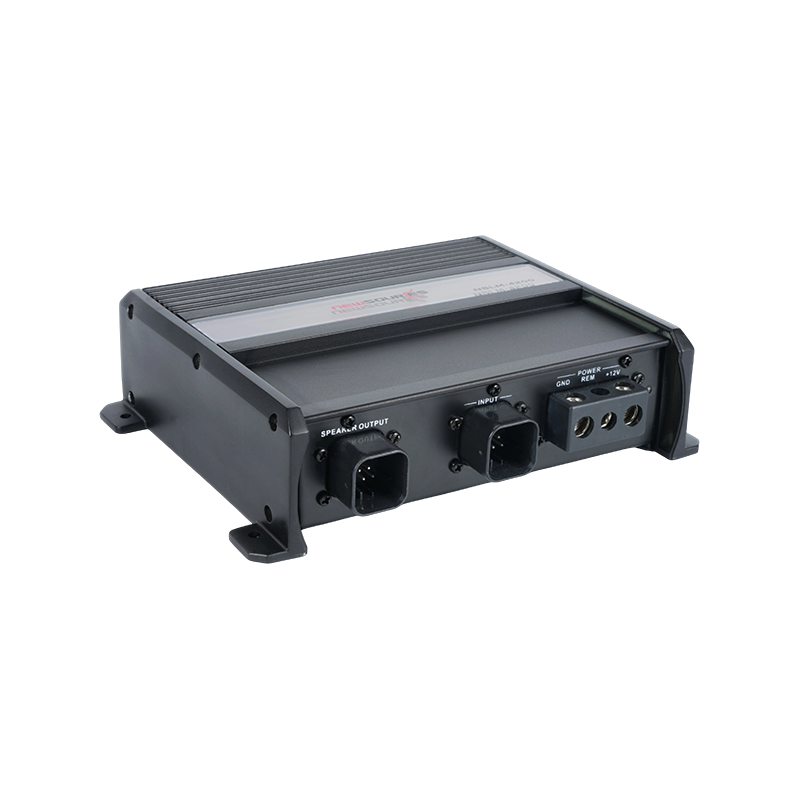
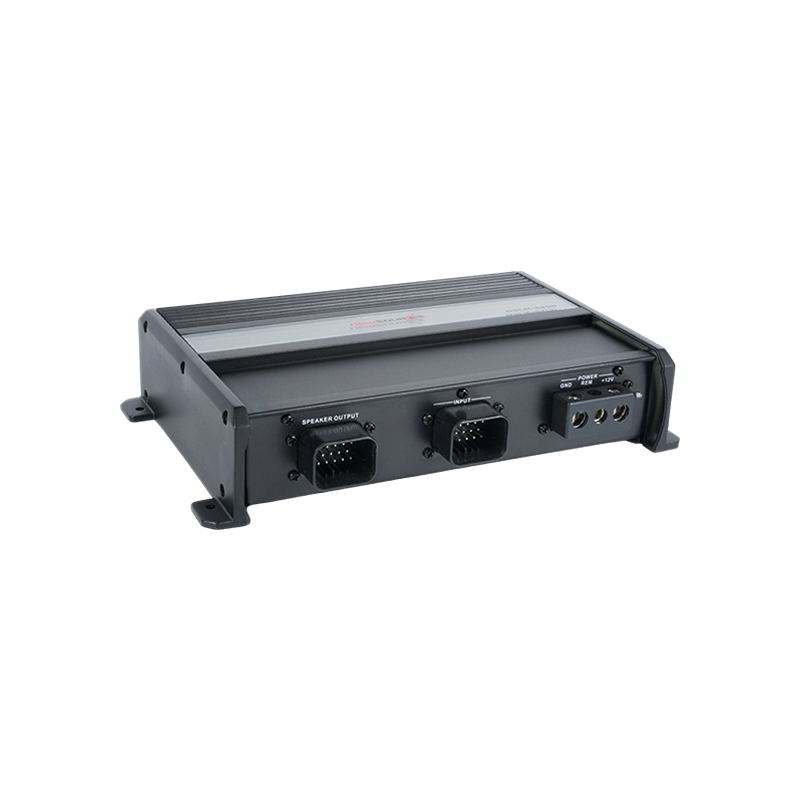
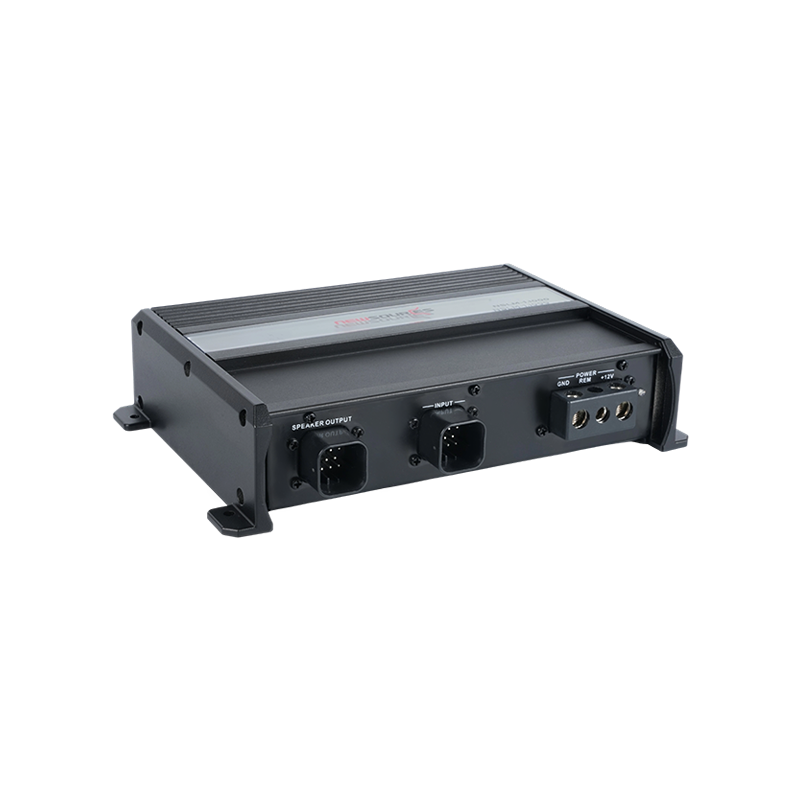
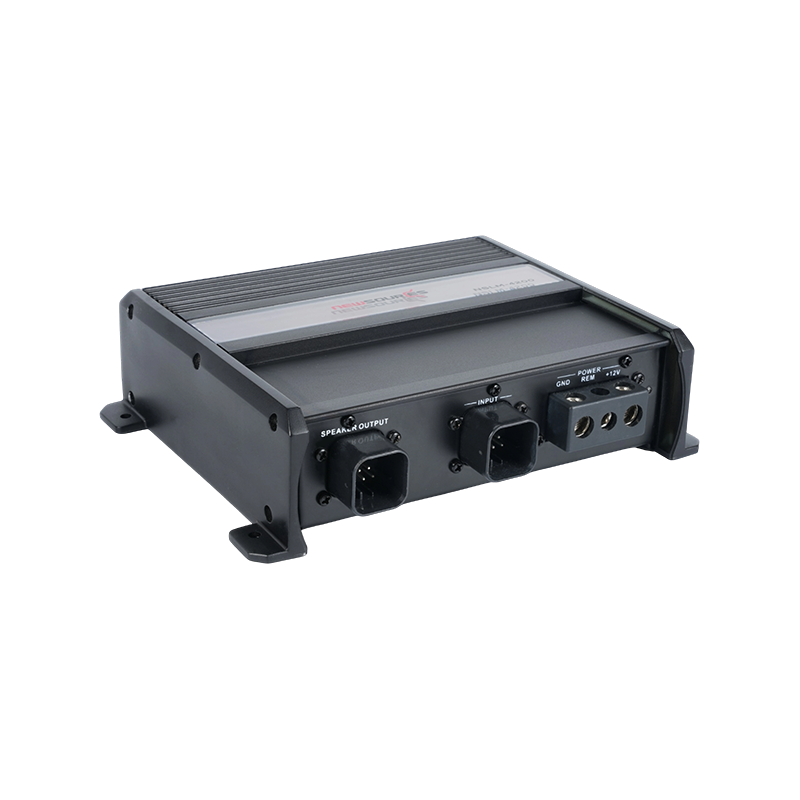 NSLM4200DSP Four-Channel Marine Amplifier with DSPEntry four-channel full-range Class D marine amplifier with onboard DSP for per-channel EQ and delay in compact two-zone builds.View Product →
The NSLM4200DSP is the entry point: a four-channel full-range Class D marine amplifier with onboard digital signal processing. It suits compact boats and simple two-zone builds where the installer wants per-channel EQ and delay without adding outboard processing hardware.
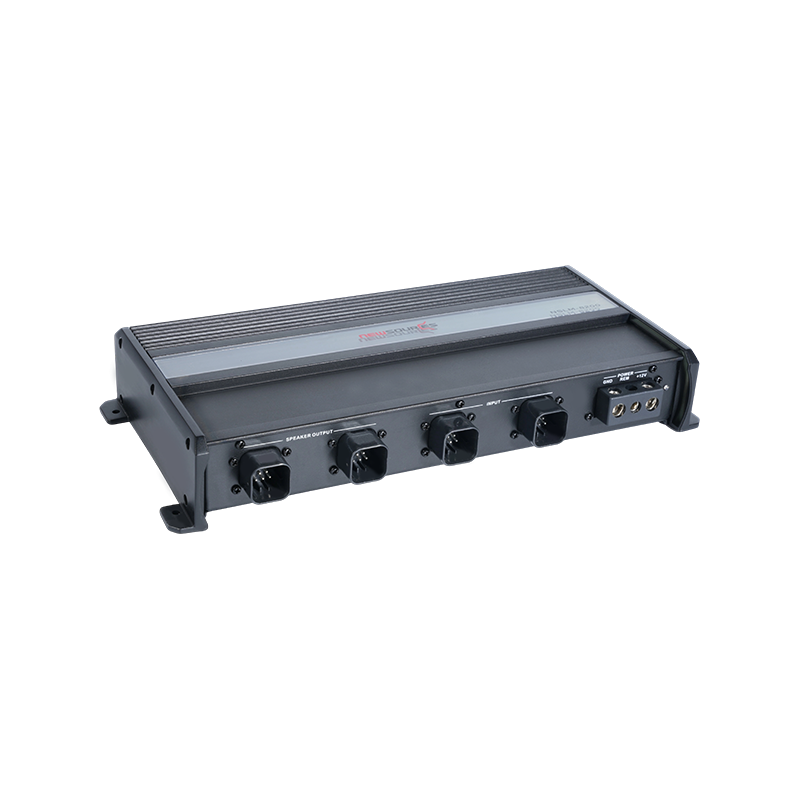
 NSLM8200 Eight-Channel Full-Range Marine AmplifierEight full-range channels for bow, cockpit, cabin, and tower zones, scaling multi-zone marine systems from the four-channel DSP unit.View Product →
For larger vessels, the NSLM8200 offers eight full-range channels, enough for bow, cockpit, cabin, and tower zones on a single chassis. Paired with a mono block, it forms the backbone of a multi-zone system with independent presets.
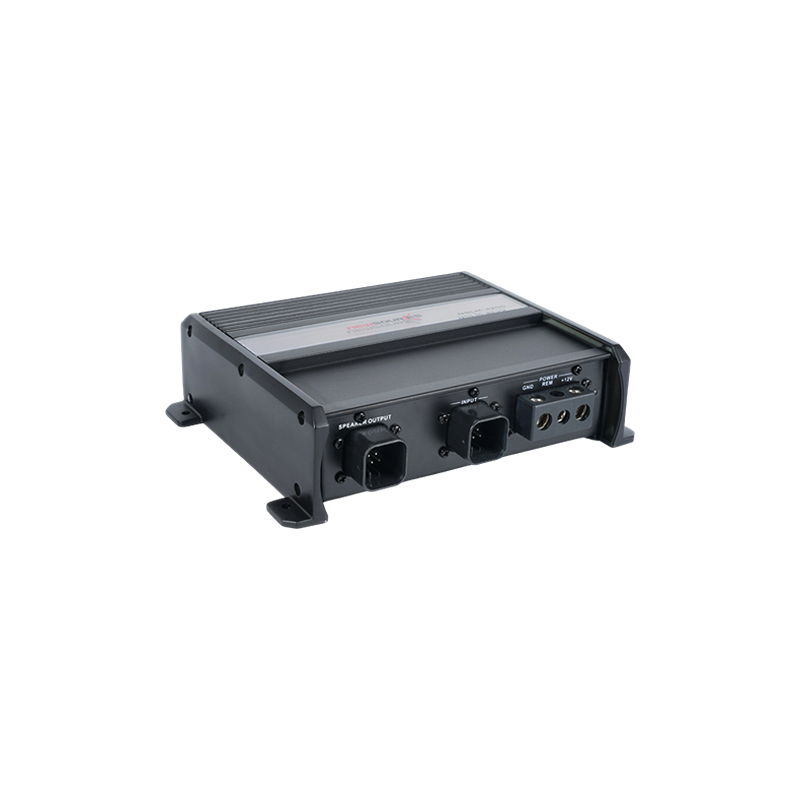
 NSLM-1.1000 Mono Marine Amplifier for SubwoofersMono Class D marine amplifier for low-frequency duty, keeping full-range channels dedicated to mid and high output in multi-zone systems.View Product →
The NSLM-1-1000 mono block covers the low-frequency duty, letting the full-range amplifier stay dedicated to mid and high channels. Splitting the work this way keeps thermal behaviour predictable during long sessions at anchor.
If you are still mapping out the full system rather than a single component, our marine amplifier range groups these models alongside the rest of the multichannel family.
Bringing the Selection Together
Choosing DSP marine amplifiers is really two decisions made at once: the technical fit for the boat, and the commercial fit with the supplier. On the technical side, match channel count to zones, insist on documented ingress protection, and plan power and grounding before the first amplifier is mounted. On the commercial side, look for a manufacturer that can explain its testing process in plain language, supports a consistent DSP platform across models, and has the production depth to keep lead times stable as your programme grows.
Get both right, and the system you install this season will still sound clean three summers from now, which is the only result that matters in this category.