
 EN
 English
 Español
 عربى
Content
- 1 What a Class D Bluetooth Car Amplifiers Company Actually Delivers
- 2 The Bluetooth Question: Receiver, Controller, or Amplifier?
- 3 A Practical Product Map for Vehicle and Marine Audio
- 4 Where Class D Bluetooth Amplifiers Earn Their Place
- 5 What to Verify in Manufacturing and Quality
- 6 Selection Checklist for B2B Buyers
- 7 Working With Newsources
Buying a Class D Bluetooth car amplifier is rarely just about one model. Distributors, installers, and vehicle upfitters usually need a manufacturing partner who can match output stages, Bluetooth behavior, protection, and installation accessories without turning every order into a one-off engineering project. That is the practical meaning of looking for a Class D Bluetooth car amplifiers company: you are choosing a product family, a testing discipline, and a team that understands how the amplifier will live inside a vehicle.
What a Class D Bluetooth Car Amplifiers Company Actually Delivers
Class D design gives you a smaller, cooler-running package for a given output target, which matters in door panels, under seats, and compact powersport enclosures. Bluetooth moves the source closer to the listener and reduces wiring complexity, but it also introduces questions about pairing behavior, signal switching, antenna placement, and noise rejection. A company that only lists models is less useful than one that can explain these trade-offs in plain language.
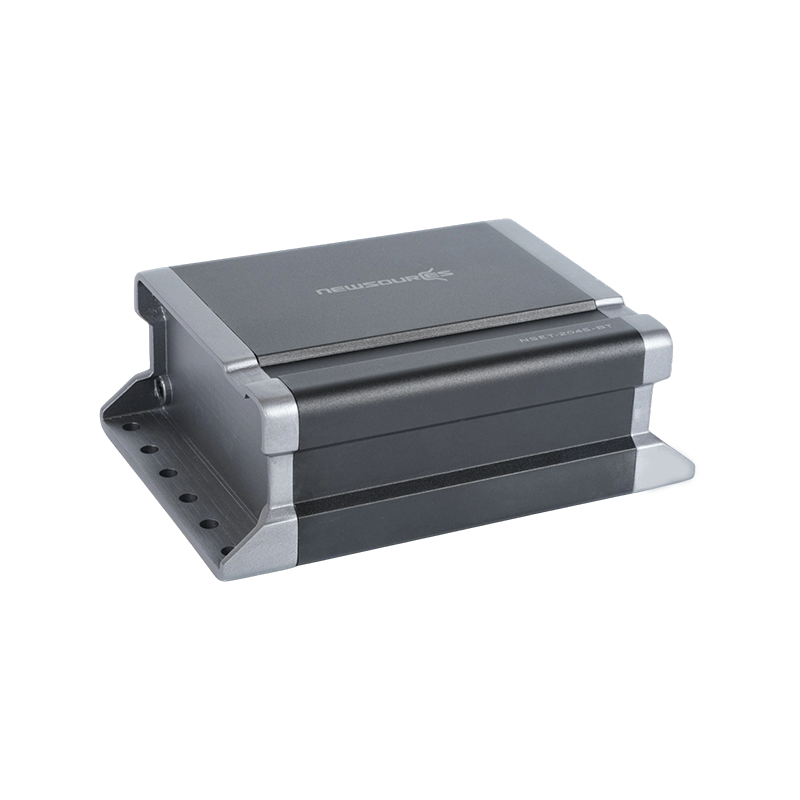
Newsources has been making car and marine amplifiers and signal processors since 1997. Our background is manufacturing, not retail: we build product families for business customers, and our catalog includes Class D car amplifiers, powersport and marine amplifiers, Bluetooth audio accessories, signal processors, and installation components. That range matters because a Bluetooth amplifier rarely works alone. It usually sits beside a line output converter, a noise filter, a bass processor, or a crossover.
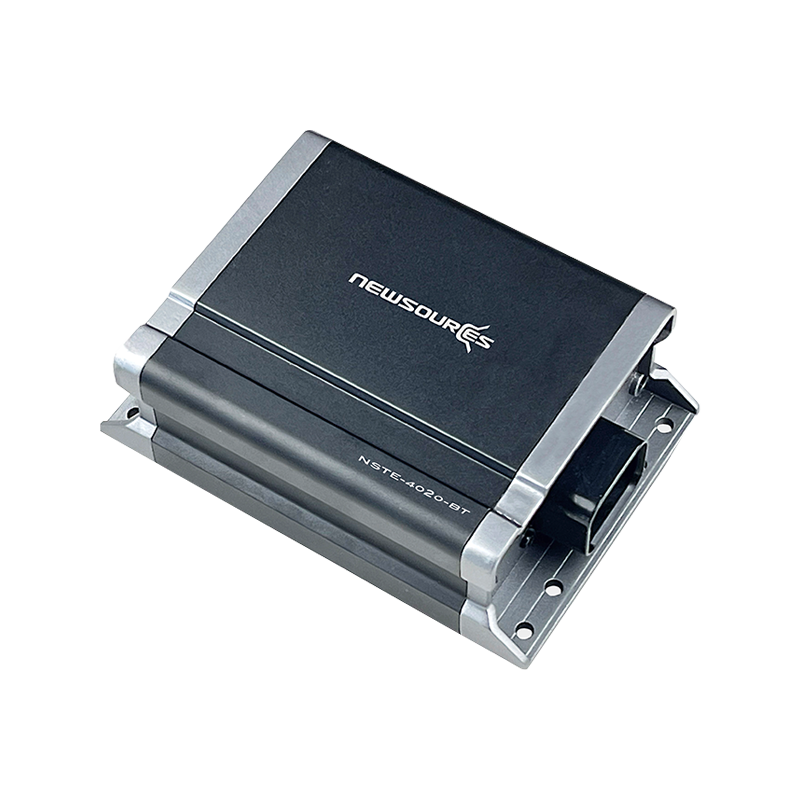
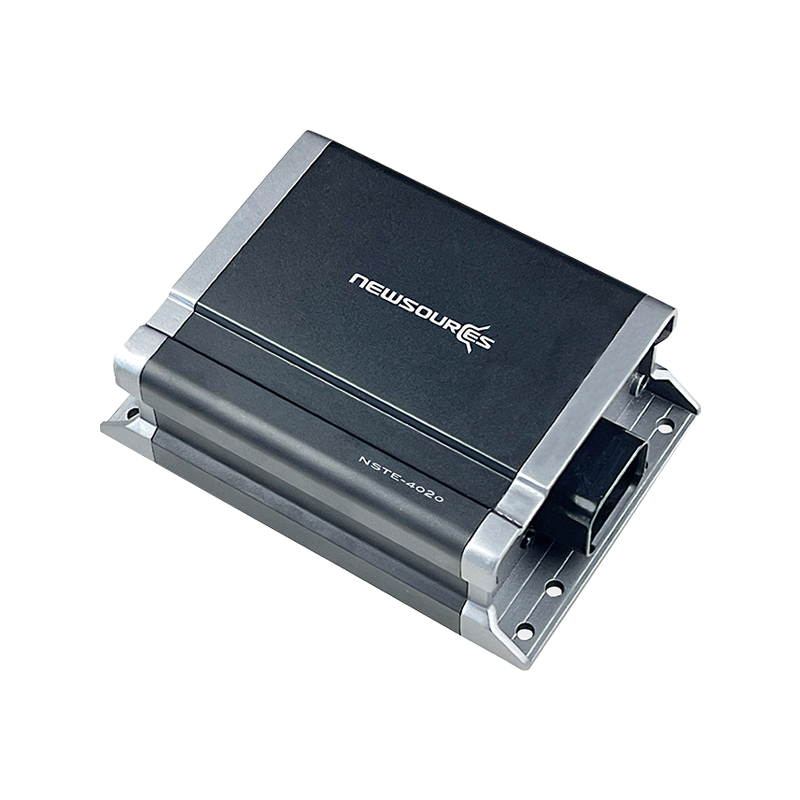
 NSTE4020BT Four-Channel Bluetooth Class D AmplifierA compact four-channel full-range Class D amplifier with integrated Bluetooth, useful where wireless playback and simplified wiring suit powersport or compact vehicle installations.View Product →
The NSTE4020BT is a useful example of the middle ground many buyers ask for: a four-channel full-range Class D amplifier with a Bluetooth receiver. It is not intended to be every system’s answer, but it shows how amplification and source access can be combined when space and wiring simplicity matter. The better question is whether the company can help you decide when that combination is appropriate and when a separate Bluetooth receiver or controller will serve the installation better.
The Bluetooth Question: Receiver, Controller, or Amplifier?
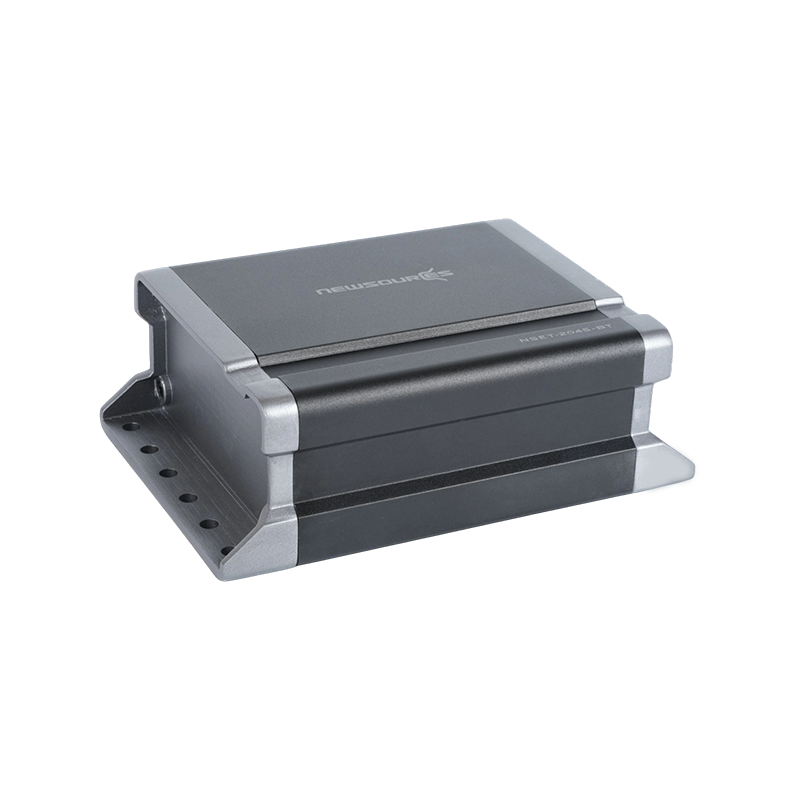
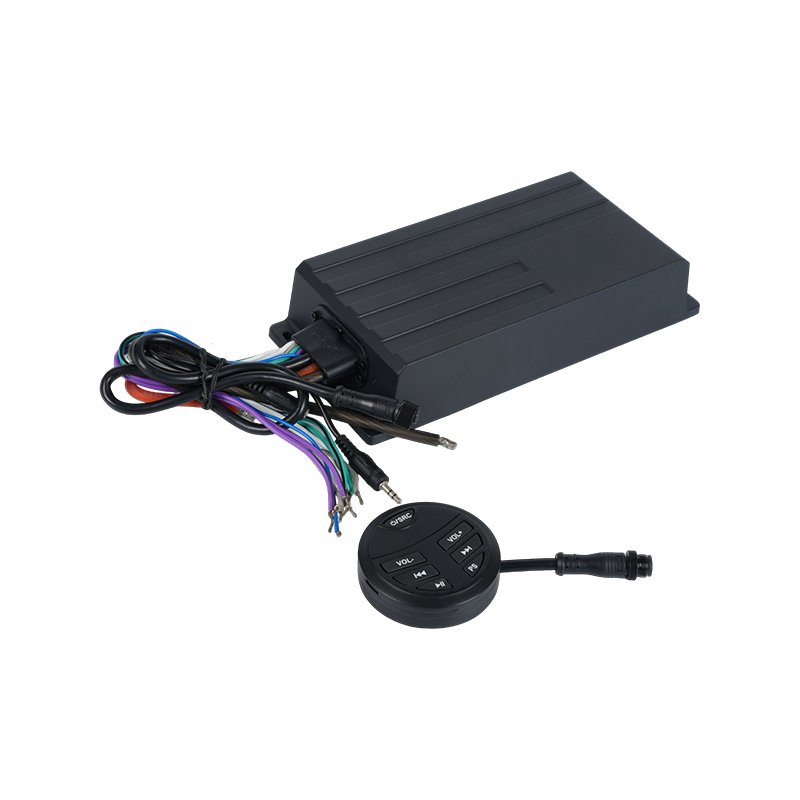
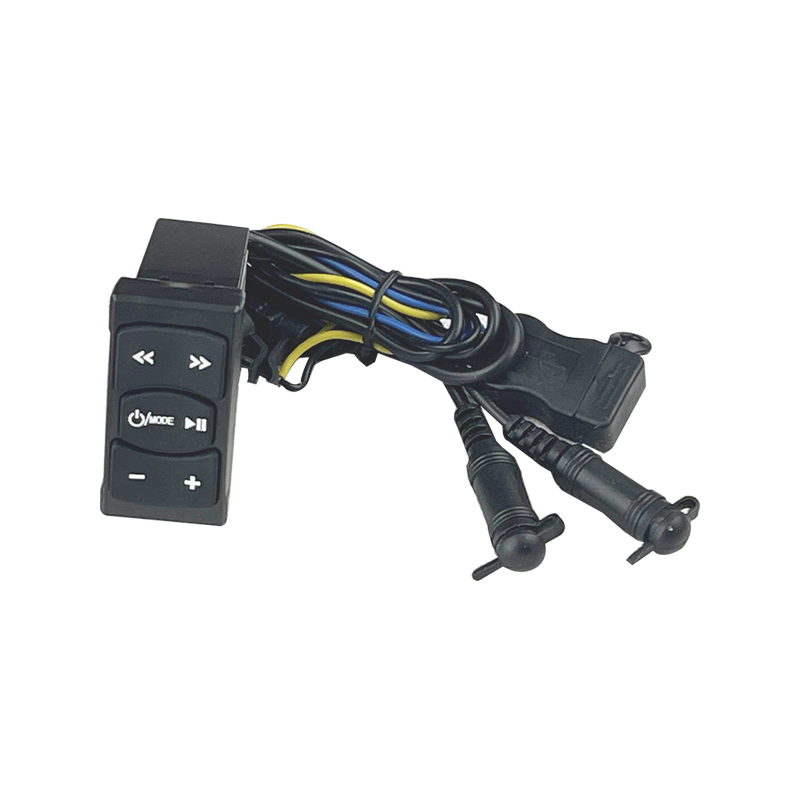
There are three common ways to add Bluetooth to a vehicle audio system. First, Bluetooth can be built into the amplifier, as with the NSTE2045BT, NSTE4020BT, and NIP74150-BTC. Second, a compact receiver or controller can feed an existing amplifier or head unit; our NSLBT1 and NSLBT3 controllers and the NSLBT2 receiver with RCA output belong to this path. Third, a hub can manage transmit and receive roles in a more flexible audio layout. The NSBTHUB is our Bluetooth transmitter and receiver hub for that kind of arrangement.
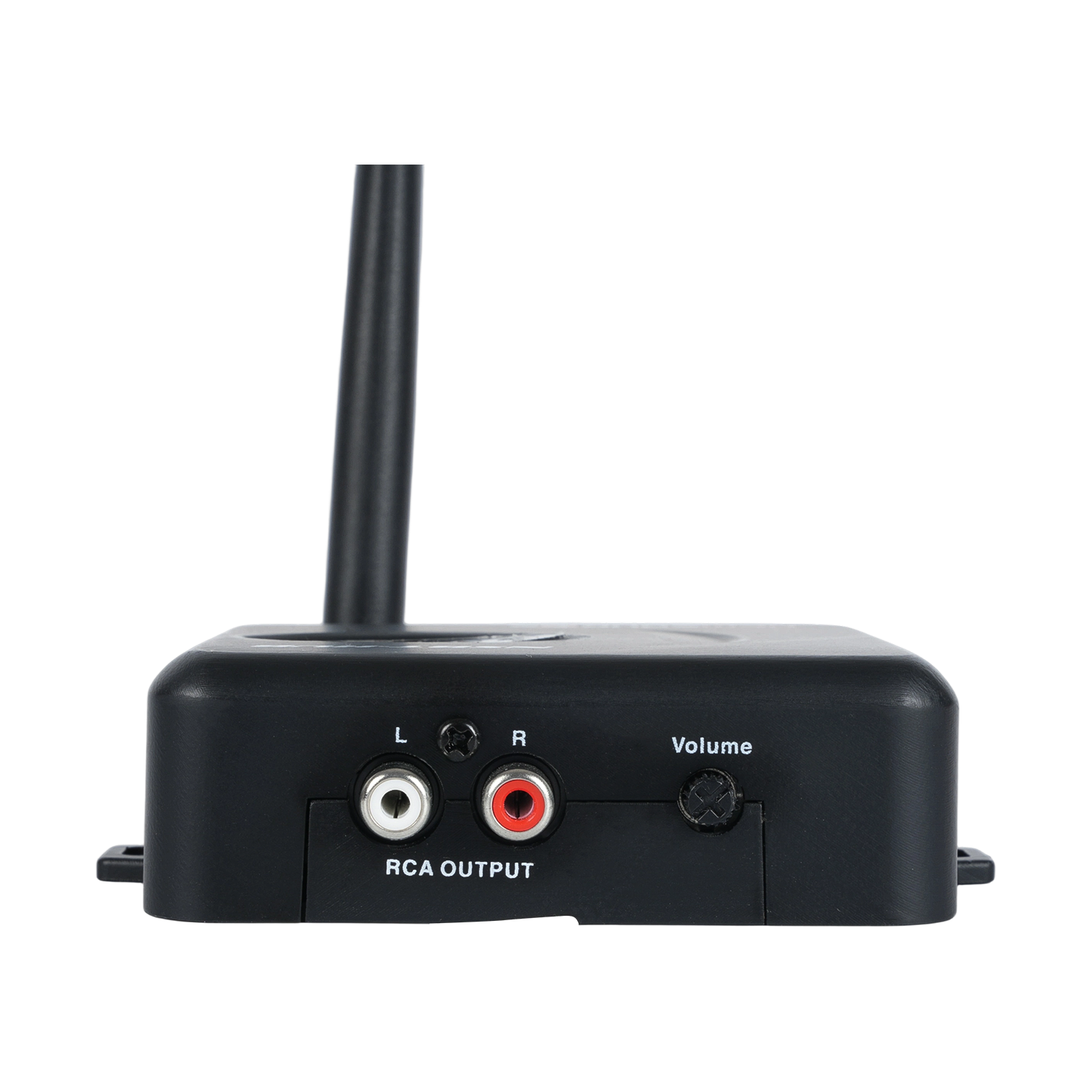 NSBT-HUB Bluetooth Transmitter and Receiver HubA multifunctional hub combining Bluetooth transmission and reception, offering master/slave modes and RCA output for adding wireless playback or linking audio systems.View Product →
For a distributor, the practical benefit is being able to cover several installation styles without sending customers to unrelated suppliers. For an installer, it means the Bluetooth decision can follow the vehicle rather than forcing the vehicle to fit one product type. A classic car may need a discreet receiver feeding a hidden amplifier. A side-by-side may need a sealed powersport amplifier with Bluetooth built in. A boat may need a multichannel marine amplifier with sources managed elsewhere. These are different problems, even though they all sit under the same “Bluetooth audio” label.
A Practical Product Map for Vehicle and Marine Audio
The table below is not a ordering guide. It is a way to see how the main product families fit together before you narrow the choice by impedance, power target, mounting space, and environmental protection.
| Product family | Representative models | Typical fit | What to check first |
|---|---|---|---|
| Class D entrance-level car amplifier | NSXP1-500, NSXP2120, NSXP4120, NSXP5800 | Daily-driver upgrades, dealer packages, first-stage system builds | Power at the intended impedance, input sensitivity, and mounting depth |
| Class D high-power car amplifier | NSAP1-1500, NSAP2300, NSAP4200, NSAP6100 | Higher-output multi-channel systems and demo vehicles | Thermal headroom, electrical supply, and channel layout |
| Mini car amplifier | NSM2020, NSM2120, NSM4020, AM2015 | Tight installs and space-sensitive vehicle interiors | Harness routing, heat path, and real-world mounting location |
| Powersport amplifier, IPX5/IPX4 | NSLBM1300, NSLBM2150, NSLBM4120, NSLBM5600 | Motorcycles, side-by-sides, and exposed vehicle audio | Water exposure, mounting angle, and connector protection |
| Powersport amplifier, IPX6/IPX7 | NIP71500, NIP74150 | Wetter powersport environments where sealing is central | Ingress protection, drainage, and long-term mounting stability |
| Marine amplifier | NSLM4200, NSLM6200, NSLM8200, NSLM-1-1000, NSLM4200DSP | Boat audio zones and multichannel marine systems | Corrosion-aware installation, channel count, and DSP needs |
| Bluetooth amplifier | NSTE2045BT, NSTE4020BT, NIP74150-BTC | Retrofit systems and compact builds where source access is integrated | Receiver behavior, source switching, and noise management |
| Audio Bluetooth accessory | NSLBT1, NSLBT3, NSLBT2, NSBTHUB | Adding Bluetooth to existing amplifiers or head units | Controller versus receiver versus hub role |
| Installation and tuning accessories | Line output converters, noise filters, bass processors, equalizers, crossovers | Solving level matching, engine noise, bass restoration, and speaker division | Channel count, signal level, and where the part sits in the chain |
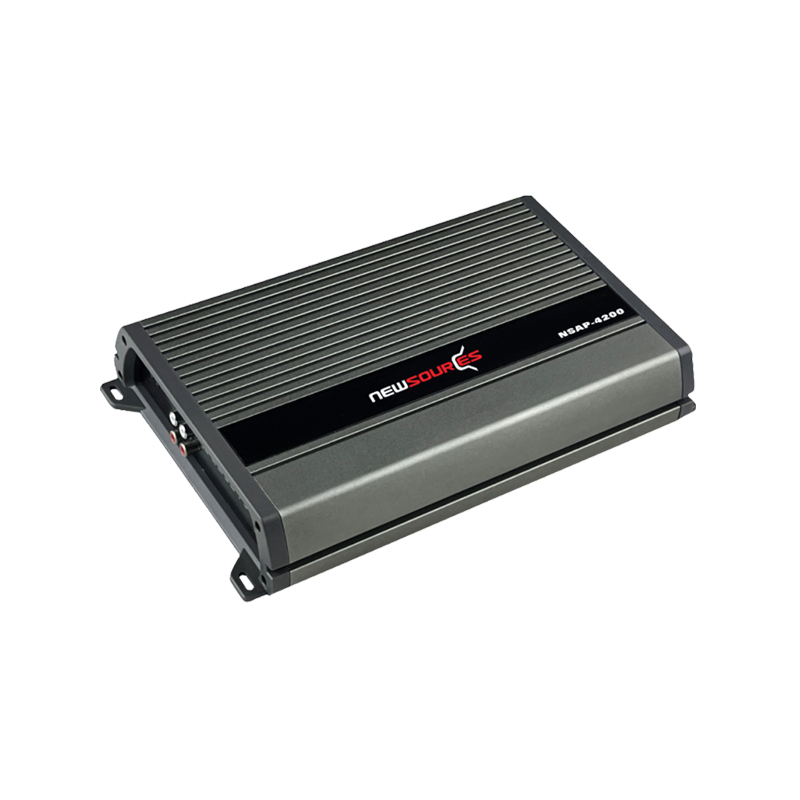 NSAP-4200 Four-Channel Class D High-Power AmplifierA compact four-channel Class D amplifier delivering higher output for mid-range and high-end speakers, with flexible crossover and input controls for system building.View Product →
When a brief moves toward higher output, the NSAP4200 sits in the Class D high-power family, while the NSXP4120 and related entrance-level models are better understood as practical building blocks for more modest systems. Seeing both families together helps a buyer avoid over-specifying one part of the system while underestimating power supply, cooling, or speaker load.
Where Class D Bluetooth Amplifiers Earn Their Place
In a daily driver, the appeal is straightforward: more usable output from a compact chassis, with Bluetooth available for phones, tablets, or media players. In an older vehicle, a Bluetooth receiver or integrated Bluetooth amplifier can modernize the source path without pretending the whole dashboard needs replacing. In powersport applications, the same Class D efficiency helps because space is tight and airflow is unpredictable. Marine systems add another layer: multichannel layouts may need clear zone planning, and a DSP marine amplifier can be useful when tuning and signal routing are part of the brief.
Installation details decide whether the product feels well chosen. A line output converter may be needed to match a factory head unit to an aftermarket amplifier. An engine noise filter may be part of the answer when whine or interference appears. A bass processor can restore low-end content, and an in-dash equalizer gives the installer tuning control at the dashboard. None of these parts should be added blindly, but a manufacturer that already builds them can help a distributor assemble a more coherent kit. Buyers comparing compact and full-size chassis may also find our article on mini car amplifiers and full-size designs useful when space is the deciding factor.
For a first look at the simpler end of the range, the Class D entrance-level car amplifier range is a sensible starting point. It shows how channel count and model size change across a family before a buyer moves into high-power or specialty platforms.
What to Verify in Manufacturing and Quality
Amplifiers are not judged only by a catalog page. They are judged after installation, when heat, vibration, charging voltage, and imperfect grounding all have a say. Our manufacturing footprint includes a 10,000㎡ Hangzhou factory, a 23,000㎡ Deqing factory, and a 4,000㎡ Cambodia factory, with more than 150 employees and over 15 assembly lines. Those numbers describe capacity; they do not replace a proper qualification process, but they show the scale behind the catalog.
On the production side, our stated processes include SMT placement, AOI optical inspection, wave soldering, AP testing, and 100% aging testing. We also note that 70% of our workers have more than ten years of experience. For a buyer, the useful follow-up is to ask how those steps apply to the specific model, what the test limits are, and how changes are controlled from sample to mass production. We welcome that kind of questioning. It is more productive than treating a line card as a promise.
R&D also deserves a practical review. Bluetooth integration, DSP options, and IPX4 to IPX7 powersport protection all point to work across wireless access, digital signal processing, and enclosure protection. The right conversation is about the requirements of your program: which source devices must pair, how the amplifier is mounted, what happens when the vehicle is washed or stored outdoors, and which accessories are expected in the box.
Selection Checklist for B2B Buyers
Before requesting samples, reduce the project to a short brief. This keeps the discussion grounded and makes it easier to compare models across families.
- Define the system: channel count, speaker load, power target, and whether Bluetooth is built in, added by receiver, or managed by a hub.
- Confirm the electrical environment: supply voltage, charging behavior, idle current expectations, and whether a 24V to 12V DC power inverter is part of the installation.
- Map the mounting location: under-seat, trunk, fairing, storage compartment, or marine locker. Note heat path, moisture exposure, and service access.
- Review the signal chain: source unit, line output converter, equalizer, bass processor, crossover, and noise filter. Decide which functions are necessary and which simply add cost.
- Agree on protection targets: IPX5/IPX4 or IPX6/IPX7 for powersport, corrosion-aware installation for marine, and suitable fusing for every platform.
- Ask for test evidence and change control: AP test criteria, aging test duration, sample approval process, and production traceability.
- Clarify commercial terms: minimum order quantity, packaging, labeling, documentation, lead time, and warranty expectations.
A good manufacturer should be willing to say when a simpler model will do. That is especially true with Class D Bluetooth amplifiers, where a compact four-channel unit may outperform an oversized choice in a vehicle that cannot support the electrical or thermal load.
Working With Newsources
We are an audio manufacturer serving business customers, with a product portfolio that runs from Class D car amplifiers and mini amplifiers to powersport, marine, Bluetooth, and signal-processing accessories. Our role is not to push every buyer toward the same platform. It is to help match the amplifier to the vehicle, the installation, and the commercial program, then support that choice with production and testing discipline.
If you are evaluating a Class D Bluetooth car amplifiers company for an upcoming range, start with the application rather than the model name. Tell us the vehicle type, channel count, source devices, mounting constraints, and target market. From there, the catalog becomes a working tool instead of a list of part numbers.
Class D efficiency and Bluetooth convenience are valuable, but they are not a complete selection strategy. The stronger approach is to choose a manufacturer that can connect amplifier design, accessory compatibility, environmental protection, and production testing into one conversation. That is how a Class D Bluetooth car amplifier becomes a reliable part of a vehicle audio system rather than simply a promising specification on a page.