
 EN
EN
 English
 Español
 عربى
عربىContent
- 1 Introduction: Why Saltwater Changes the Rules
- 2 Understanding the Marine Environment and Failure Modes
- 3 Key Features to Look for in Multichannel Marine Amplifiers
- 4 Power, Wiring, and Grounding Considerations
- 5 Installation Best Practices for Saltwater Safety
- 6 Maintenance, Inspection, and Troubleshooting
- 7 Comparison Table: Marine Features vs. Standard Car Amps
- 8 Buying Checklist: Questions to Ask Before You Buy
- 9 Conclusion: Design, Installation, and Care Together Keep Your Amp Alive
Introduction: Why Saltwater Changes the Rules
Saltwater is uniquely aggressive: it accelerates corrosion, promotes electrical leakage, and encourages galvanic reactions between dissimilar metals. For boat audio systems that use multichannel marine amplifiers, exposure to salt spray, humid air, and occasional immersion means the typical car amplifier's materials and protections are often insufficient. This article explains the specific risks posed by marine environments, the features that make amplifiers safe for saltwater use, and practical installation and maintenance steps to maximize longevity and performance.
Understanding the Marine Environment and Failure Modes
Marine electronics face a combination of stressors: salty aerosol, high humidity, temperature swings, UV exposure, and the possibility of direct water contact. These factors cause several common failure modes in amplifiers: corrosion of terminals and circuit traces, insulation breakdown and shorting, mechanical failure from pitting and oxide buildup, and performance degradation due to contaminated connectors or overheated components.
Corrosion and Galvanic Action
Saltwater creates conductive films over surfaces; when dissimilar metals are electrically connected, galvanic currents accelerate corrosion of the less noble metal. Amplifier terminals, chassis fasteners, and speaker leads are common galvanic hotspots if not properly selected and isolated.
Moisture Ingress and Electrical Leakage
Even tiny amounts of moisture inside an amplifier can cause leakage currents between traces, raising noise, reducing insulation resistance, and in extreme cases causing shorts. Thermal cycling compounds the problem as trapped moisture condenses and expands.
Key Features to Look for in Multichannel Marine Amplifiers
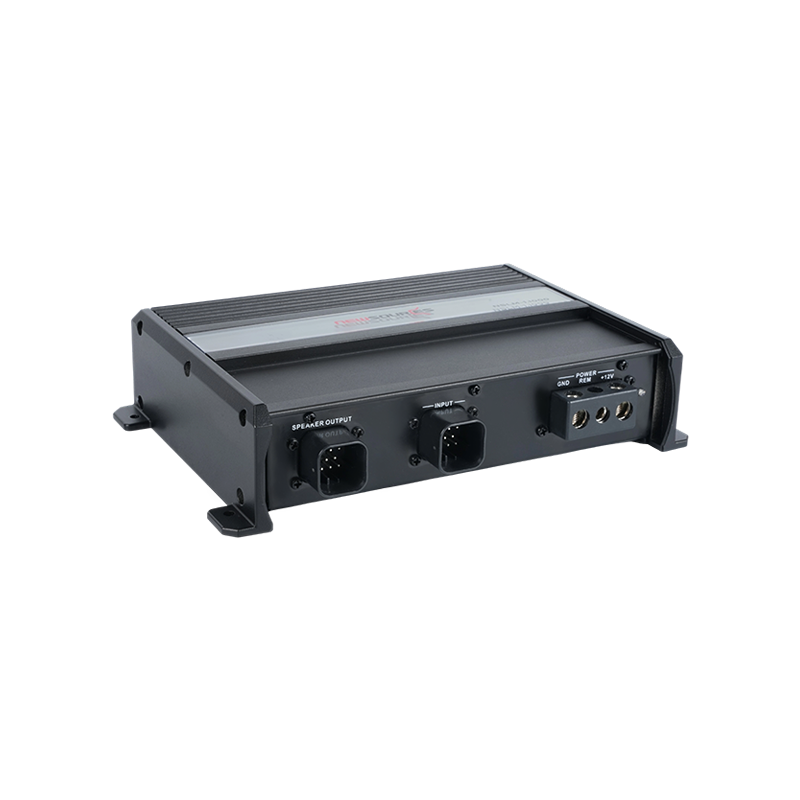
Not every amplifier labeled "marine" is built equally. When shopping for a multichannel marine amplifier, evaluate design details that directly mitigate saltwater risks. Below are the most important features and why they matter.
IP Rating and Ingress Protection
An IP rating indicates resistance to dust and water. For salt spray and occasional splashes, look for at least IPX4 protection (splash-proof). For installations where direct spray or heavy washdown is likely, prefer IPX5–IPX6. If immersion is possible (rare for amplifiers but relevant in some boats), IPX7 or IPX8 is needed. Manufacturers should list specific test standards used — ask for them if unclear.
Conformal Coating and Potting
Conformal coatings (silicone, acrylic, polyurethane, or parylene) applied to circuit boards form a thin protective film that prevents salt deposits and moisture from causing leakage paths. Some high-end marine amps add selective potting around vulnerable components. Confirm the type of coating — parylene offers excellent barrier performance but is costlier.
Corrosion-Resistant Hardware and Finishes
Terminals, screws, and mounting brackets should be stainless steel, nickel-plated brass, or coated aluminum. Anodized or powder-coated housings resist pitting and flaking. Avoid untreated steel fasteners and raw copper exposed to spray. Gold or tin plating on signal connectors reduces oxidation and contact resistance over time.
Sealed Connectors and Gasketed Covers
Look for marine amplifiers with gasketed covers for control panels, sealed remote level plugs, and weatherproof power input housings. Sealed signal and speaker connectors reduce ingress and make maintenance easier by preventing salt crystals from forming on mating surfaces.
Thermal Management for Humid Conditions
Humidity reduces heat transfer efficiency and can accelerate failure if thermal design is inadequate. Effective marine amplifiers use larger internal heat sinks, thermal pads that remain stable in salt-laden air, and smart thermal protection that avoids frequent on/off cycling. Forced-air fans are less desirable in marine settings unless their inlets are effectively filtered and sealed.
Power, Wiring, and Grounding Considerations
Proper power distribution minimizes voltage drop and heating — both of which are amplified (pun intended) in marine installs. Correct wiring and grounding also reduce stray currents that can cause corrosion and interference.
Marine-Grade Power Cables and Fusing
Use marine-grade tinned-copper wire for power and speaker runs; tinned copper resists corrosion better than bare copper. Fuse the amplifier close to the battery with an appropriately rated ANL or breaker type designed for marine use. Avoid using in-line fuses mounted in exposed areas where corrosion can prevent reliable operation.
Chassis Grounding and Isolation
Establish a single, dedicated ground point near the amp using tinned copper and ensure it bonds to the boat's grounding system or lightning ground per marine electrical codes. Isolation from other metallic systems can prevent galvanic paths. On boats, sometimes floating amplifier grounds (with proper isolation transformers for inputs) are used to reduce noise and ground-loop corrosion — consult a marine electrician for complex setups.
Installation Best Practices for Saltwater Safety
Good installation reduces long-term risk more than any single material choice. Proper placement, ventilation, connector routing, and sacrificial protection are essential to extending amplifier life on a boat.
- Choose a dry, ventilated location above likely splash lines — bilge and engine compartments are poor choices unless fully sealed and ventilated.
- Route power and speaker cables away from exhausts and fuel lines, and secure them with stainless clamps to prevent chafing and stray currents.
- Use dielectric grease on exposed terminals and connector pins during assembly to repel moisture and prevent salt crystal buildup.
- Consider adding a sacrificial anode or isolator in the boat's bonding system to localize galvanic corrosion away from critical electronics.
Maintenance, Inspection, and Troubleshooting
Routine care extends life dramatically. Salt deposits are often visible before catastrophic failure: white crystals, green/blue corrosion on copper, and sticky residue on connectors are early warnings.
Regular Inspection Checklist
- Visually inspect terminals, connectors, and mounting hardware every 3 months or after long trips.
- Clean terminals with a soft brush and freshwater rinse; dry thoroughly and reapply dielectric grease.
- Check audio noise, channel dropouts, and any thermal protection triggers — these are symptoms of wiring corrosion or internal contamination.
Troubleshooting Common Marine Problems
If one channel drops out, inspect speaker leads and connectors first — corrosion often isolates conductors. Persistent noise that varies with engine RPM suggests grounding or alternator noise; re-evaluate the ground point and consider an isolator or noise filter. For intermittent shutdowns, confirm the amp's thermal sensor and ensure ventilation is not blocked by insulation or sails.
Comparison Table: Marine Features vs. Standard Car Amps
| Characteristic | Marine Amplifier | Standard Car Amplifier |
| Corrosion Protection | Conformal coating, tinned wiring, stainless hardware | Minimal - prone to corrosion |
| Ingress Rating | IPX4–IPX7 options | Typically none |
| Connectors | Sealed or tinned pins | Standard RCA and screw terminals |
Buying Checklist: Questions to Ask Before You Buy
- What is the amplifier's IP rating and what test standard was used?
- Is the PCB conformally coated, and which coating material is used?
- Are power and speaker connectors tinned or sealed? Are replacement connectors available?
- Does the warranty explicitly cover corrosion or water ingress failures?
- Does the manufacturer provide an installation guide for marine environments?
Conclusion: Design, Installation, and Care Together Keep Your Amp Alive
A multichannel marine amplifier can perform reliably in saltwater environments when selected and installed thoughtfully. Prioritize IP ratings, conformal coatings, corrosion-resistant hardware, tinned wiring, and smart ventilation. Combine the right hardware choice with careful routing, dielectric protection, and scheduled maintenance to prevent most common failures. When in doubt, consult a marine audio professional: the correct amplifier and installation will pay back through years of trouble-free sound on the water.