
 EN
EN
 English
 Español
 عربى
عربىContent
- 1 What Is a Multichannel Marine Amplifier and Why Does It Matter?
- 2 Marine vs. Automotive Amplifiers: Why You Cannot Substitute One for the Other
- 3 Key Specifications to Evaluate in a Multichannel Marine Amplifier
- 4 Channel Configuration Options and System Planning
- 5 Built-In DSP and Equalizer Features That Improve Marine Audio Performance
- 6 Installation Best Practices for Multichannel Marine Amplifiers
- 7 Top Features to Prioritize When Comparing Marine Multichannel Amplifiers
What Is a Multichannel Marine Amplifier and Why Does It Matter?
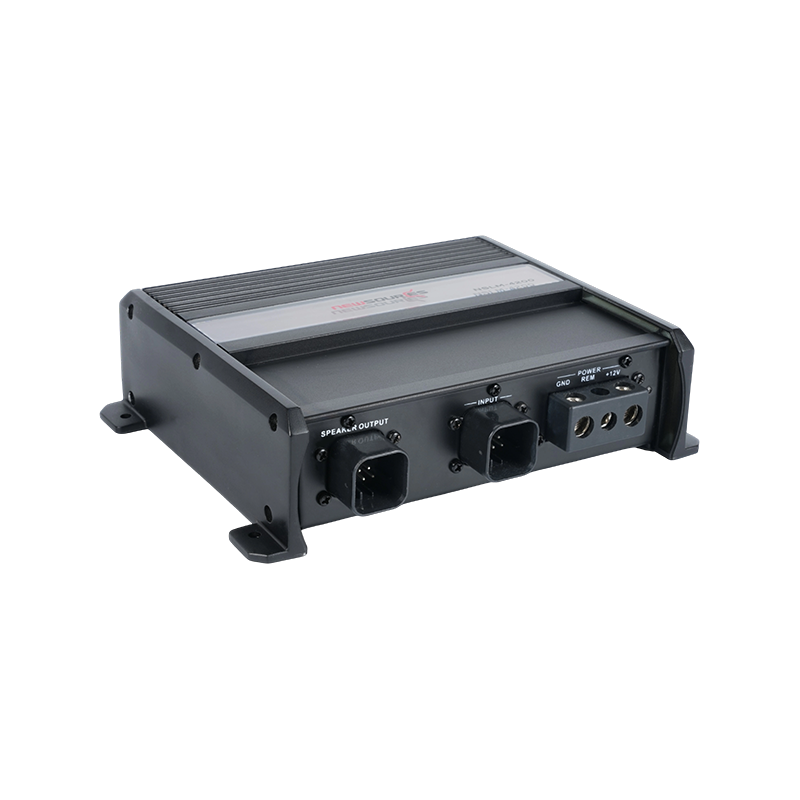
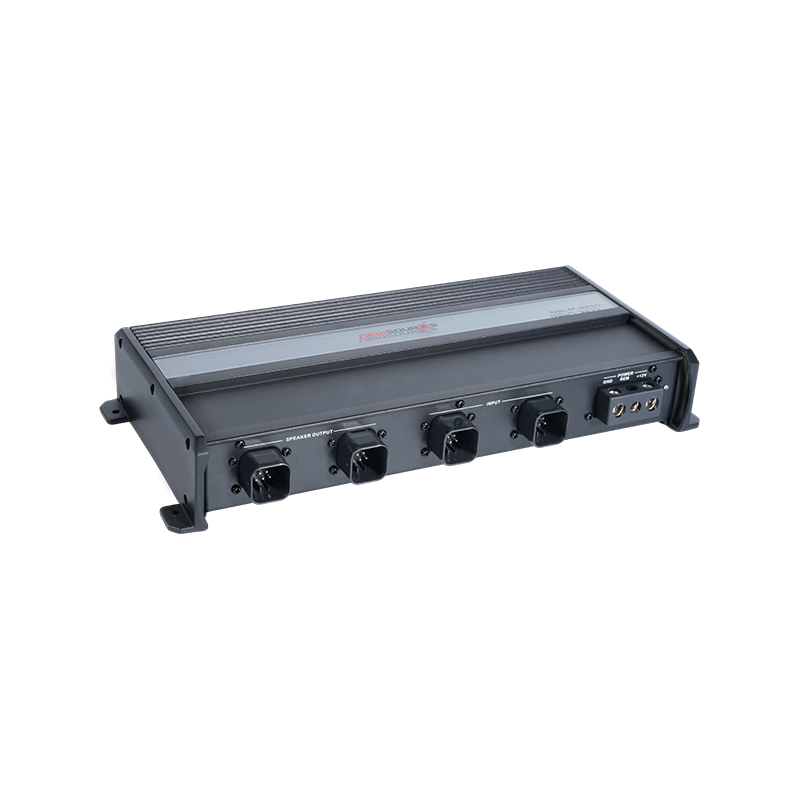
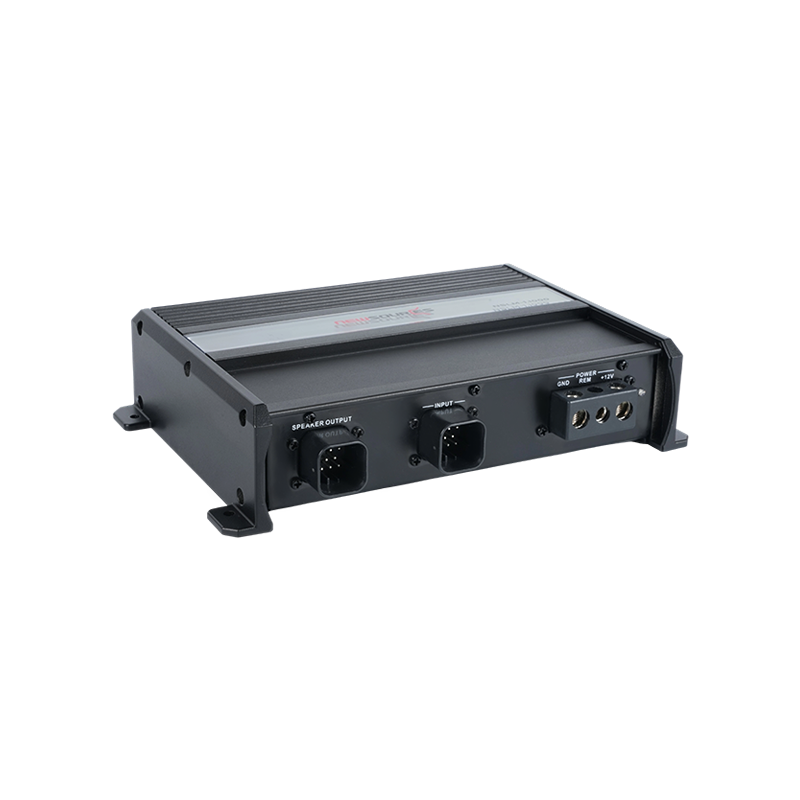
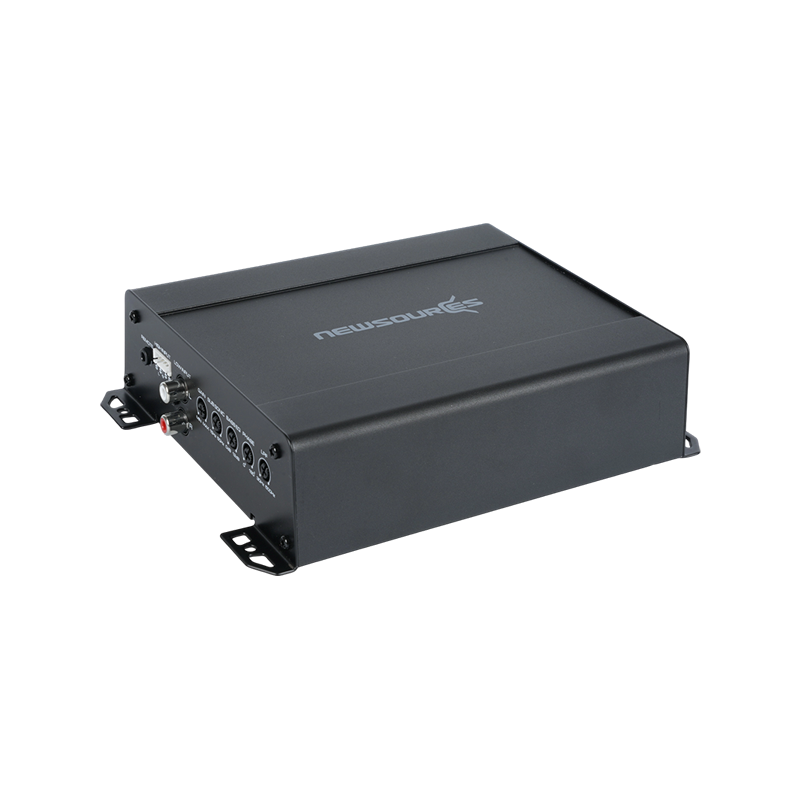
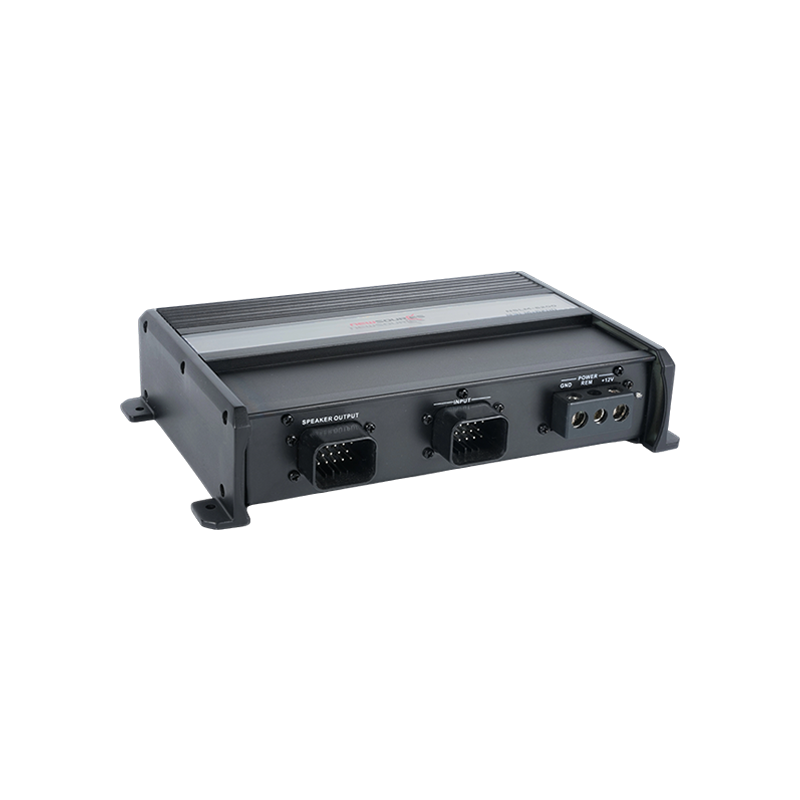
A multichannel marine amplifier is a purpose-built power amplifier designed to drive multiple speaker zones simultaneously aboard a boat, yacht, or watercraft, while withstanding the harsh physical and environmental conditions unique to the marine environment. Unlike a standard automotive or home audio amplifier, a marine-rated multichannel unit is engineered to resist corrosion from saltwater spray, humidity, UV radiation, vibration from engines and wave impact, and wide temperature swings — all while delivering clean, high-power audio to speakers distributed across a vessel that may include the helm station, cockpit, bow, cabin, and swim platform.
The "multichannel" designation refers to the number of independent amplifier channels in a single unit — commonly 4-channel, 5-channel, 6-channel, or 8-channel configurations. Each channel independently drives one speaker or a wired pair of speakers, allowing a single amplifier to power a complete multi-zone audio system without stacking multiple separate units. On a vessel where installation space, wiring complexity, and weight all matter, consolidating amplification into one well-specified multichannel unit is the most practical and cost-effective approach to building a high-performance boat audio system.
Marine vs. Automotive Amplifiers: Why You Cannot Substitute One for the Other
A common mistake among first-time boat audio builders is installing an automotive-grade amplifier on a vessel to save cost, reasoning that both environments run on 12-volt DC power and use similar speaker impedances. This substitution consistently leads to premature failure and, in worst cases, electrical hazards, because the marine environment presents conditions that automotive amplifiers are not designed to survive.
The most critical difference is corrosion protection. Saltwater is an extremely aggressive electrolyte that attacks bare circuit board traces, unprotected solder joints, exposed metal components, and standard terminal blocks with a speed that surprises owners who have never operated in a saltwater environment. Marine-certified amplifiers are built with conformal-coated printed circuit boards — a thin polymer film applied over all board surfaces that seals components and traces from moisture and salt fog penetration. This coating, combined with sealed or gasket-protected enclosures, corrosion-resistant terminal hardware, and UV-stabilized plastics, is what separates a marine-rated unit from an automotive equivalent at the engineering level.
Beyond corrosion, marine amplifiers must also meet the ignition protection standard ABYC E-11 and, for gasoline-powered vessels, must not produce sparks that could ignite fuel vapors in the bilge or engine compartment. This ignition protection requirement means that internal switching components, relay contacts, and cooling fans in marine amplifiers must be designed or enclosed to prevent ignition of flammable vapors — a requirement that has no equivalent in automotive amplifier design standards.
Key Specifications to Evaluate in a Multichannel Marine Amplifier
Selecting a multichannel marine amplifier requires comparing several interdependent specifications that together determine whether the unit will perform reliably in the target installation and deliver the audio quality the system requires. Understanding what each specification means in practice prevents the common mistake of selecting on rated power alone while overlooking factors that directly affect system sound quality and long-term reliability.
RMS Power Output vs. Peak Power
RMS (root mean square) power is the continuous power the amplifier can deliver to a stated load impedance — the number that reflects real-world performance. Peak power is the maximum instantaneous power the amplifier can produce for a very brief transient — a figure that is frequently inflated in marketing materials and bears little relationship to the amplifier's ability to drive speakers in sustained operation. When comparing multichannel marine amplifiers, use only RMS power ratings measured at 4 ohms (the standard marine speaker impedance) with all channels driven simultaneously. An amplifier rated at 75W RMS per channel × 4 channels all channels driven at 4 ohms is a meaningfully specified product; one that lists only peak power or rates channels individually rather than simultaneously driven is likely to underperform its rated figures in actual use.
Signal-to-Noise Ratio and Total Harmonic Distortion
Signal-to-noise ratio (SNR) expressed in decibels (dB) measures how far the amplifier's noise floor sits below the signal level — higher is better. A marine amplifier with an SNR of 95 dB or above will be audibly quiet between tracks and during low-level program material; units with SNR below 85 dB may produce an audible hiss through efficient marine speakers, particularly noticeable at the helm station or in the cabin where background noise levels are lower. Total harmonic distortion (THD) at rated power — expressed as a percentage — indicates how accurately the amplifier reproduces the input signal without adding harmonic artifacts. For high-quality marine audio, THD below 0.1% at rated power is a reasonable target; many quality marine amplifiers achieve 0.05% or better.
Input Sensitivity and Signal Source Compatibility
Input sensitivity — typically adjustable from around 200 mV to 4V RMS — determines the input signal level required to drive the amplifier to full output. Most marine head units output a preamp signal in the range of 2–5V RMS through RCA connectors, and the amplifier's sensitivity adjustment must be set to match this source level to achieve full output without clipping. Multichannel marine amplifiers typically provide one set of RCA inputs per stereo pair of channels, with some models offering dedicated subwoofer inputs. Confirm that the number and type of inputs on the amplifier match the output configuration of the source unit before purchasing — particularly important when a 6- or 8-channel amplifier must be fed from a source unit with only two or four RCA output pairs.
Channel Configuration Options and System Planning
The channel count of the multichannel amplifier should be selected to match the speaker zone architecture of the vessel rather than defaulting to the largest available unit. Over-specifying channel count wastes money and installation space; under-specifying forces compromises in zone coverage or requires adding a second amplifier.
| Amplifier Type | Typical Channel Use | Best Suited For |
| 4-Channel | 2 stereo zones or 3 zones + bridged sub | Small to mid-size runabouts, day boats |
| 5-Channel | 2 stereo zones + dedicated mono sub channel | Bowriders, sport boats with dedicated sub |
| 6-Channel | 3 stereo zones or 2 zones + tower + sub | Wakeboard boats, cruisers, mid-size yachts |
| 8-Channel | 4 stereo zones or 3 zones + tower + 2 subs | Large yachts, pontoons, multi-zone systems |
Many 4-channel and 6-channel marine amplifiers support bridged operation — combining two channels into a single higher-power mono output for a subwoofer. A 4-channel amplifier running channels 3 and 4 bridged can deliver 200–300W RMS into a 4-ohm subwoofer while channels 1 and 2 continue to power cockpit speakers in stereo. This bridging flexibility effectively turns a 4-channel unit into a 2-channel stereo amplifier plus a mono subwoofer amplifier, providing excellent system versatility without requiring a separate mono amplifier for bass.
Built-In DSP and Equalizer Features That Improve Marine Audio Performance
The acoustic environment on a boat is among the most challenging for audio reproduction. Hard fiberglass surfaces, open-air cockpits, engine noise, water noise, and wind at speed all work against clear, balanced sound. Multichannel marine amplifiers with built-in digital signal processing (DSP) provide tools to compensate for these conditions that passive equalization alone cannot address.
- Parametric or graphic equalizer per channel: Per-channel equalization allows the tonal balance of each speaker zone to be tuned independently to compensate for the acoustic properties of that specific location on the vessel. Cockpit speakers may need a mid-frequency boost to cut through wind noise at speed; cabin speakers may need high-frequency roll-off to reduce harshness from fiberglass reflections. Fixed 3-band EQ is the minimum useful configuration; parametric EQ with adjustable center frequency, bandwidth, and gain per channel provides far greater precision.
- Crossover filters (high-pass and low-pass): Active crossover filters built into the amplifier's DSP allow each channel's frequency range to be limited to the range appropriate for the connected speaker. Tower speakers benefit from a high-pass filter set at 80–100 Hz to protect them from bass frequencies they cannot reproduce cleanly at high power; subwoofer channels require a low-pass filter to restrict output to frequencies below 80–120 Hz. Proper crossover configuration dramatically improves system efficiency, reduces distortion, and extends speaker life.
- Time alignment / delay per channel: On larger vessels where speakers in different zones are physically separated by significant distances, time alignment DSP allows the arrival time of audio from each zone to be synchronized by introducing a digital delay on channels whose speakers are physically closer to the listener. This produces a coherent, focused soundstage rather than a spatially smeared audio image from multiple misaligned sources.
- Speed-compensating volume (SCV) or noise-sensing automation: Some premium multichannel marine amplifiers incorporate speed-compensating volume circuitry that automatically increases system volume as vessel speed — and therefore wind and engine noise — increases, maintaining a consistent perceived loudness without the driver having to manually adjust the source unit while operating the helm.
Installation Best Practices for Multichannel Marine Amplifiers
Even the highest-quality multichannel marine amplifier will underperform or fail prematurely if installed incorrectly. The marine installation environment has specific requirements for location selection, wiring, grounding, and thermal management that differ from automotive installation practice and must be followed carefully.
- Location selection — ventilation and moisture: Install the amplifier in a location with adequate air circulation for convection cooling, away from direct bilge water exposure and engine heat sources. Under-seat compartments with passive ventilation are acceptable for smaller units; high-power amplifiers may require forced-air ventilation or installation near an existing ventilation pathway to prevent thermal shutdown under sustained high-volume operation. Even with a marine-rated enclosure, avoid locations where the amplifier will be routinely submerged or subject to direct spray.
- Power wiring with correct gauge and inline fusing: The power and ground wires from the battery to the amplifier must be sized to carry the amplifier's maximum current draw without excessive voltage drop, which robs output power and can cause clipping distortion. As a general rule, a 4-channel marine amplifier drawing 30–50 amperes at full power requires a minimum 4 AWG power and ground cable run; 8-channel high-power units may require 2 AWG or 1/0 AWG depending on current draw and cable run length. An inline fuse or circuit breaker rated at 125% of the amplifier's maximum current draw must be installed within 18 inches of the positive battery terminal per ABYC standards.
- Grounding to a proper ground bus: Marine electrical systems require all audio equipment grounds to terminate at a central negative ground bus bonded to the battery negative terminal, rather than grounding individual components to random structural points as is acceptable in automotive installation. Improper grounding in marine audio systems is the most common cause of alternator whine, ground loop hum, and electrical noise that degrades audio quality and can mask potentially dangerous electrical fault conditions.
- RCA signal cable routing away from power wiring: Route RCA interconnects and speaker cables in separate runs physically separated from power wiring by at least 6 inches wherever possible. Power cables carrying alternator charging current and high-amperage amplifier supply current generate electromagnetic fields that induce noise into unshielded signal cables running in parallel proximity — the characteristic source of alternator whine in improperly wired marine audio systems.
- Gain setting by measurement rather than by ear: Set amplifier input sensitivity (gain) using a multimeter or oscilloscope to match the amplifier's input to the source unit's output level at the onset of clipping — not by ear, and not by turning the gain to maximum. Incorrectly set gain is the primary cause of speaker damage from clipping distortion in marine audio systems, and correct gain setting takes less than 15 minutes with basic test equipment.
Top Features to Prioritize When Comparing Marine Multichannel Amplifiers
With a wide range of multichannel marine amplifiers available from brands including JL Audio, Wet Sounds, Rockford Fosgate, Sony, Kenwood, and Pioneer, narrowing the selection to the right product for a specific installation requires prioritizing features that match the actual application requirements rather than chasing maximum power ratings or the lowest price.
- Certification and ratings: Verify that the amplifier carries a recognized marine certification — IPX5 or IPX6 water resistance rating for spray protection, ABYC E-11 compliance for ignition protection on gasoline vessels, and CE marking for European-flagged vessels. These certifications confirm that the product has been tested to defined standards rather than simply marketed as "marine grade."
- Class D topology for efficiency: Class D amplifier designs convert input power to output with efficiencies of 80–90%, generating far less heat than Class AB designs of equivalent output power. In a confined marine installation space with limited ventilation, the lower heat generation of Class D significantly reduces thermal throttling and extends component lifespan. Modern Class D marine amplifiers achieve audio fidelity indistinguishable from Class AB at normal listening levels.
- Flexible zone switching and zone independent volume: Premium multichannel marine amplifiers support independent volume control per zone — either through the source unit's zone volume controls or through the amplifier's own DSP — allowing the bow speakers to run at a different level than the cockpit speakers without rewiring. This flexibility is particularly valuable on vessels used for both cruising (where all zones run at moderate levels) and entertaining at anchor (where cockpit and swim platform zones may run at high levels while cabin zones remain quiet).
- Compact form factor with high power density: Installation space on most vessels is limited. A compact multichannel amplifier that delivers 75W RMS × 4 channels in a chassis measuring 250 × 180 × 50 mm fits in locations inaccessible to a larger unit delivering equivalent power — a practical advantage in boats where every cubic inch of storage and installation space is contested. Compare the power-per-unit-volume ratio of competing amplifiers when space is a constraint, rather than selecting solely on the basis of rated power.