
 EN
EN
 English
 Español
 عربى
عربىContent
- 1 What Is a DSP Marine Amplifier and How Does It Work?
- 2 Why the Marine Acoustic Environment Demands DSP Processing
- 3 Key Specifications to Evaluate When Choosing a DSP Marine Amplifier
- 4 DSP Tuning Capabilities: What to Expect and How to Use Them
- 5 Marine-Grade Build Quality: What Separates Genuine Marine Amplifiers from Counterfeits
- 6 Installation Best Practices for DSP Marine Amplifiers
- 7 Recommended DSP Marine Amplifier Configurations for Different Vessel Types
What Is a DSP Marine Amplifier and How Does It Work?
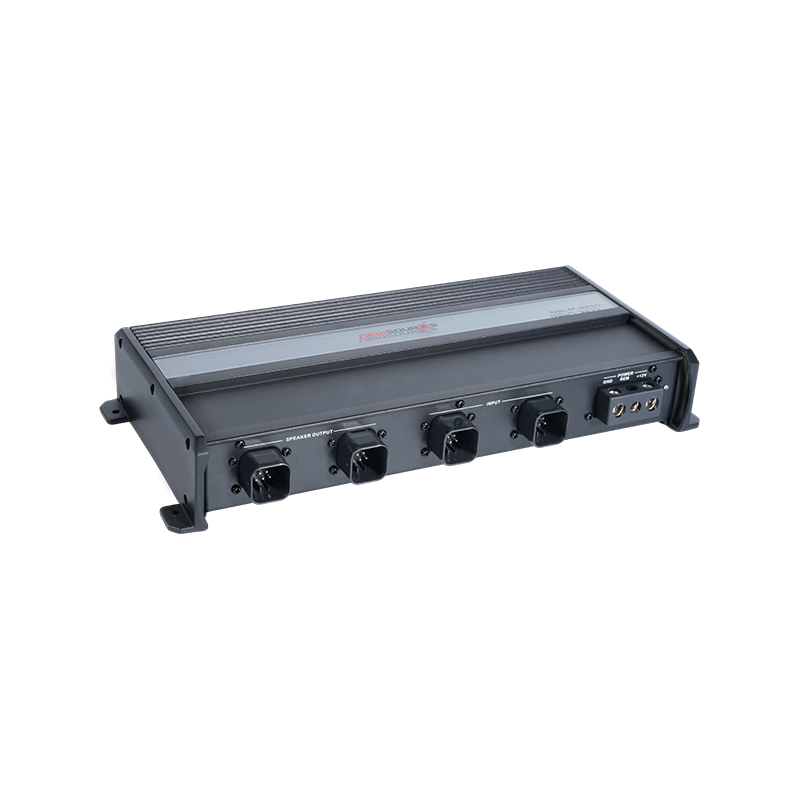
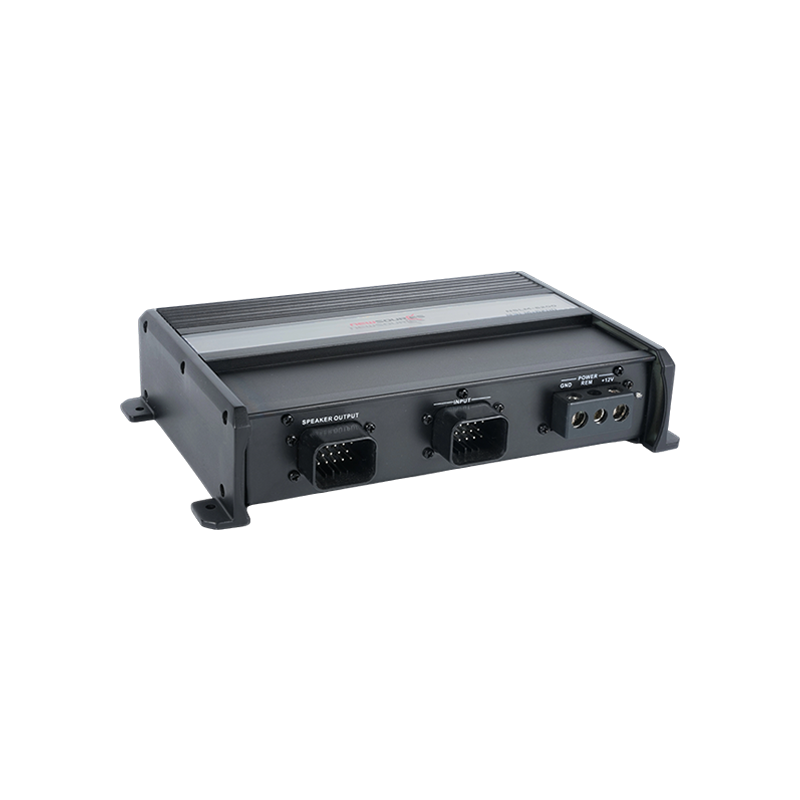
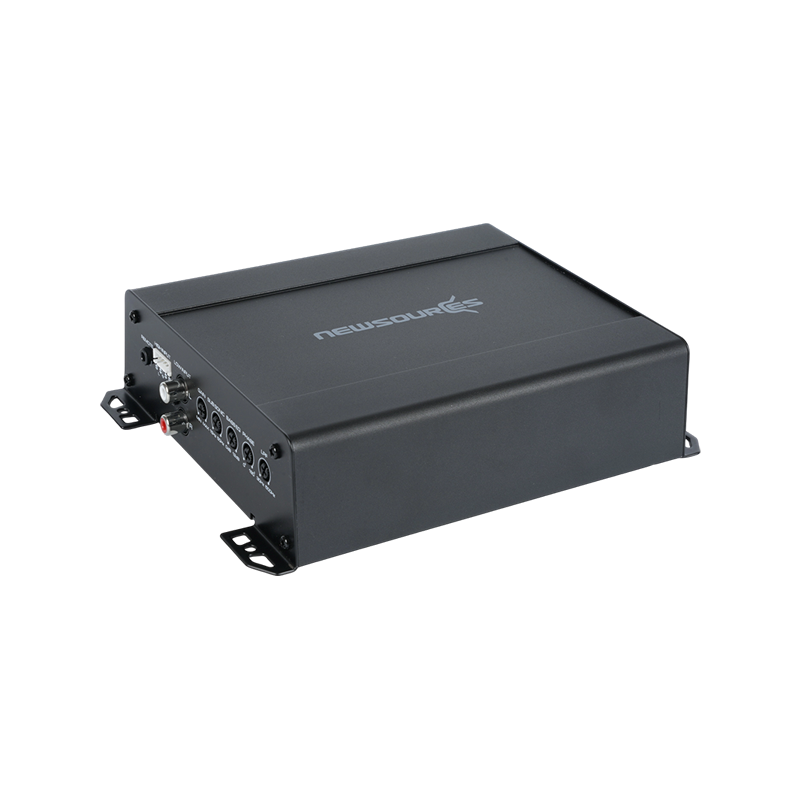
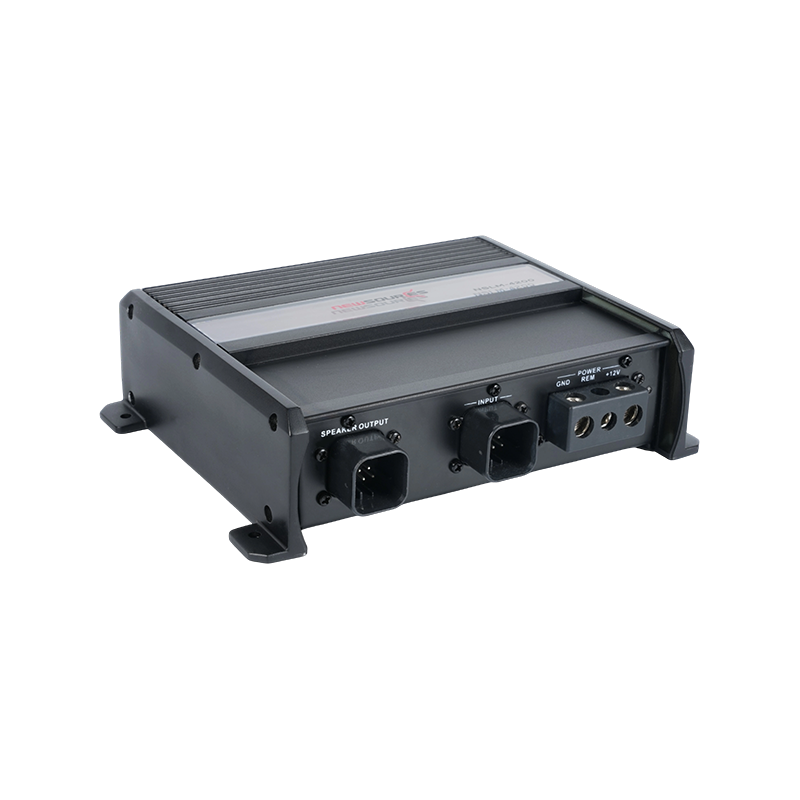
A DSP marine amplifier is a power amplifier specifically engineered for onboard boat audio systems that incorporates a built-in Digital Signal Processor — a dedicated computational chip that analyzes and manipulates the audio signal in real time before it is amplified and sent to the speakers. The DSP component gives the amplifier the ability to perform functions that a conventional analog amplifier cannot: precise equalization across multiple frequency bands, time alignment between individual speakers at different distances from the listening position, crossover filtering to direct specific frequency ranges to the correct speaker types, and dynamic loudness compensation to maintain tonal balance at varying volume levels. In the marine environment — where wind noise, engine rumble, water sounds, and the acoustic challenges of open-air listening conspire to degrade audio quality — these processing capabilities make a measurable and audible difference that simple power amplification alone cannot address.
The "marine" designation goes beyond the DSP functionality to encompass the physical design standards that distinguish marine audio equipment from automotive or residential counterparts. A genuine marine-grade amplifier must withstand continuous exposure to salt spray, UV radiation, humidity, vibration, and temperature extremes that would rapidly corrode and degrade standard consumer electronics. Conformal coating on circuit boards, sealed or weather-resistant enclosures with drainage provisions, corrosion-resistant hardware, and UV-stabilized plastics and labels are the design features that separate a true marine amplifier from a car audio unit that has simply been installed on a boat.
Why the Marine Acoustic Environment Demands DSP Processing
Anyone who has tried to enjoy music on a moving boat understands the acoustic challenges involved. Unlike a car interior — which is a closed, relatively controlled acoustic space — a boat operates in an open or semi-open environment where background noise levels can reach 75 to 90 dB at speed, where reflected surfaces are minimal, and where the listening position is inconsistent because passengers move around the vessel. These conditions mean that audio signals arriving at the listener's ears are unbalanced, temporally smeared by different speaker distances, and partially masked by broadband environmental noise in the low and mid-frequency ranges.
A DSP marine amplifier addresses these challenges systematically. Time alignment correction compensates for the fact that speakers mounted at different positions on the vessel — bow, helm, stern tower — send their sound to the listener's ears at measurably different times because of their physical distance differences. Without time alignment, the sound from multiple speaker locations smears together rather than cohering into a focused stereo or surround image. Parametric EQ allows the installer to compensate for the frequency response aberrations introduced by speaker mounting positions, hull reflections, and the acoustic absorption or reflection characteristics of different seating areas on the boat. High-pass filtering protects smaller speakers from trying to reproduce bass frequencies they cannot handle, preventing the cone excursion damage and distortion that results from bass-heavy signal being sent to mid-range or full-range speakers without adequate filtering.
Key Specifications to Evaluate When Choosing a DSP Marine Amplifier
The specification sheet of a DSP marine amplifier contains a range of technical parameters that directly affect system performance, installation flexibility, and long-term reliability. Understanding these parameters prevents common purchasing mistakes and helps buyers identify which products will genuinely deliver the performance their system requires.
| Specification | Typical Range | What to Look For |
| RMS Power Output | 50W – 150W per channel | Measured at 4Ω, 14.4V, ≤1% THD |
| Channel Configuration | 4, 5, 6, or 8 channels | Match to number of speaker zones |
| DSP EQ Bands | 8 – 31 bands per channel | More bands = finer tuning precision |
| Time Alignment Range | 0 – 20ms (0 – 7 meters) | Must cover the longest speaker distance on vessel |
| Signal-to-Noise Ratio | >95 dB | Higher SNR = quieter background noise floor |
| Input Sensitivity | 200mV – 6V adjustable | Wide range accommodates different head units |
| Weatherproof Rating | IP65 or higher | Confirms dust and water jet resistance |
| Tuning Interface | PC software / app / onboard controls | PC/app control offers greatest flexibility |
Power output figures deserve particular scrutiny because marine audio marketing frequently cites peak or maximum power figures that bear no relationship to real-world continuous output. Always compare RMS (root mean square) power measured at the speaker's nominal impedance under standard automotive voltage (14.4V) with total harmonic distortion at or below 1%. An amplifier claiming 1000W peak across 4 channels that delivers 75W RMS per channel at 4Ω and 1% THD is performing exactly as a quality marine amplifier should — but a buyer who focuses on the peak figure and compares it against a competitor's RMS specification will make an uninformed decision.
DSP Tuning Capabilities: What to Expect and How to Use Them
The DSP processing capabilities of a marine amplifier are only as valuable as the user's ability to configure them correctly. Most DSP marine amplifiers provide tuning access through one of three interfaces: onboard rotary controls or buttons for basic parameter adjustment, a dedicated PC software application connected via USB for full parameter access, or a smartphone application connected via Bluetooth or Wi-Fi. PC software provides the deepest tuning capability and the clearest visualization of filter settings and EQ curves, making it the preferred interface for professional installation and for boat owners willing to invest time in learning the software. Smartphone apps offer greater convenience for on-the-water adjustments after the initial setup has been completed on the PC.
Parametric Equalization
Parametric EQ allows the user to adjust the gain (boost or cut in dB), center frequency (the specific frequency being adjusted), and bandwidth (Q factor — how wide or narrow the frequency band affected by the adjustment is) for each EQ band independently. This is far more powerful than the fixed-frequency graphic EQ found on head units because it allows precise targeting of specific acoustic problems — a resonance peak at 250 Hz from the fiberglass hull, a dip at 3.5 kHz caused by the speaker mounting angle, or a loss of air and detail above 10 kHz from speaker diffraction around a hard edge. Each channel of a DSP amplifier can be equalized independently, allowing the tonal character of bow speakers, helm speakers, and stern speakers to be individually optimized for their different acoustic environments on the vessel.
Crossover Filtering
DSP crossover filters divide the audio frequency spectrum and direct each portion to the appropriate speaker type — high frequencies to tweeters, midrange frequencies to mid-woofers, and bass frequencies to subwoofers. Unlike passive crossover networks built from capacitors and inductors, DSP-based active crossovers can be adjusted in real time without any component changes, allowing the crossover frequency and slope steepness to be optimized for the specific speakers in the system. Steeper crossover slopes (48 dB per octave Linkwitz-Riley filters are common in high-performance DSP amplifiers) provide better driver protection and cleaner frequency separation than the shallower slopes typical of passive crossovers. For a marine system with tweeters, coaxial speakers, and a subwoofer, a correctly configured DSP crossover network dramatically improves clarity and bass definition compared to running full-range signal to all speakers.
Time Alignment
Time alignment — also called delay — compensates for the physical distance differences between speakers and the listening position by adding a precise digital delay to the output of closer speakers, so that all sound waves arrive at the listener's ears simultaneously. On a boat where the helm speaker is 0.5 meters from the driver and the stern tower speakers are 4 meters away, the stern speakers would need approximately 10 milliseconds of delay removed (or the helm speakers would need 10ms of delay added) to align them temporally. Getting time alignment correct has a more dramatic effect on perceived audio quality — particularly soundstage coherence and vocal clarity — than any amount of equalization, and it is a capability that is simply not available in systems without DSP processing.
Marine-Grade Build Quality: What Separates Genuine Marine Amplifiers from Counterfeits
The marine audio market contains a significant proportion of products that claim marine-grade construction without genuinely meeting the standards required for reliable long-term service in a saltwater environment. Identifying genuine marine-grade construction requires looking beyond marketing claims to specific design and material specifications.
- Conformal coating on PCBs: All circuit boards in a genuine marine amplifier should be coated with conformal coating — a thin protective chemical film that prevents moisture, salt, and condensation from causing corrosion or short circuits on the solder joints and component leads. Request documentation or inspect under UV light if possible; conformal coating fluoresces under UV illumination, confirming its presence.
- 316 stainless steel or marine-grade hardware: All external screws, terminals, and mounting hardware should be 316 stainless steel or equivalent marine-grade corrosion-resistant material. Standard 304 stainless or zinc-plated steel fasteners will show surface rust within one season of saltwater exposure.
- UV-stabilized enclosures and labels: Plastics and printed labels that are not UV-stabilized will fade, chalk, and crack within two to three seasons of sun exposure on an open boat. Genuine marine-grade amplifier housings use UV-stabilized polymers or aluminum enclosures with powder-coat or anodized finishes that maintain their appearance and structural integrity in continuous UV exposure.
- Sealed or drainable enclosures: While not all marine amplifiers are fully sealed (which would create thermal management challenges for the heat the amplifier generates), the enclosure design should prevent direct water ingress at the mounting orientation and should allow any water that does enter to drain rather than pool on the circuit boards.
- IP rating certification: An IP (Ingress Protection) rating of IP65 (dust-tight, protected against water jets) or higher for the amplifier enclosure confirms third-party verified protection against the spray conditions encountered on a boat. Be cautious of products that claim "water resistant" without a specific IP rating, as this claim has no standardized meaning.
Installation Best Practices for DSP Marine Amplifiers
A DSP marine amplifier installed incorrectly will perform below its potential regardless of its specification quality. The marine environment introduces installation challenges that do not exist in automotive applications, and addressing these correctly during installation prevents both performance problems and premature equipment failure.
- Location selection for thermal management: Amplifiers generate heat proportional to their output power, and marine installations often lack the forced airflow available in automotive trunk installations. Mount the amplifier in a location with natural ventilation or install a bilge-type blower fan to maintain air circulation around the amplifier. Avoid mounting directly against fiberglass hull sections that will become hot in direct sun, as heat-soaked mounting surfaces significantly reduce the amplifier's thermal headroom.
- Power wiring gauge and fusing: Use marine-grade tinned copper wire for all power and ground connections — standard automotive copper wiring oxidizes rapidly in the marine environment, increasing resistance at connections and reducing available power to the amplifier. Size power wire according to the amplifier's maximum current draw at full output, and install an in-line fuse within 18 inches of the battery connection to protect against wiring short circuits.
- Grounding to the vessel's common ground point: Ground the amplifier to the vessel's main electrical ground bus rather than to a local metal structure on the hull. Poor grounding in a marine electrical system is the most common cause of alternator whine and other noise in the audio system. Use the shortest practical ground cable and ensure all ground connections are clean, tight, and treated with anti-corrosion compound.
- Signal cable routing away from power wiring: Route RCA signal cables and speaker wires on the opposite side of the vessel from power cables wherever possible, and cross power and signal cables at 90-degree angles rather than running them parallel. Parallel runs of power and signal cables in close proximity create electromagnetic interference that introduces noise into the audio signal — a particular problem on vessels with multiple electrical systems including VHF radios, depth sounders, and engine management electronics.
- Set gain structure correctly before DSP tuning: The amplifier's input gain (sensitivity) must be set correctly before any DSP tuning is performed. Set the source unit to 75–80% of its maximum volume output, play a test tone at the highest level you would typically listen, and adjust the amplifier's input gain to the point where the amplifier just begins to clip — then back it off slightly. Correct gain structure maximizes signal-to-noise ratio through the entire signal chain and ensures the DSP is processing a full-strength, undistorted signal.
Recommended DSP Marine Amplifier Configurations for Different Vessel Types
The optimal DSP marine amplifier configuration depends significantly on the size of the vessel, the number of listening zones, and the complexity of the speaker system. The following configurations represent practical starting points for common vessel categories, though individual preferences and specific vessel acoustics will influence the final system design.
- Small day boats and runabouts (under 20 feet): A compact 4-channel DSP amplifier with 75–100W RMS per channel typically provides adequate power for 4 coaxial speakers. DSP priorities are high-pass filtering to protect the speakers from bass frequencies that compact coaxials cannot reproduce cleanly, and mild EQ correction for the speaker's mounting position response. A single amplifier typically handles the complete system on smaller vessels.
- Mid-size bowriders and deck boats (20–28 feet): A 6 or 8-channel DSP amplifier allows independent zone control for bow, helm, and stern speaker groups, with a dedicated subwoofer channel for bass reinforcement. Time alignment becomes more valuable at this scale because speaker distances between zones span 3 to 6 meters. Bluetooth or Wi-Fi app control is particularly useful on deck boats where the installer and passenger positions are spread across the vessel.
- Wake boats and tower systems: Tower speaker installations — where speakers are mounted 3 to 5 meters above the waterline on wakeboard tower structures — require significantly more power than standard onboard speakers because the tower speakers must cover wide listening areas at distance and compete with engine and water noise during wake sports activity. A dedicated tower amplifier channel with 150W or more RMS per tower speaker, configured with appropriate EQ compensation for the tower's acoustic environment, is standard in serious wake boat audio systems.
- Cruisers and larger express boats (28+ feet): Multi-zone audio systems on larger vessels benefit from multiple DSP amplifiers — each handling a specific zone or speaker type — managed through a master DSP controller or a network audio architecture that allows independent volume and EQ control in the cockpit, cabin, and flybridge zones simultaneously. At this scale, professional installation and commissioning using real-time analyzer (RTA) measurement tools during DSP tuning is strongly recommended to maximize the system's performance.
A DSP marine amplifier represents the single most impactful upgrade available for an existing boat audio system, and the most intelligent foundation for a new system build. The DSP processing capabilities address the acoustic challenges of the marine environment in ways that no amount of additional power or speaker quality can compensate for, while the marine-grade construction ensures that the investment survives the corrosive conditions that quickly degrade standard consumer electronics. Matching the amplifier's specifications, DSP capabilities, and weatherproofing standard to the specific demands of the vessel and its audio system is the key to realizing the full potential of this technology on the water.