
 EN
EN
 English
 Español
 عربى
عربىContent
What Makes a DSP Marine Amplifier Different
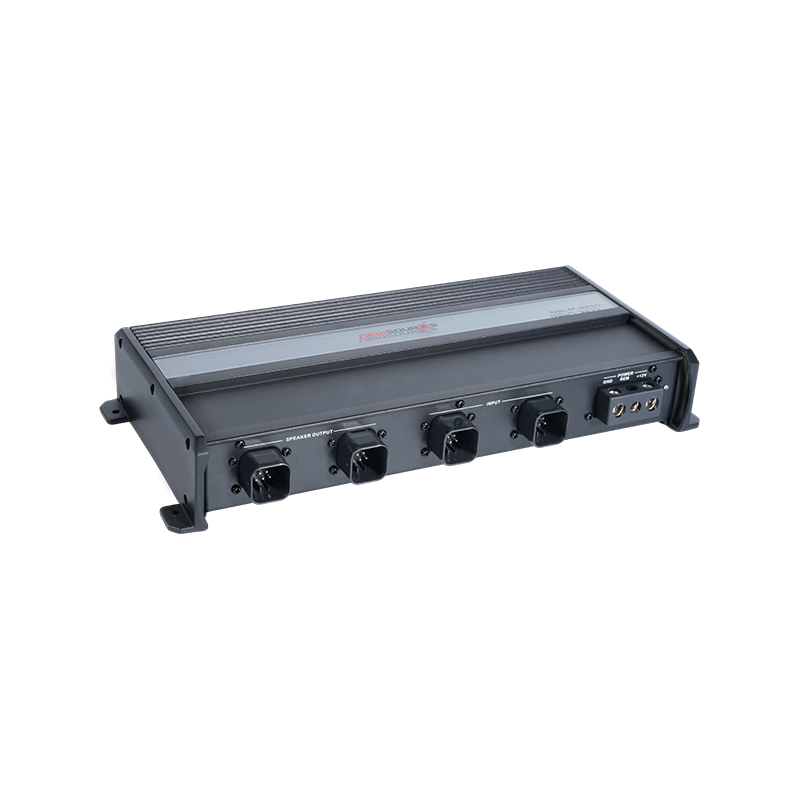
A DSP marine amplifier combines a traditional power amplifier with a built-in digital signal processor, allowing the unit to tune audio output specifically for the acoustic challenges of a boat. Unlike standard marine amplifiers that simply boost signal strength, a DSP-equipped model can adjust time alignment, equalization, and crossover points electronically, compensating for the odd speaker placements and reflective surfaces common on boats, from open bow seating to enclosed cabins. This makes it possible to achieve balanced, clear sound even when speakers cannot be positioned in an ideal listening arrangement.
Marine environments also demand hardware that can survive moisture, salt air, vibration, and temperature swings. A true marine-grade DSP amplifier pairs its processing capability with conformal-coated circuit boards, corrosion-resistant connectors, and a sealed or semi-sealed housing, ensuring the electronics remain reliable even after repeated exposure to spray and humidity.
Core Features to Look For
Not all amplifiers marketed for marine use include genuine DSP functionality, so it helps to know which features actually indicate advanced processing capability rather than basic tone controls.
- Parametric equalization with multiple adjustable bands per channel, rather than a fixed bass/treble control.
- Time alignment settings that let each speaker's signal be delayed in milliseconds to correct for uneven listening distances.
- Electronic crossovers with adjustable slopes for separating frequencies between tower speakers, cockpit speakers, and subwoofers.
- Zone-based output control, allowing different volume levels and tuning for the bow, cockpit, and cabin areas independently.
- App-based or software tuning interfaces that let installers save and recall custom sound profiles.
Power Ratings and Channel Configurations
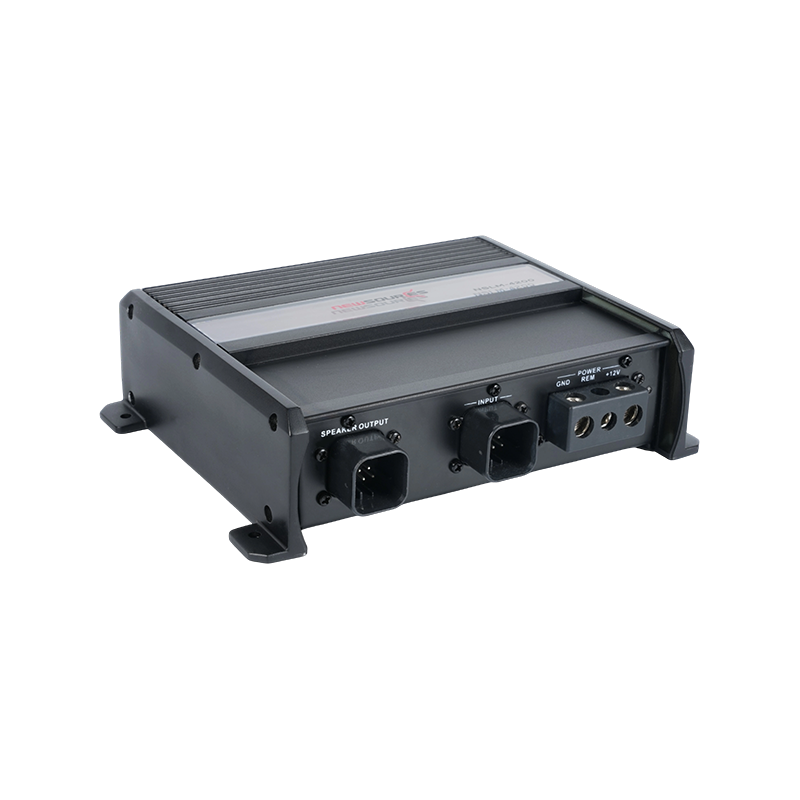
DSP marine amplifiers are available in a range of channel counts and power outputs to match different boat audio systems, from a simple two-speaker cockpit setup to a full multi-zone system with tower speakers and a subwoofer. Choosing the right configuration depends on how many speaker zones the boat has and how much headroom is needed to overcome wind and engine noise at cruising speed.
Typical Configuration Guide
| Boat Audio Setup | Recommended Channels | Typical Power per Channel |
| Basic cockpit speakers | 4-channel | 50-75 watts RMS |
| Cockpit plus tower speakers | 6-channel | 75-100 watts RMS |
| Full system with subwoofer | 8-channel | 100-150 watts RMS (sub channel higher) |
Why DSP Tuning Matters on a Boat
Boat cabins and open decks create acoustic conditions that are far less predictable than a car interior or home living room. Hard fiberglass surfaces reflect high frequencies unevenly, open-air seating loses bass energy quickly, and wind noise at speed can mask midrange detail. A DSP marine amplifier addresses these issues by allowing an installer to apply corrective equalization curves for each zone, flattening problem frequencies and restoring clarity that would otherwise be lost.
Time alignment is particularly valuable on boats because speakers are often mounted asymmetrically, such as tower speakers positioned above and behind the listener while cockpit speakers sit much closer. Without correction, this creates phase cancellation that muddies vocals and reduces stereo imaging. By digitally delaying the closer speaker's signal, the DSP effectively synchronizes sound arrival at the listening position, producing a tighter and more natural soundstage.
Installation Best Practices
Getting the most out of a DSP marine amplifier depends heavily on proper installation, not just the hardware itself. Mounting location, wiring, and grounding all affect long-term reliability and sound quality.
- Mount the amplifier in a dry, ventilated compartment away from bilge water and direct sun exposure.
- Use marine-grade tinned copper wiring to resist corrosion in humid or salty conditions.
- Ensure a solid chassis ground connection to prevent electrical noise and voltage drop issues.
- Fuse the power wire close to the battery to protect against short circuits.
- Use the DSP software's real-time analyzer, if available, to fine-tune equalization while the boat is running at cruising speed for realistic results.
Matching the Amplifier to Your Speakers and Source Unit
A DSP amplifier performs best when paired with a source unit and speakers that can take advantage of its processing power. Many marine head units include basic built-in DSP, but pairing them with a dedicated external DSP amplifier provides more precise control over each speaker zone. When selecting speakers, it is worth matching power handling and impedance to the amplifier's rated output per channel to avoid distortion or premature speaker failure. Subwoofers in particular benefit from DSP-controlled crossover points, since a properly set low-pass filter prevents boomy or muddy bass at higher volumes.
Long-Term Care and Troubleshooting
Even marine-rated amplifiers benefit from routine care. Periodically checking wiring connections for corrosion, confirming that drainage in the mounting compartment is clear, and updating DSP tuning software when new firmware becomes available can all extend the system's service life. If sound quality degrades over time, common culprits include loosened ground connections, moisture intrusion at connector points, or a shifted equalization setting from accidental button presses on the source unit. Most DSP amplifiers allow tuning profiles to be saved and restored, making it easy to return to a known-good configuration after troubleshooting.