
 EN
EN
 English
 Español
 عربى
عربىContent
- 1 Sound Quality Characteristics of Class A/B Car Amplifiers
- 2 Comparing Class A/B to Alternative Amplifier Topologies
- 3 Key Specifications and Performance Metrics
- 4 Component Quality and Build Considerations
- 5 Installation Best Practices for Optimal Performance
- 6 Thermal Management and Ventilation Requirements
- 7 Tuning and Optimization Techniques
- 8 Long-Term Reliability and Maintenance
Class A/B car amplifiers represent a hybrid topology that combines the sonic purity of Class A operation with the efficiency advantages of Class B design. This architecture utilizes two complementary transistor pairs—one handling the positive half of the audio waveform and the other managing the negative half. The crucial distinction lies in the biasing arrangement, where both transistor sets remain partially conducting even during idle periods, eliminating the crossover distortion inherent in pure Class B designs while avoiding the excessive heat generation and power waste characteristic of pure Class A operation.
The operational principle involves setting the bias point so that each output transistor conducts for slightly more than half of the signal cycle, creating an overlap zone where both transistors are active simultaneously. This overlap region ensures smooth transition between the positive and negative halves of the waveform, preventing the notch distortion that occurs when Class B transistors switch on and off at the zero-crossing point. The degree of Class A operation—determined by the bias current level—directly influences both sound quality and thermal characteristics, with higher bias currents pushing the amplifier further into Class A territory and improving linearity at the cost of reduced efficiency.
Modern Class A/B car amplifiers typically achieve efficiency ratings between 50% and 70%, substantially better than pure Class A designs operating at 20-30% efficiency but lower than Class D switching amplifiers that can exceed 85% efficiency. This efficiency level represents an excellent compromise for automotive applications where battery drain and heat management matter, but where sound quality remains paramount. The power supply design in Class A/B amplifiers must deliver substantial current reserves to handle dynamic musical peaks while maintaining voltage stability under varying load conditions created by complex speaker impedances.
Sound Quality Characteristics of Class A/B Car Amplifiers
The sonic signature of well-designed Class A/B car amplifiers centers on transparency, naturalness, and accurate tonal reproduction across the frequency spectrum. The minimal crossover distortion achieved through proper biasing creates a smooth, grain-free presentation that allows subtle musical details to emerge without the harshness or edge sometimes associated with poorly implemented Class B or budget Class D designs. Midrange clarity particularly benefits from Class A/B topology, as vocal reproduction maintains natural timbre and texture without the thinness or hardness that can result from switching distortion or inadequate bias current.
Dynamic response represents another strength of Class A/B car amplifiers, with their linear output stage capable of tracking rapid transients and complex musical passages without compression or smearing. The continuous conduction through the Class A bias region enables instant response to signal demands, while the robust power supply typical of quality Class A/B designs provides the current reserves necessary for reproducing orchestral crescendos, drum strikes, or bass guitar attacks with proper impact and authority. This dynamic capability becomes particularly noticeable when comparing Class A/B amplifiers to underpowered or poorly regulated alternatives that exhibit dynamic compression during demanding musical passages.
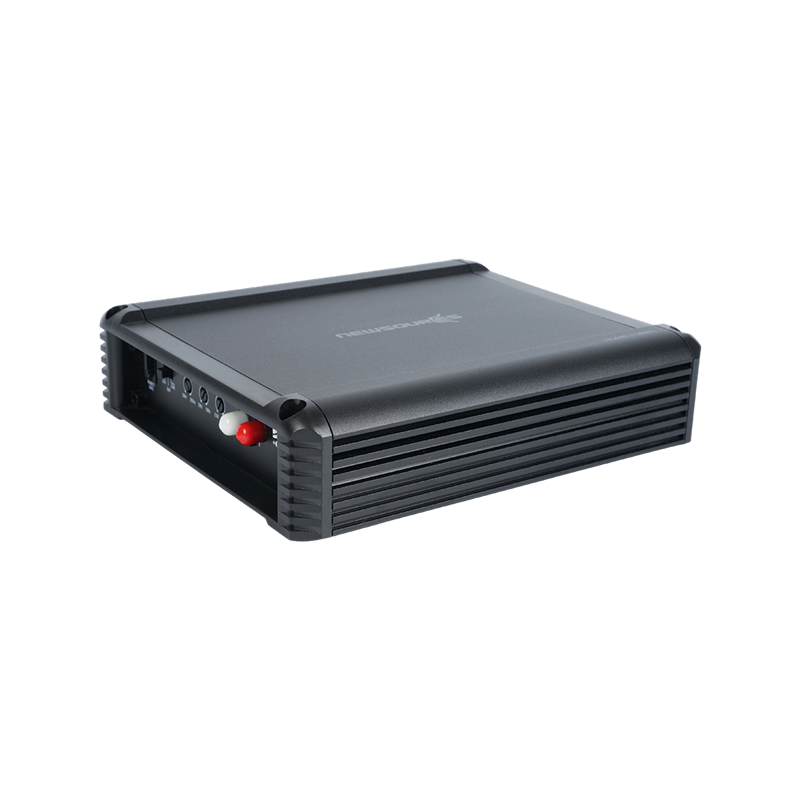
Bass reproduction in Class A/B car amplifiers combines control, definition, and weight when properly matched to appropriate subwoofer loads. The high damping factor typical of well-designed Class A/B output stages—often exceeding 200:1—provides excellent cone control, preventing overhang and maintaining tight, articulate bass response. The linear power delivery throughout the Class A/B operating range ensures that bass notes maintain consistent tonal character from soft passages to high-volume peaks, avoiding the tonal shifts or hardening sometimes experienced with amplifiers operating near their limits or exhibiting significant thermal compression.
Comparing Class A/B to Alternative Amplifier Topologies
Pure Class A amplifiers deliver the ultimate in linear operation by maintaining both output transistors in continuous conduction throughout the entire signal cycle, completely eliminating crossover distortion and switching artifacts. However, the automotive environment presents severe challenges for Class A implementation due to extreme inefficiency, massive heat generation, and substantial battery drain. While some enthusiast-grade car amplifiers incorporate Class A operation for low-level signals before sliding into Class A/B for higher outputs, fully Class A car amplifiers remain rare due to practical limitations in vehicular applications.
Class D switching amplifiers have gained significant market share in car audio through exceptional efficiency (typically 80-90%), compact dimensions, and reduced thermal management requirements. Modern Class D designs have narrowed the sound quality gap with Class A/B through improved switching frequencies (often 300-500kHz), sophisticated feedback loops, and advanced filter designs. However, many audiophiles still perceive Class A/B amplifiers as delivering superior sonic refinement, particularly in the critical midrange frequencies where switching artifacts may remain audible despite filtering. The choice between Class A/B and Class D often depends on individual priorities regarding sound quality, power efficiency, installation space, and budget considerations.
| Amplifier Class | Efficiency | Sound Quality | Heat Generation | Typical Use |
| Class A | 20-30% | Excellent | Very High | Rare in cars |
| Class A/B | 50-70% | Very Good | Moderate-High | Premium full-range |
| Class D | 80-90% | Good-Very Good | Low | Subwoofers, compact systems |
| Class B | 60-75% | Fair | Moderate | Obsolete |
Key Specifications and Performance Metrics
Power output ratings for Class A/B car amplifiers require careful interpretation, as manufacturers may specify power under varying conditions that don't reflect real-world performance. The most meaningful measurement is RMS (root mean square) power at rated impedance with all channels driven simultaneously, measured with less than 1% total harmonic distortion (THD). Quality Class A/B amplifiers should maintain their rated power output from 20Hz to 20kHz with minimal deviation, indicating adequate power supply regulation and bandwidth capability throughout the audio spectrum.
Total harmonic distortion plus noise (THD+N) specifications reveal the amplifier's linearity and noise floor characteristics. Premium Class A/B car amplifiers typically achieve THD+N figures below 0.01% at rated power, with the best designs measuring under 0.005% throughout most of their operating range. However, the type of distortion matters as much as the absolute percentage—second and third harmonic distortion can sound musical and pleasing, while higher-order odd harmonics create harshness and listener fatigue. Intermodulation distortion specifications provide additional insight into how the amplifier handles complex musical signals containing multiple simultaneous frequencies.
- Signal-to-noise ratio (SNR) measurements indicate the amplifier's quietness, with values above 100dB considered excellent for car audio applications where road noise provides a relatively high ambient noise floor
- Damping factor specifications above 200 ensure adequate speaker control, particularly important for woofers where cone movement must be precisely regulated to prevent overhang and maintain tight bass response
- Frequency response should extend from at least 10Hz to 50kHz within ±0.5dB to ensure full audio bandwidth reproduction without phase shift or rolloff affecting perceived sound quality
- Input sensitivity adjustment range enables proper gain matching with various source units, preventing noise issues from excessive gain or inadequate output from insufficient gain settings
Component Quality and Build Considerations
The power supply section fundamentally determines a Class A/B amplifier's dynamic capability and sustained output performance. High-quality designs incorporate oversized toroidal or EI-core transformers in their switching power supplies, providing substantial current reserves during musical peaks while maintaining voltage stability under varying load conditions. The power supply filter capacitors—often exceeding 10,000µF per 100 watts of output—store energy for transient demands, with premium amplifiers using low-ESR capacitors that deliver current instantaneously without voltage sag or compression.
Output transistor selection and thermal management directly impact reliability and sustained performance in the demanding automotive environment. Premium Class A/B amplifiers employ multiple parallel output devices per channel, distributing thermal load and ensuring that individual transistors operate within their safe operating area (SOA) even during high-power, low-impedance operation. Thermal coupling between output devices and their associated heatsinks must be optimized through proper mounting hardware, thermal compound application, and heatsink design that maximizes surface area and airflow in the confined installation spaces typical of automotive applications.
Circuit Board Design and Component Selection
The printed circuit board layout significantly influences sonic performance through its impact on signal path length, ground plane integrity, and noise rejection. Audiophile-oriented Class A/B amplifiers utilize thick copper PCBs with dedicated ground planes that minimize impedance and prevent ground loops that could introduce noise or degrade channel separation. Signal path routing should minimize trace length and avoid running sensitive input stages near high-current power supply or output stage traces that could induce interference through capacitive or magnetic coupling.
Passive component quality affects both measured performance and subjective sound character. Premium Class A/B amplifiers specify metal film resistors in the signal path for their superior noise characteristics and temperature stability compared to carbon film types, while polypropylene or polystyrene capacitors in critical coupling positions provide low distortion and minimal dielectric absorption. The input stage operational amplifiers or discrete transistor circuits establish the amplifier's noise floor and input characteristics, with high-quality designs employing low-noise, high-bandwidth devices optimized for audio applications.
Installation Best Practices for Optimal Performance
Proper power and ground connections form the foundation for realizing a Class A/B amplifier's performance potential. The power cable gauge must be adequate for the amplifier's current draw, with 4-gauge wire representing the minimum for amplifiers rated above 500 watts and 0-gauge or larger required for multi-amplifier systems exceeding 1500 watts total. The ground connection deserves equal attention, utilizing the same gauge wire as the power cable and connecting to a clean, bare metal chassis point as close to the amplifier as practical, with the connection point thoroughly cleaned to bare metal and secured with star washers to prevent loosening from vibration.
Fusing protection must be sized appropriately and located within 18 inches of the battery connection point. The fuse rating should be calculated based on the amplifier's maximum current draw at minimum operating voltage, typically determined by dividing the total RMS power output by 10.5 volts and adding 25% safety margin. Inadequate fusing creates fire hazards, while excessive fuse ratings fail to protect against short circuits or component failures that could damage the vehicle's electrical system or create safety hazards.
Signal cable routing requires careful planning to avoid electromagnetic interference from power cables, alternator whine, or ignition noise. RCA interconnects should follow the shortest practical path from the source unit to the amplifiers, avoiding parallel runs with power cables and crossing them at 90-degree angles when intersection is unavoidable. Twisted-pair RCA cables with braided shields provide superior noise rejection compared to standard cables, particularly important in vehicles with significant electrical noise sources or when running long cable distances exceeding 15 feet.
Thermal Management and Ventilation Requirements
Class A/B amplifiers generate substantial heat during operation, with thermal management critical for reliability and sustained performance. Amplifier location should provide adequate airflow around the heatsink surfaces, avoiding completely enclosed spaces or tight compartments that trap heat and cause thermal shutdown during extended listening sessions. Trunk installations benefit from mounting amplifiers to the rear deck or side panels where convection currents naturally draw cool air across heatsinks, while under-seat installations require careful attention to clearances that ensure adequate ventilation despite confined spaces.
Thermal shutdown protection circuits monitor heatsink temperature and reduce output power or shut down completely when safe operating temperatures are exceeded, protecting the amplifier from damage but potentially interrupting listening enjoyment during critical passages. Quality Class A/B amplifiers incorporate sophisticated thermal management with gradual power reduction rather than abrupt shutdown, maintaining some output capability while managing temperature rise. Installation practices that optimize cooling reduce or eliminate thermal shutdown occurrences, even during high-power operation in warm weather conditions.
Tuning and Optimization Techniques
Gain structure optimization represents the most critical tuning adjustment, establishing the proper signal levels throughout the audio system from source to speakers. The process begins by setting the source unit volume to approximately 75-80% of maximum with a reference track containing substantial dynamic range, then adjusting each amplifier's input sensitivity control until the onset of audible distortion, then backing off slightly. This procedure ensures maximum signal-to-noise ratio while preventing clipping that would damage speakers or create harsh, distorted sound.
Crossover settings require careful adjustment based on speaker capabilities and desired frequency distribution. For component speaker systems, the high-pass crossover protecting tweeters should be set between 3-5kHz with slopes of 12-18dB per octave, while midrange drivers benefit from 80-100Hz high-pass filtering to prevent excursion damage and reduce distortion. Subwoofer crossovers typically operate between 50-80Hz depending on the main speaker's low-frequency extension, with 24dB per octave slopes providing clean transitions without overlap or gaps in frequency response.
Time alignment and phase coherence adjustments available on advanced Class A/B amplifiers compensate for the physical distance differences between speakers and the listening position. By delaying the arrival of sound from closer speakers to match those farther away, the system creates a coherent soundstage with proper imaging and tonal balance. Phase switches on subwoofer channels should be adjusted by ear, selecting the position that provides the strongest, most natural bass integration with the main speakers rather than relying solely on measurement equipment.
Long-Term Reliability and Maintenance
Class A/B car amplifiers require minimal maintenance when properly installed, but periodic inspections ensure continued reliable operation. Annual checks should verify that all power and ground connections remain tight and corrosion-free, with particular attention to the battery terminals and amplifier mounting points where vibration can loosen connections over time. The amplifier's cooling fins should be cleaned of accumulated dust or debris that impedes heat dissipation, particularly important for amplifiers mounted in dusty environments like open trunk installations or beneath seats.
Expected service life for quality Class A/B amplifiers exceeds ten years under normal operating conditions, with failures typically resulting from installation errors, environmental damage, or abuse rather than inherent design limitations. The most common failure modes involve protection circuit activation from short circuits or thermal overload, blown fuses from excessive current draw, or output stage damage from operating into excessively low impedances or sustained clipping. Proper installation, appropriate fusing, and gain structure optimization prevent most failure modes, while quality construction with premium components ensures reliable long-term operation even in the demanding automotive environment with its temperature extremes, vibration, and electrical noise challenges.