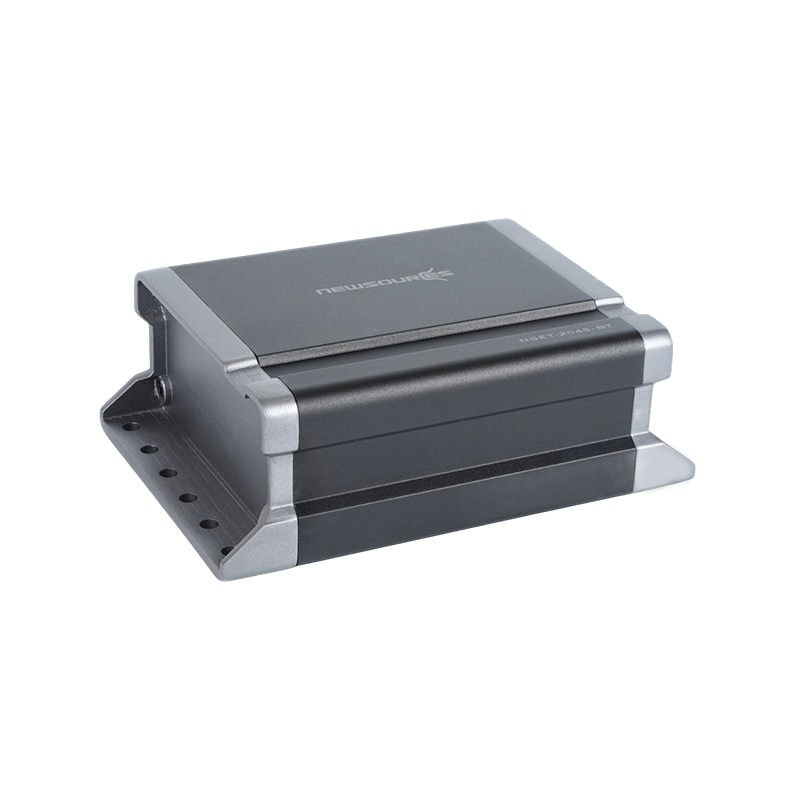

 EN
EN
 English
 Español
 عربى
عربىContent
- 1 Why a Motorcycle Amplifier Makes a Real Difference on the Road
- 2 How Motorcycle Amplifiers Differ from Car Audio Amplifiers
- 3 Key Specifications to Evaluate When Choosing a Motorcycle Amplifier
- 4 Amplifier Classes: Class A/B vs Class D for Motorcycles
- 5 Matching the Amplifier to Your Speakers and Head Unit
- 6 Installation Essentials: Wiring, Fusing, and Placement
- 7 Top Features to Look for in a Motorcycle Amplifier
Why a Motorcycle Amplifier Makes a Real Difference on the Road
The audio environment on a moving motorcycle is one of the most acoustically hostile settings imaginable for a sound system. Wind noise at highway speeds can exceed 90 decibels — roughly equivalent to standing near a lawnmower — and the combination of engine noise, road surface roar, and turbulence around the fairing creates a constant masking effect that overwhelms any audio source not powerful enough to cut through it. Factory-installed motorcycle audio systems, even on premium touring bikes from brands like Harley-Davidson, Indian, and Honda Gold Wing, frequently fall short of delivering genuinely satisfying sound at speed because the head unit's built-in amplification simply cannot generate the output level needed to overcome ambient noise without distortion.
A dedicated motorcycle amplifier solves this problem at its root. Rather than asking a head unit's internal amplifier — typically rated at 18–22 watts RMS per channel — to drive speakers to extreme levels where clipping and harmonic distortion occur, an external amplifier delivers clean, undistorted power at the levels required. The result is not just louder audio but cleaner, fuller sound with better bass response and midrange clarity at the volumes needed for highway listening. For riders who spend significant time on long tours or who simply want to enjoy music, podcasts, or navigation audio without straining, a properly matched amplifier is the most effective single upgrade to a motorcycle audio system.
How Motorcycle Amplifiers Differ from Car Audio Amplifiers
Many riders assume that a compact car audio amplifier can simply be relocated to a motorcycle with no further consideration. This assumption leads to failures, both electrical and mechanical, that could have been avoided. Motorcycle amplifiers are engineered around a set of operating constraints that car audio amplifiers are not designed to meet, and the differences are significant enough that purpose-built motorcycle amplifiers command a meaningful premium over equivalent car audio units — a premium that is justified by the hostile operating environment.
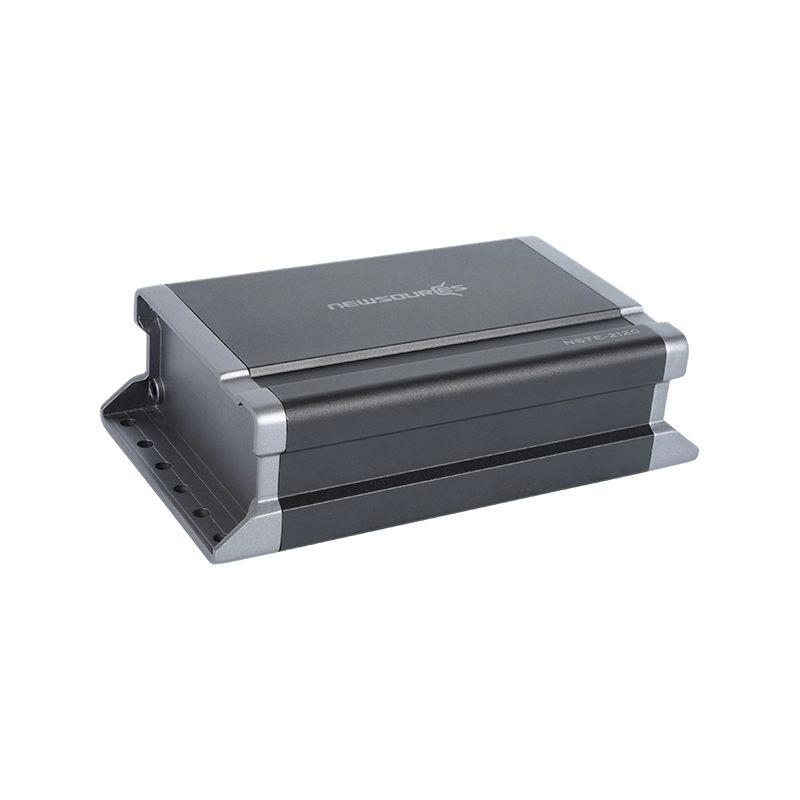
Weatherproofing and Environmental Resistance
A motorcycle amplifier must withstand direct rain, road spray, humidity, dust, and temperature extremes that a car amplifier installed in a boot or under a seat never encounters. Purpose-built motorcycle amplifiers carry IP (Ingress Protection) ratings — most commonly IP66 or IP67 — which specify the degree of protection against solid particles and water ingress. An IP66 rating means the amplifier is protected against powerful water jets from any direction, while IP67 adds protection against temporary immersion in water up to one metre depth. The circuit boards inside weatherproof motorcycle amplifiers are also conformal-coated — sealed with a thin protective lacquer that prevents corrosion from condensation and salt-laden air in coastal environments. Car amplifiers have none of these protections and will begin to corrode and fail within months if exposed to typical motorcycle operating conditions.
Compact Form Factor and Mounting Flexibility
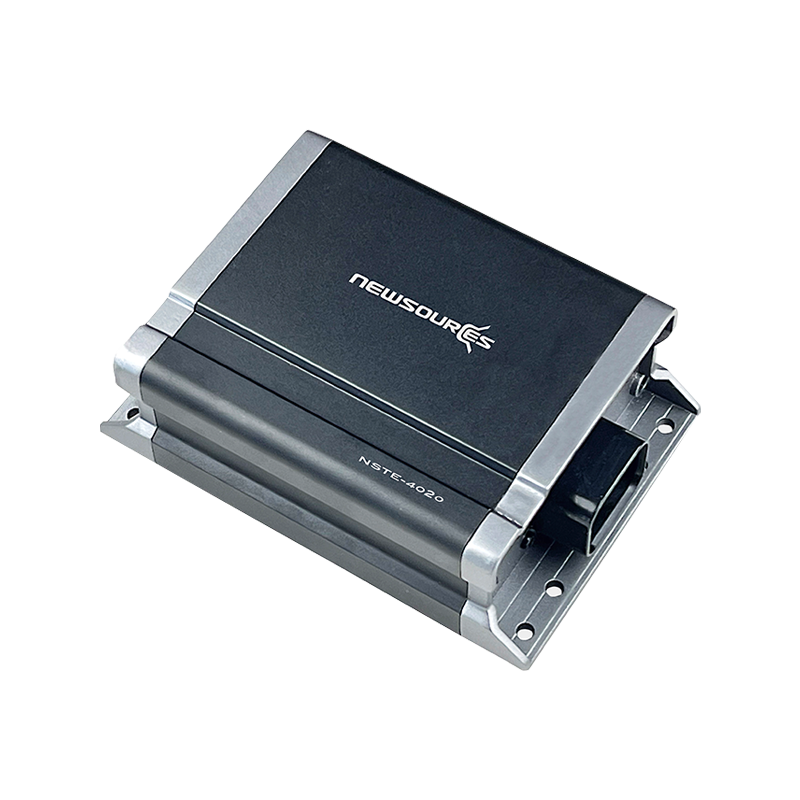
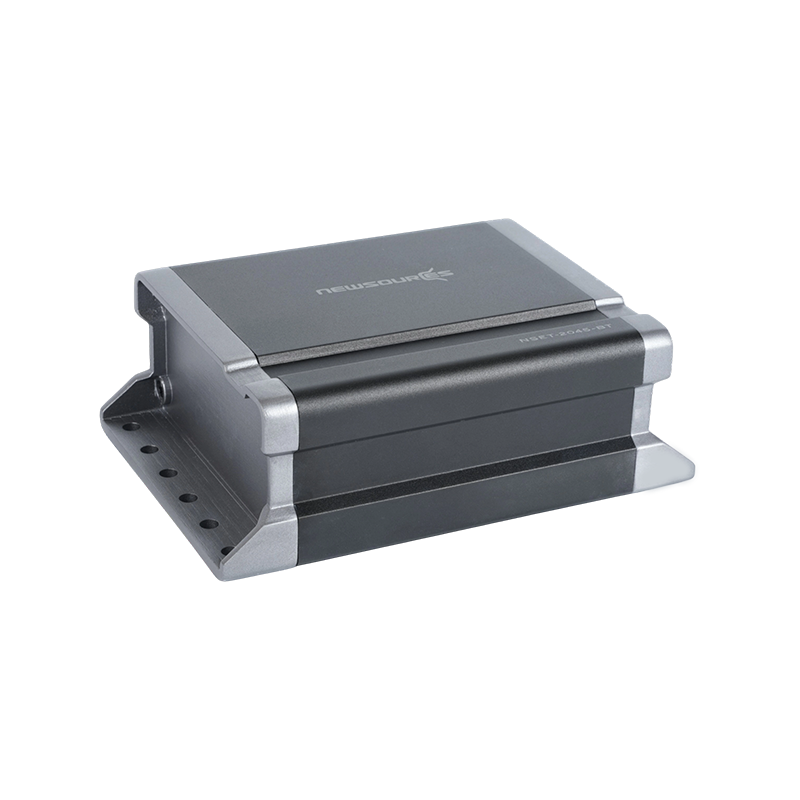
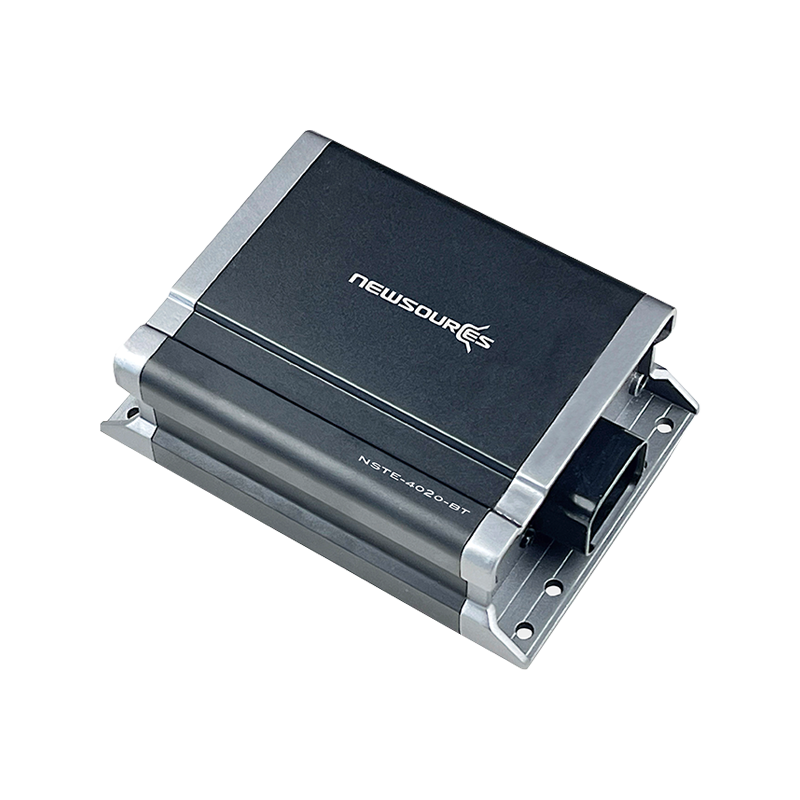
Space on a motorcycle is fundamentally different from space in a car. Motorcycle amplifiers are designed to fit in fairing cavities, under seats, inside saddlebags, or behind fairings — locations with dimensions far more constrained than a car boot. Many purpose-built motorcycle amplifiers use a flat, thin profile that allows them to be mounted against a surface with minimal projection, and they include multiple mounting flange configurations to accommodate different installation geometries. Some models are designed to mount directly to the speaker assembly or to integrate with the handlebar pod, reducing the need for dedicated amplifier mounting locations entirely.
Voltage Regulation and Noise Suppression
Motorcycle electrical systems produce significantly more electrical noise than automotive systems, primarily because the alternator and ignition system are in much closer physical proximity to the audio components. Alternator whine — a high-pitched tone that rises and falls with engine RPM — is the most common audio problem on motorcycle audio systems and is caused by insufficient filtering of the charging system's AC ripple from the DC supply. Purpose-built motorcycle amplifiers incorporate internal voltage regulation and heavy filtering on the power supply stage to reject this noise before it reaches the audio signal path. Car amplifiers without equivalent filtering will reproduce alternator whine as an audible artefact, requiring additional external filtering that adds cost and complexity to the installation.
Key Specifications to Evaluate When Choosing a Motorcycle Amplifier
| Specification | What It Means | Recommended Range |
| RMS Power per Channel | Continuous clean power delivered to each speaker | 40–100W RMS per channel |
| Total Harmonic Distortion (THD) | Measure of signal purity at rated power | ≤0.1% at rated power |
| Signal-to-Noise Ratio (SNR) | Ratio of audio signal to background noise floor | ≥85 dB |
| Input Sensitivity | Voltage range the amp accepts from the source unit | 200mV – 4V adjustable |
| Impedance Range | Speaker impedance the amp can drive stably | 2–8 ohms |
| IP Rating | Water and dust resistance level | IP65 minimum; IP67 preferred |
| Operating Temperature | Temperature range for safe continuous operation | -20°C to +80°C |
| Number of Channels | Separate amplified outputs | 2-channel (fairing speakers) or 4-channel (fairing + saddlebag) |
RMS power rating deserves particular attention because it is frequently misrepresented in product marketing. Peak power figures — sometimes labelled "max power" — are typically two to four times the RMS figure and represent a momentary burst the amplifier can sustain for a fraction of a second before thermal protection activates. An amplifier advertised as "400W" with 100W RMS per channel is being honest; one advertised as "400W" with no RMS specification is almost certainly quoting peak power for a unit producing considerably less continuous output. Always compare amplifiers on their RMS power ratings, not peak figures.
Amplifier Classes: Class A/B vs Class D for Motorcycles
Amplifier topology — the circuit architecture used to amplify the audio signal — directly affects efficiency, heat generation, and audio quality. Two classes dominate the motorcycle amplifier market: Class A/B and Class D.
Class A/B amplifiers operate by keeping the output transistors partially conducting at all times, transitioning between Class A operation at low power and Class B at higher power levels. This approach delivers excellent audio fidelity with very low crossover distortion but operates at 50–65% efficiency — meaning a significant proportion of the power drawn from the battery is dissipated as heat. On a motorcycle, this heat must be managed through the amplifier's heatsink, which needs adequate airflow. Class A/B amplifiers are preferred by audiophile-oriented riders who prioritise sound quality above all other factors and who install the amplifier in a location with reasonable ventilation.
Class D amplifiers use a switching output stage that turns the output transistors fully on and off at very high frequency (typically 300–500 kHz), modulating the pulse width to represent the audio waveform. This approach achieves efficiency of 85–95%, generating very little heat and placing far less load on the motorcycle's charging system. Modern Class D amplifiers have substantially closed the audio quality gap with Class A/B designs — high-quality Class D units are indistinguishable from Class A/B in blind listening tests at typical motorcycle listening levels. The combination of high efficiency, compact size, and low heat generation makes Class D the dominant technology in purpose-built motorcycle amplifiers.
Matching the Amplifier to Your Speakers and Head Unit
An amplifier that is mismatched to the speakers it drives will either underperform or damage the speakers — both outcomes are avoidable with straightforward calculations. The amplifier's RMS power per channel should be between 75% and 150% of the speaker's continuous power handling rating. Powering a speaker rated at 50W RMS continuous with an amplifier channel producing 40–75W RMS gives the speaker adequate headroom without risk of damage from sustained overdrive. Significantly underpowering speakers with a clipping amplifier — which occurs when a low-power amp is pushed past its limits — is actually more damaging to speaker voice coils than a higher-powered amplifier operating cleanly, because clipped waveforms convert amplifier distortion into heat in the voice coil.
Speaker impedance must also be matched to the amplifier's stable impedance range. Most motorcycle speakers are 4-ohm units; running a 4-ohm speaker on an amplifier rated for a minimum of 4 ohms is straightforward. Problems arise when riders wire two speakers in parallel to a single amplifier channel, halving the impedance to 2 ohms — if the amplifier is not rated for 2-ohm operation, it will overheat and activate thermal protection, producing audio dropouts during demanding passages.
The head unit's pre-amplifier output voltage — stated as its RCA output level — should fall within the amplifier's adjustable input sensitivity range. A head unit with a 4V RCA output connected to an amplifier with input sensitivity set for 200mV input will produce a severely overloaded, distorted signal. Most modern motorcycle head units output between 2V and 4V on their RCA outputs, and most amplifiers provide an adjustable input sensitivity trim that can accommodate this range — but verify compatibility before purchasing.
Installation Essentials: Wiring, Fusing, and Placement
Correct installation is as important as correct amplifier selection. Errors in wiring — particularly in grounding and power cable sizing — are responsible for the majority of amplifier failures, noise problems, and electrical faults in motorcycle audio installations.
- Power cable sizing: The power cable from the battery to the amplifier must be sized for the amplifier's maximum current draw. A 4-channel amplifier producing 50W RMS per channel draws approximately 20–25 amps at peak. Use at minimum 8 AWG cable for runs up to 3 metres; use 4 AWG for longer runs or higher-powered amplifiers. Undersized cable creates resistance, voltage drop, and a fire risk.
- Fusing: Install an in-line fuse holder within 30 cm of the battery terminal on the positive power cable. The fuse rating should match the amplifier's maximum current draw — not the wire's current capacity. This protects the wiring from a short circuit between the battery and the amplifier rather than relying on the vehicle's main fuse.
- Grounding: Ground the amplifier to a clean, bare metal chassis point as close to the amplifier as possible. A poor ground connection — through painted metal, a shared ground point with other accessories, or an undersized ground wire — is the most common cause of alternator whine and background hiss in motorcycle audio systems. The ground wire should be the same gauge as the power wire.
- Signal cables: Route RCA signal cables on the opposite side of the motorcycle from the power cables wherever possible. Running signal and power cables in parallel and in contact with each other induces electromagnetic interference into the audio signal, producing hum or buzz through the speakers.
- Placement and ventilation: Even a highly efficient Class D amplifier generates some heat and needs airflow around its heatsink surfaces. Avoid mounting the amplifier in a completely sealed, unventilated cavity. Under the seat with access to airflow from the frame area is generally a good location on most touring and cruiser motorcycles; inside a fairing cavity is workable if the amplifier is not pressed directly against foam or insulation.
- Vibration isolation: Mount the amplifier on rubber grommets or vibration-damping mounts rather than directly to the frame or fairing. Motorcycle vibration at idle and low speeds transmits directly through rigid mounts to the amplifier chassis, and over time can fatigue solder joints on the circuit board, particularly in amplifiers not specifically designed for the motorcycle environment.
Top Features to Look for in a Motorcycle Amplifier
Beyond the fundamental specifications of power, efficiency, and weatherproofing, several additional features significantly improve the real-world usability and performance of a motorcycle amplifier installation. When comparing products, the following capabilities are worth prioritising in your evaluation.
- Built-in high-pass and low-pass crossovers: Onboard crossover filters allow the amplifier to direct the appropriate frequency range to each speaker — high frequencies to fairing tweeters, midrange to main speakers — without requiring a separate crossover component in the signal path. Look for adjustable crossover frequency settings (typically 50–5,000 Hz sweep range) and selectable crossover slopes (12 dB/octave or 24 dB/octave).
- Bass boost control: A switchable bass boost at a fixed frequency (typically 45–80 Hz, 0–12 dB boost range) compensates for the bass rolloff that occurs at high riding speeds, where wind noise masks low-frequency content most severely. This should be used judiciously — excessive bass boost at low speeds produces a boomy, fatiguing sound character.
- High-level (speaker-level) inputs: Allows the amplifier to accept signal directly from the head unit's speaker outputs rather than requiring RCA pre-out connections. This is essential for integrating an amplifier with factory-installed head units that lack RCA outputs, which is a common constraint on OEM motorcycle audio systems.
- Thermal and short-circuit protection: Automatic shutdown on overtemperature and speaker short-circuit conditions protects both the amplifier and the speakers from damage. Verify that the amplifier indicates its protection status through an LED indicator so faults can be diagnosed quickly during a roadside inspection.
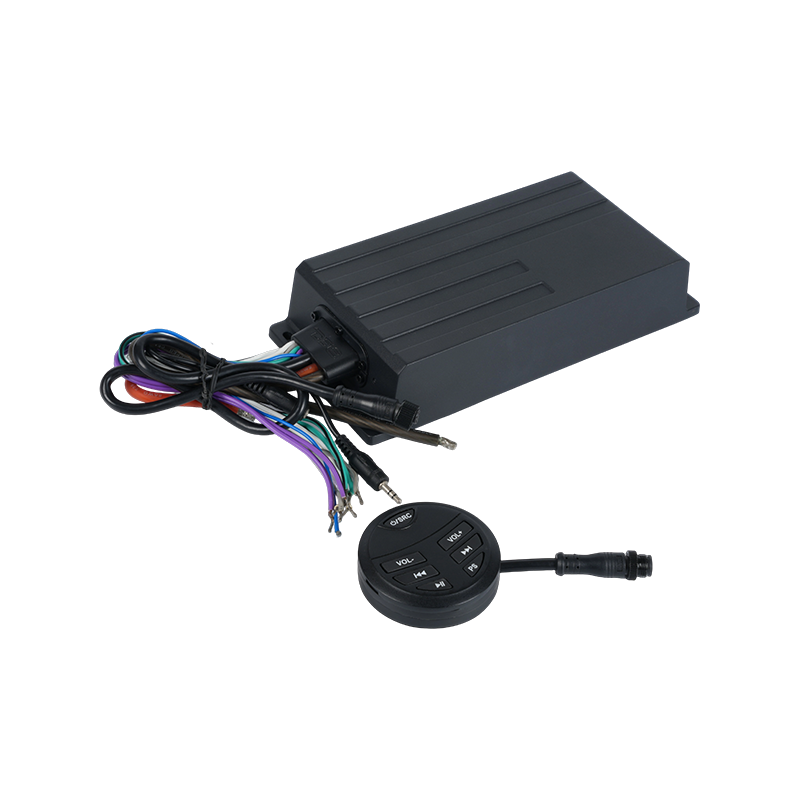
- Bluetooth audio input: Some compact motorcycle amplifiers integrate a Bluetooth receiver directly, eliminating the need for a separate head unit for riders who stream audio from a smartphone. This simplifies the installation significantly and reduces the number of powered components drawing from the motorcycle's electrical system.