
 EN
EN
 English
 Español
 عربى
عربىContent
- 1 What Is a Mono Block Class D Amplifier?
- 2 The Engineering Behind Class D Switching Topology
- 3 Why Choose Mono Block Configuration Over Stereo or Multi-Channel?
- 4 Key Specifications to Evaluate When Selecting a Mono Block Class D Amplifier
- 5 Applications: Where Mono Block Class D Amplifiers Excel
- 6 Common Misconceptions About Class D Audio Quality
- 7 Making the Right Choice: Matching a Mono Block Class D Amplifier to Your System
What Is a Mono Block Class D Amplifier?
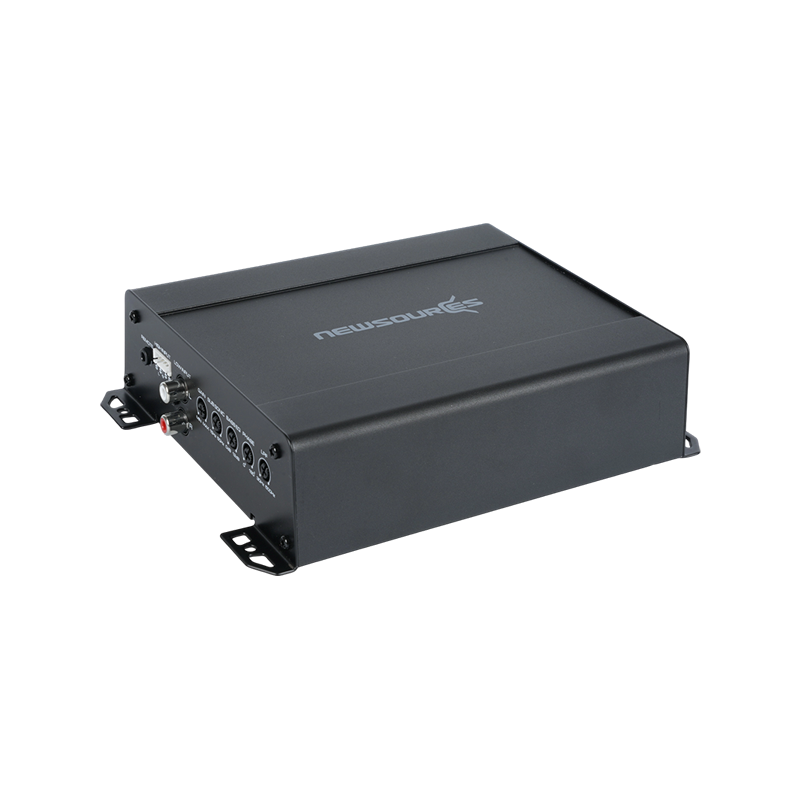
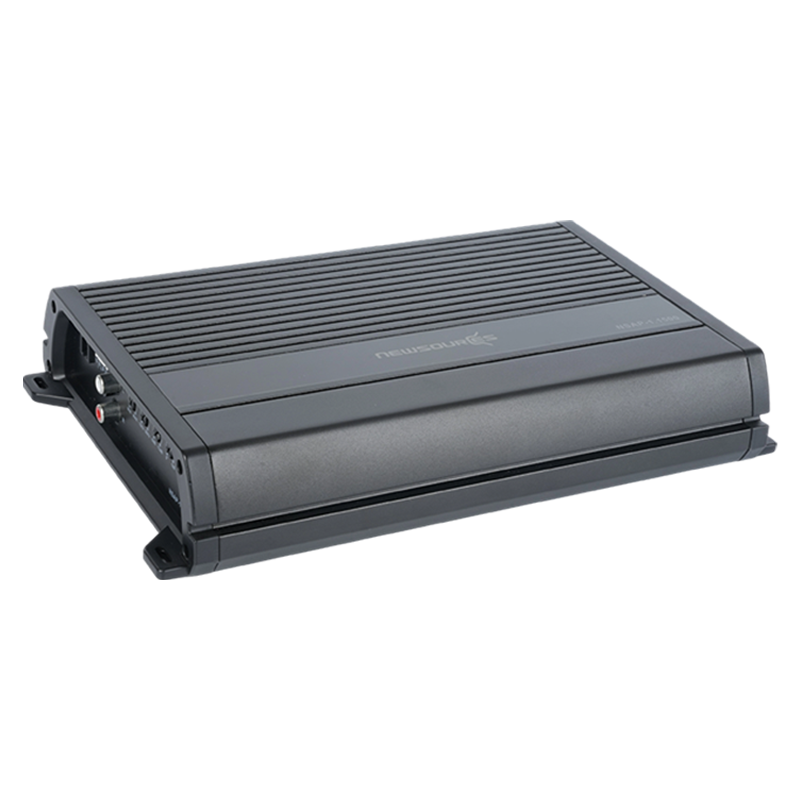
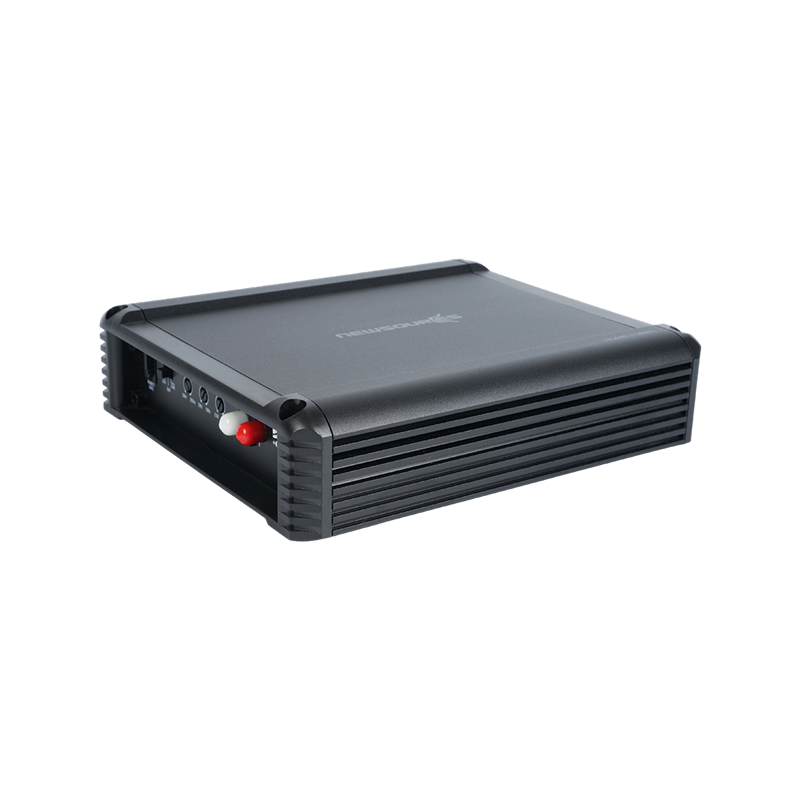
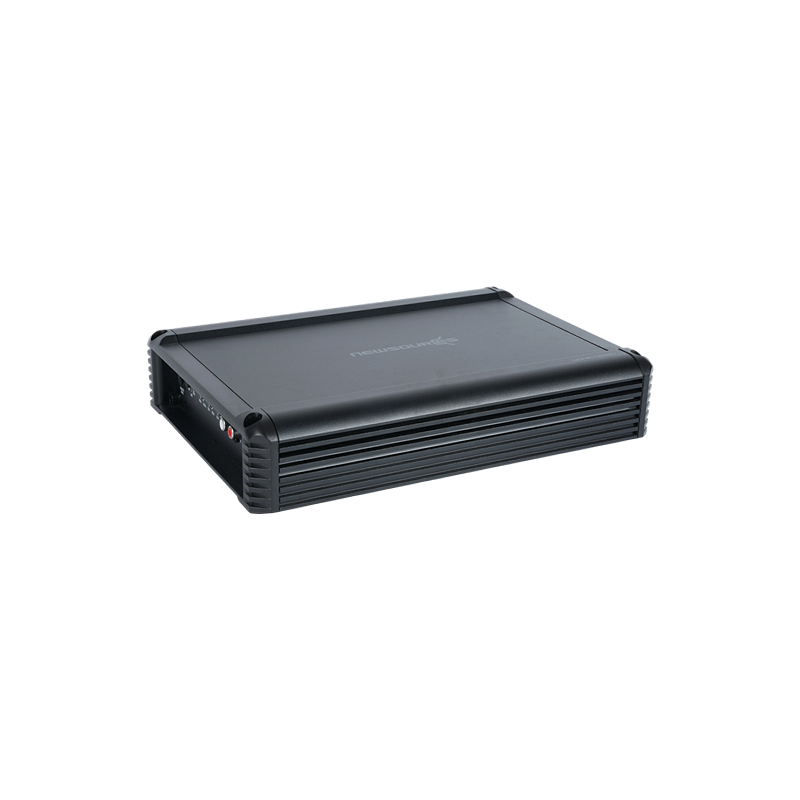
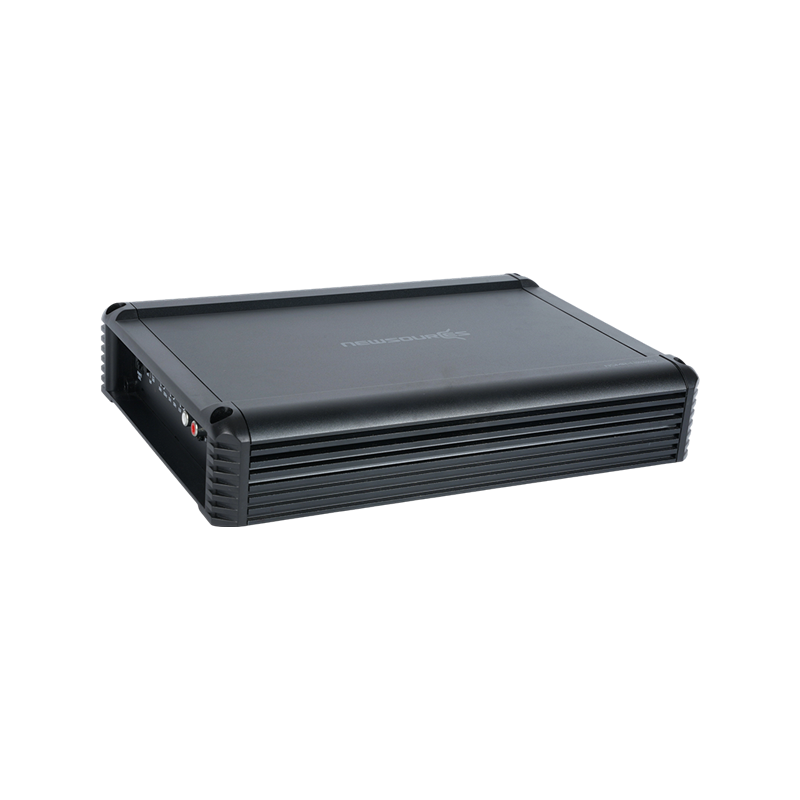
A mono block Class D amplifier is a self-contained, single-channel power amplifier that uses switching amplification technology to drive one loudspeaker or subwoofer with high efficiency and minimal thermal output. The term "mono block" refers to the physical and electrical architecture: each amplifier unit is dedicated entirely to one audio channel, housing its own power supply, input stage, switching output stage, and output filter within a single enclosure. This contrasts with stereo amplifiers, which share a common power supply and chassis between two channels, or multi-channel amplifiers, which divide resources across four or more outputs. When two mono blocks are used together — one per channel — each speaker receives a fully independent, dedicated amplification path with no shared resources that could introduce crosstalk or compromise dynamic headroom under load.
The Class D designation refers to the amplification topology used inside the unit. Unlike Class A, Class B, or Class AB amplifiers — which regulate output by controlling the continuous conduction of transistors — a Class D amplifier operates its output transistors as high-speed electronic switches, alternating between fully on and fully off states at frequencies typically between 300 kHz and 1.5 MHz. The audio signal is encoded in the duty cycle of these switching pulses through a process called pulse width modulation (PWM) or, in more advanced designs, sigma-delta modulation. A low-pass filter at the output reconstructs the analog audio waveform before it reaches the speaker terminals. Because the output transistors spend minimal time in the linear (partially conducting) region where power is dissipated as heat, theoretical efficiency can approach 90–98%, compared to 25–50% for Class AB designs.
The Engineering Behind Class D Switching Topology
Understanding how Class D amplification works at a circuit level helps audio engineers and enthusiasts evaluate product claims more critically and select designs that genuinely deliver on their specifications rather than relying on marketing alone.
Pulse Width Modulation and the Switching Stage
In a PWM-based Class D amplifier, the analog input signal is compared against a high-frequency triangular or sawtooth carrier wave inside a comparator circuit. When the input signal voltage exceeds the carrier, the comparator output goes high; when it falls below, the output goes low. This produces a train of pulses whose width — the proportion of time spent in the high state — varies in direct proportion to the instantaneous amplitude of the input signal. This pulse train drives a complementary pair of power MOSFETs or GaN (gallium nitride) transistors in a half-bridge or full-bridge (H-bridge) configuration, switching the output rail between the positive and negative supply voltages at the carrier frequency. The result is a high-voltage, high-current switching waveform at the speaker terminal that, after passing through an LC low-pass filter, closely approximates the original analog audio signal with very low distortion.
Output Filter Design and Its Sonic Impact
The output LC filter — an inductor and capacitor network — is one of the most critically engineered components in a Class D amplifier, and its design has a profound effect on both measured performance and perceived sound quality. The filter must attenuate the switching frequency and its harmonics by 60 dB or more to prevent radio frequency interference and protect the speaker voice coil from high-frequency heating, while simultaneously maintaining flat frequency response and low group delay across the entire audio band. The interaction between the output filter and the impedance of the connected speaker — which varies with frequency — can cause frequency response variations if the filter is not properly designed for the intended load impedance. This is why high-quality mono block Class D amplifiers specify performance measurements at defined load impedances (typically 4Ω or 8Ω) and may include output impedance correction or load-invariant feedback topologies to maintain response accuracy across different speaker loads.
Feedback Architecture and Distortion Control
Early Class D amplifiers suffered from relatively high distortion — particularly at high modulation depths and high frequencies — because the open-loop switching process introduced nonlinearities from dead-time distortion, MOSFET non-idealities, and power supply noise modulation. Modern high-performance mono block Class D designs address this through global negative feedback loops that sample the output signal after the LC filter and compare it to the input, correcting errors in real time. The bandwidth of this feedback loop determines how effectively high-frequency distortion components are suppressed. Some advanced designs — including those based on Bruno Putzeys' Ncore and Purifi Eigentakt platforms — achieve total harmonic distortion plus noise (THD+N) figures below 0.001% across the full audio band, competitive with or superior to the best Class AB amplifiers at a fraction of the thermal dissipation.
Why Choose Mono Block Configuration Over Stereo or Multi-Channel?
The mono block architecture offers several concrete performance and practical advantages over shared-channel designs that justify its higher cost and larger physical footprint in demanding audio applications.
- Fully independent power supplies: Each mono block has its own mains transformer or switch-mode power supply (SMPS), filter capacitors, and rectification. When one channel demands a large transient current peak — during a bass drum hit or orchestral climax — it draws entirely from its own reservoir without robbing the opposite channel of supply voltage. This eliminates the dynamic crosstalk that can occur in stereo amplifiers under high-load conditions, where one channel's transients modulate the shared rail voltage and appear as correlated noise in the other channel.
- Elimination of inter-channel crosstalk: Because the two channels share no circuit elements — not the power supply, not the ground plane, not the chassis grounding topology — there is no electrical path through which the signal or noise from one channel can contaminate the other. Measured channel separation in dual mono block setups routinely exceeds 100 dB, compared to 60–80 dB in well-designed stereo amplifiers, preserving the stereo image and spatial information encoded in the recording.
- Scalable headroom and power reserves: A mono block dedicated to a single channel can use the full thermal and electrical capacity of its enclosure for one speaker's demands. High-efficiency Class D topology allows very high continuous and peak power ratings — 500W, 1000W, or more per channel — in chassis that remain manageable in size and cool in operation, enabling mono blocks to effortlessly control loudspeakers with challenging impedance curves or low sensitivity ratings.
- Flexible placement: Because Class D mono blocks run cool and are typically compact relative to their power output, they can be placed near the loudspeakers — on the floor behind the speaker cabinet, on the speaker plinth, or even mounted to the speaker enclosure in active system designs. Short speaker cables reduce cable-induced losses and high-frequency rolloff, while longer interconnects from the preamplifier carry the low-current signal with less risk of degradation than long, high-current speaker runs.
- Simplified maintenance and fault isolation: In professional or critical listening environments, a fault in one mono block affects only one channel, leaving the other fully operational. Identifying and replacing or servicing the affected unit is straightforward compared to diagnosing a fault in a multi-channel amplifier where a shared power supply failure can disable all outputs simultaneously.
Key Specifications to Evaluate When Selecting a Mono Block Class D Amplifier
Specification sheets for Class D amplifiers require careful interpretation, as measurement conditions significantly affect the published numbers. The following table summarizes the most important specifications and what to look for in each:
| Specification | What It Measures | What to Look For |
| Continuous Power Output (W RMS) | Sustained power into rated load | Measured at 1% THD or less into 4Ω and 8Ω |
| THD+N (%) | Total distortion and noise at rated power | Below 0.01% at 1W and full power; check 1 kHz and 20 kHz |
| Signal-to-Noise Ratio (dB) | Noise floor relative to rated output | Above 110 dB A-weighted; confirm unweighted figure |
| Frequency Response (Hz) | Bandwidth within ±0.5 dB or ±3 dB | Flat 20 Hz–20 kHz; check load dependency |
| Damping Factor | Output impedance vs. load impedance ratio | Above 500 into 8Ω at 1 kHz for tight bass control |
| Efficiency (%) | Electrical power converted to audio output | 85–98% at rated power; check idle consumption |
| Input Sensitivity and Impedance | Input voltage for full power; loading on source | Match to preamplifier output; ≥10 kΩ input impedance preferred |
Applications: Where Mono Block Class D Amplifiers Excel
The combination of high power density, thermal efficiency, and single-channel dedication makes the mono block Class D amplifier an exceptionally versatile tool across a wide range of audio applications, from domestic high-fidelity listening rooms to large-scale professional installations.
High-End Home Audio and Two-Channel Stereo
In serious two-channel listening rooms, a pair of mono block Class D amplifiers positioned close to their respective speakers represents one of the cleanest possible signal paths from preamplifier to driver. Audiophile-grade Class D platforms such as Purifi Eigentakt, Hypex Ncore, and Pascal modules — available both as finished products and as OEM modules used by boutique amplifier manufacturers — deliver measured performance that challenges the finest linear amplifiers while consuming a fraction of the mains power and generating very little heat. This makes them practical in domestic environments where dedicated cooling infrastructure is neither desirable nor feasible.
Subwoofer Amplification
Subwoofer applications are an ideal match for Class D mono block amplifiers because bass reproduction demands very high continuous power levels — often 500W to 2000W — to move large driver cones with sufficient excursion at low frequencies. The high efficiency of Class D topology means that even at 1000W output, the amplifier module may dissipate only 50–100W as heat, making it practical to integrate the amplifier plate directly into the subwoofer enclosure without thermal problems. Virtually all modern powered subwoofers — from home theater models to professional concert subwoofers — use Class D amplification, with mono block designs providing the highest power levels in the most compact and thermally manageable form.
Professional Live Sound and Installation Audio
Live sound reinforcement systems require amplifiers that can deliver enormous instantaneous power for hours on end, in environments without climate control, where weight and rack space are directly related to transportation and installation cost. Class D mono blocks — either as discrete chassis or as high-density rack amplifiers with multiple mono block modules — provide the power-to-weight ratio and thermal manageability that make touring and fixed installation at scale feasible. DSP-integrated mono block Class D amplifiers additionally offer loudspeaker management, crossover filtering, delay alignment, and protection limiting within the amplifier itself, eliminating external signal processing hardware and simplifying system architecture in complex multi-way installations.
Common Misconceptions About Class D Audio Quality
Despite the substantial advances in Class D amplifier performance over the past two decades, several persistent misconceptions continue to influence purchasing decisions — often leading buyers to overlook designs that would objectively serve their systems better.
- "Class D sounds harsh or digital": This criticism was valid for early Class D designs with limited feedback bandwidth and high switching noise. Modern implementations with global feedback loops, GaN switching devices, and careful output filter design measure and sound indistinguishable from — or superior to — high-quality Class AB amplifiers in controlled blind listening tests. The switching process itself operates far above the audible frequency range and has no inherent impact on the tonal character of the amplified signal.
- "High efficiency means compromised sound quality": Efficiency and audio quality are independent engineering parameters. The same feedback and output stage design disciplines that produce high efficiency also reduce distortion and output impedance. A well-engineered Class D amplifier can simultaneously achieve 95% efficiency, 0.001% THD+N, and a damping factor above 1000 — there is no fundamental trade-off between these targets.
- "Class D amplifiers interfere with radio reception": Poorly shielded or cheaply constructed Class D amplifiers can radiate electromagnetic interference in the AM and FM broadcast bands. However, quality mono block Class D designs include EMI filtering on the mains input, shielded enclosures, and output filter designs that reduce switching harmonics well below regulatory limits set by FCC Part 15 and CE/EN 55032 standards. Proper installation with quality, shielded interconnects eliminates any residual interference concern in practical installations.
Making the Right Choice: Matching a Mono Block Class D Amplifier to Your System
Selecting the optimal mono block Class D amplifier requires aligning the amplifier's electrical characteristics with the specific demands of the connected loudspeaker and the upstream signal chain. Begin by confirming the nominal impedance and sensitivity of your loudspeaker — an 87 dB/W/m speaker in a large room may require 200–500W per channel to achieve realistic dynamic headroom, while a 95 dB/W/m horn-loaded design may be fully driven by 50W with low noise floor requirements. Match the amplifier's input sensitivity to the output voltage swing of your preamplifier or DAC, and confirm that the amplifier's input impedance is high enough not to load the source excessively.
Review the amplifier's performance measurements at the specific load impedance of your speaker, not just at the nominal 8Ω figure that most manufacturers quote for headline specifications. A speaker that dips to 3Ω in the bass region will draw nearly three times the current at that impedance, and the amplifier must maintain its distortion and stability specifications into this load without engaging protection circuits or compressing dynamics. Requesting measurements from independent review sources — or from the manufacturer at 4Ω and 2Ω loads — provides a more complete picture of real-world performance than the single headline specification figure alone. With this information in hand, a mono block Class D amplifier can be matched to a loudspeaker system with confidence that the result will be both technically correct and sonically rewarding.