
 EN
EN
 English
 Español
 عربى
عربىContent
- 1 Understanding the Fundamental Role of Amplification in Audio Systems
- 2 What a Preamp Does and Why It Matters
- 3 What a Power Amp Does and Why Signal Voltage Is Not Enough
- 4 Preamp vs Power Amp: Core Differences at a Glance
- 5 When to Use Separates vs an Integrated Amplifier
- 6 Practical Applications: Where Each Component Type Shines
- 7 Matching Preamps and Power Amps for Optimal System Performance
Understanding the Fundamental Role of Amplification in Audio Systems
Every audio system — whether a home hi-fi setup, a professional recording studio, a live sound reinforcement rig, or a guitar amplifier — relies on amplification to take a weak electrical signal and make it powerful enough to drive loudspeakers and produce audible sound. However, amplification is not a single process. It actually occurs in two distinct stages, each handled by a different type of component: the preamplifier (preamp) and the power amplifier (power amp). These two stages serve completely different functions in the signal chain, and understanding what each one does — and what happens when you get the combination wrong — is fundamental to building or operating any audio system that performs well.
The confusion between preamps and power amps is extremely common, particularly among people setting up their first serious audio system or moving from consumer-grade all-in-one equipment to separates. Many integrated amplifiers combine both stages in a single chassis, which masks the functional distinction between them. Once you understand what each stage is responsible for, you will be far better equipped to diagnose problems, make informed purchasing decisions, and optimize the performance of any audio system you work with.
What a Preamp Does and Why It Matters
A preamplifier — preamp — sits at the beginning of the signal chain, before the power amplifier. Its primary job is to take a very low-level signal from a source device and amplify it to a standardized line level that is strong enough to drive the input of a power amplifier effectively. Without a preamp, the signal from a microphone, a phono cartridge on a turntable, or a guitar pickup would be far too weak to feed a power amplifier with sufficient voltage swing, resulting in an output that is either extremely quiet or badly distorted as the power amp struggles with an inadequate input signal.
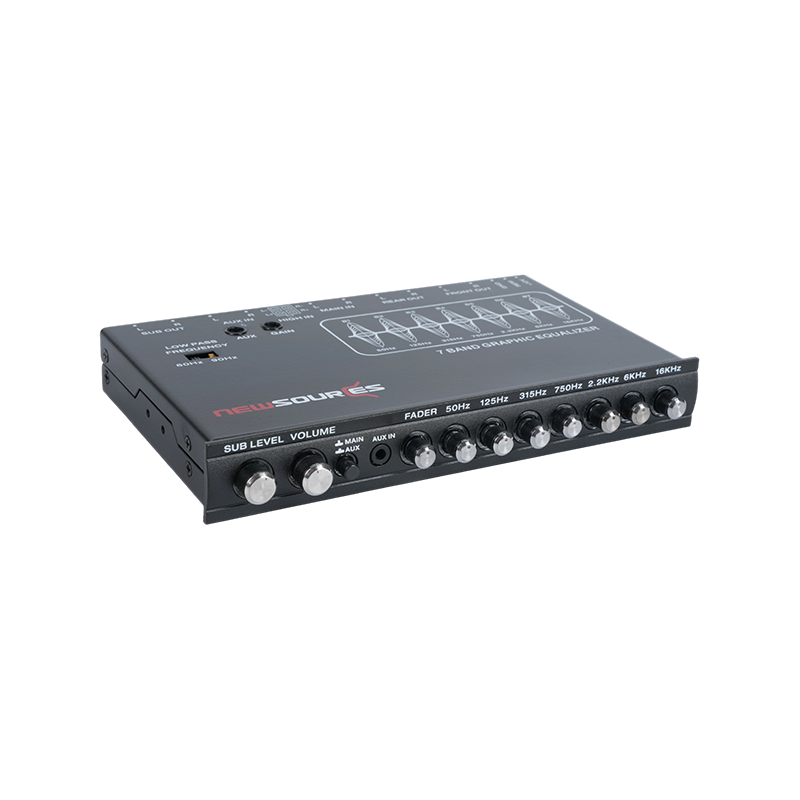
Beyond simple voltage amplification, a preamp performs several other critical functions that shape the character and usability of the audio system. Input selection allows the user to choose between multiple source devices — a turntable, a CD player, a streaming device, a tape deck — and route the selected signal to the output. Volume control in the preamp stage determines how much signal is fed to the power amplifier, which in turn controls the final loudness of the system. Tone controls or equalizers, when present, are implemented in the preamp stage because this is where the signal is at line level and can be processed with precision circuits before amplification to high power.
Phono Preamps: A Specialized Case
The phono preamplifier is a specialized preamp designed specifically for the signal produced by a turntable's cartridge. Phono cartridges produce an output signal that is not only extremely low in voltage — typically 0.2 mV to 5 mV depending on cartridge type — but also requires a specific frequency correction called the RIAA equalization curve to be applied. During the vinyl mastering process, bass frequencies are reduced and treble frequencies are boosted to fit more music onto a record and reduce surface noise. The phono preamp reverses this equalization during playback, simultaneously amplifying the signal and applying the RIAA correction curve. Without a phono preamp, a turntable connected directly to a line-level input will produce a tinny, bass-deficient sound at very low volume — a common mistake when people try to connect a turntable to a system that lacks a built-in phono stage.
Microphone Preamps in Recording
In recording studio contexts, the microphone preamplifier is one of the most critically important components in the signal chain. Microphones — particularly condenser and ribbon microphones — produce very low output voltages that must be amplified by 40 dB to 70 dB or more before they reach a usable line level. The quality of this amplification has a profound effect on the character of the recorded sound. High-quality mic preamps with low noise floors, wide frequency response, and low distortion preserve the natural character of the microphone and the source. Vintage-style transformers-based preamps add warmth and harmonic color that many recording engineers seek for specific applications. The preamp is often where the sonic character of a recording is established — a fact that explains why professional studios invest heavily in multiple high-quality outboard preamps even when recording interfaces include built-in preamp stages.
What a Power Amp Does and Why Signal Voltage Is Not Enough
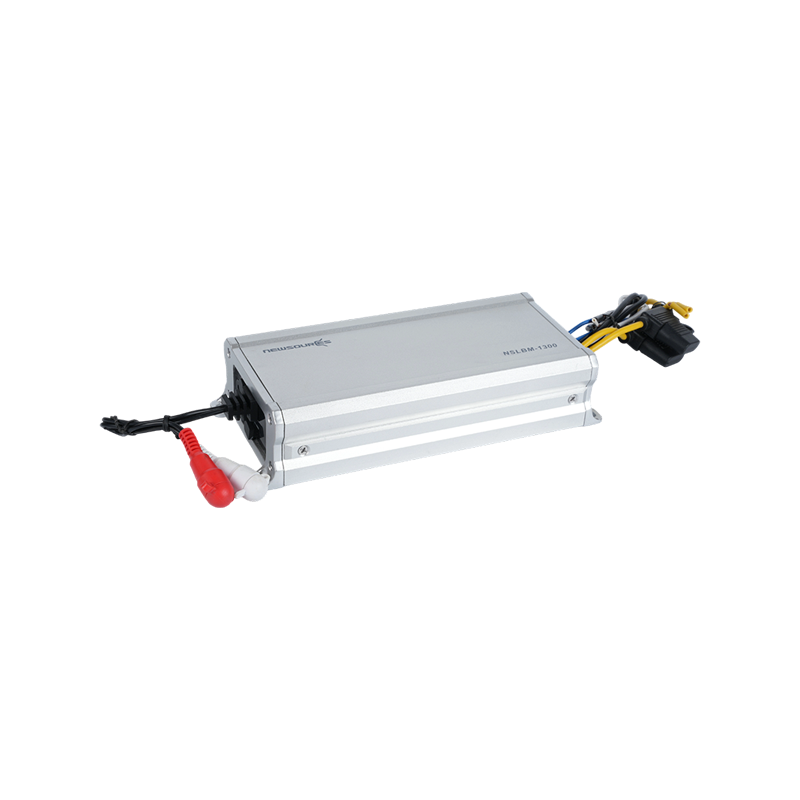
A power amplifier receives the line-level signal from the preamp — which typically has enough voltage swing but very little current capacity — and amplifies it in terms of both voltage and current to a level that can drive loudspeakers. Loudspeakers are low-impedance loads, typically 4 to 8 ohms, that require significant electrical current to move their voice coils and produce sound at useful volumes. A preamp output can provide perhaps a few milliamps of current — nowhere near enough to drive a speaker. The power amplifier's job is to multiply the current capacity of the signal dramatically, providing watts of actual power output rather than the microwatts available at the preamp stage.
The power output rating of a power amplifier — measured in watts per channel into a specified impedance — determines how loud the system can play and how much headroom is available before the amplifier clips. Clipping occurs when the amplifier is asked to deliver more power than its supply rails can support, causing the tops and bottoms of the audio waveform to be flattened. Clipping produces harsh, distorted sound and can damage tweeters in loudspeakers because clipped waveforms contain large amounts of high-frequency harmonic energy. Selecting a power amplifier with adequate headroom for the efficiency of your loudspeakers and the listening levels you require is a critical specification decision — more so than many people appreciate when they focus exclusively on the preamp side of the system.
Class A, Class AB, and Class D Power Amplifiers
Power amplifiers are categorized by their operating class, which describes how the output transistors or tubes conduct current during the audio cycle. Class A amplifiers conduct through the full 360 degrees of the waveform — both output devices are always active — producing the lowest distortion and most linear response but with very low efficiency (typically 25% or less), meaning they generate significant heat and require large power supplies. Class AB amplifiers — the most common type in hi-fi and professional audio — use a small bias current to keep both output devices operating near their conduction threshold, providing much better efficiency (typically 50–70%) while maintaining low distortion at normal listening levels. Class D amplifiers use high-frequency pulse-width modulation to achieve efficiencies of 85–95%, making them extremely compact and cool-running, which is why they dominate the market for subwoofer amplifiers, portable PA systems, and modern integrated amplifiers where size and power consumption are priorities.
Preamp vs Power Amp: Core Differences at a Glance
The table below summarizes the fundamental differences between preamps and power amps across the key parameters that matter for system design and component selection:
| Parameter | Preamplifier | Power Amplifier |
| Primary function | Signal conditioning and voltage gain | Current amplification to drive speakers |
| Input signal level | Mic level (mV) or phono level (mV) | Line level (typically 0.775V – 2V RMS) |
| Output | Line-level voltage signal (low current) | High-current signal in watts |
| Controls user functions | Yes — volume, input selection, tone | Rarely — sensitivity trim only |
| Connects directly to speakers | No | Yes |
| Heat and power consumption | Low | High (especially Class A) |
| Key quality metric | Noise floor, gain accuracy, RIAA accuracy | Power output, THD, damping factor |
When to Use Separates vs an Integrated Amplifier
An integrated amplifier combines the preamp and power amp stages in a single chassis, sharing a common power supply and housing. This approach is more convenient, less expensive to manufacture, and takes up less space — which explains why integrated amplifiers dominate the consumer hi-fi market and most entry-to-mid-level home audio applications. For the majority of listeners in domestic environments, a well-designed integrated amplifier delivers excellent performance at a lower cost than equivalent separate components.
The case for separate preamps and power amps becomes compelling in specific circumstances. In professional audio and live sound reinforcement, separates are the standard approach because they allow independent upgrading of each stage, better physical placement (power amps can be rack-mounted near speaker arrays while preamps remain at the mixing position), and easier maintenance and replacement in a working system. In high-end hi-fi, separates allow audiophiles to match preamp character with power amp capability — pairing a warm, tube-based preamp with a high-power solid-state power amp, for example — in ways that are impossible with integrated designs. Separates also eliminate the interaction between the high-current power supply of the power amp stage and the sensitive low-level circuitry of the preamp stage, which in some integrated designs causes subtle but audible interference.
Practical Applications: Where Each Component Type Shines
Understanding which scenarios call for dedicated preamps, dedicated power amps, or specific combinations helps clarify the practical value of each component type beyond theoretical descriptions.
- Home Hi-Fi with a Turntable: A dedicated phono preamp is essential if your integrated amplifier or receiver lacks a built-in phono stage. Many modern receivers omit phono inputs entirely. A standalone phono preamp connects between the turntable and any line-level input, restoring full turntable compatibility and often improving sound quality over built-in phono stages in budget equipment.
- Recording Studio Microphone Chain: A high-quality standalone microphone preamp — or a rack of multiple preamps — is one of the most impactful investments a recording studio can make. Even modest improvements in preamp quality are clearly audible in recorded vocals and acoustic instruments, where the preamp's noise floor, headroom, and frequency response directly affect the character of the captured sound.
- Passive Speaker Systems with Active Sources: When using passive loudspeakers with a streaming device or DAC that outputs line-level audio, a power amplifier alone is sufficient if a volume control is integrated into the source device. However, if multiple sources need to be switched and volume controlled independently of the source, a preamp becomes necessary as the system control center.
- Guitar and Instrument Amplification: Guitar amplifiers are a specialized application where the preamp and power amp stages have distinctly different sonic contributions. Many guitarists use preamp pedals or rack preamps to achieve their core tone and drive characteristics, then route that signal into a clean power amplifier — a configuration known as a preamp-power amp rig — for maximum tonal flexibility and consistency across different venue systems.
- Live Sound and PA Systems: In live sound reinforcement, mixing consoles function as the system preamp — providing mic preamps for each input channel, level control, EQ, and routing. The mixed output feeds dedicated power amplifiers that drive the main speakers, monitors, and subwoofers. This separation is fundamental to professional live audio system design and allows each stage to be independently sized and optimized for its specific function.
Matching Preamps and Power Amps for Optimal System Performance
When using separate preamp and power amp components, ensuring electrical compatibility between the two is essential for achieving the best possible performance. The output impedance of the preamp and the input impedance of the power amp must be properly matched — the general rule is that the power amp's input impedance should be at least ten times higher than the preamp's output impedance to ensure adequate signal transfer without high-frequency roll-off or loading distortion. Most professional and hi-fi components are designed with this in mind, but it is worth verifying specifications when combining equipment from different manufacturers or different eras.
The sensitivity of the power amplifier — the input voltage required to drive it to full output — must also be compatible with the output level of the preamp. A power amplifier with a sensitivity of 1V RMS will reach full power output when the preamp delivers 1V — which is well within the capability of most line-level preamp outputs. Mismatches in this area result either in insufficient system gain (the volume can never get loud enough) or in a system where the volume control must be used at very low settings, placing the volume pot in a range where channel balance and noise performance are poor. Checking these specifications before purchasing components for a separates system prevents frustrating compatibility problems that are difficult to diagnose without understanding what causes them.