
 EN
 English
 Español
 عربى
Content
- 1 What a Car Audio Amplifiers Factory Actually Does
- 2 Product Range and Production Logic
- 3 From SMT to 100% Burn-In: How Quality Is Built
- 4 Matching Amplifiers to Real Vehicles
- 5 Accessories and the Signal Chain
- 6 What to Ask a Car Audio Amplifiers Factory Before You Commit
- 7 Why Experience Still Matters in a Crowded Amplifier Market
Searching for a car audio amplifiers factory usually starts with a simple need: a manufacturing partner who can deliver consistent amplifiers at a workable price. The deeper question is whether that factory understands the whole audio chain—power, signal, speakers, vehicles and installation realities. At Newsources, we have built car and marine audio electronics since 1997, and the best sourcing conversations are always practical and grounded in how products are actually made.
What a Car Audio Amplifiers Factory Actually Does
An amplifier factory is not only an assembly hall. It is where electrical design, component sourcing, PCB layout, thermal planning, protection circuits, mechanical fit and testing meet. A factory that only screws boards into cases can assemble a product, but it cannot reliably solve the problems that appear in a hot trunk, a damp boat compartment or a motorcycle fairing.
That is why the production plan begins before the first solder joint. Engineers match the amplifier class to the market, choose connectors and controls that suit the installation, and define test limits that catch problems early. A real factory has to manage both Class D and Class A/B builds, because each brings different thermal and component-consistency requirements.
| Family | Common configurations | What it asks of the factory |
|---|---|---|
| Class D entry level | 1, 2, 4 and 5 channels | Compact boards, cost control and stable thermal behaviour |
| Class D high power | 1, 2, 4 and 6 channels | Heatsink design, protection circuits and burn-in discipline |
| Class A/B | 2 and 4 channels | Linear output consistency and careful heat management |
| Marine and powersport | 2 to 8 channels, IPX4 to IPX7 | Sealing, material choice and water-exposure testing |
| Mini and Bluetooth | 2 and 4 channels | Small chassis, wireless integration and noise control |
For buyers, this matters because the cheapest quotation may not include the work that keeps returns low. Ask how the factory validates heat, load, protection and long-term reliability before a model enters the catalogue.
Product Range and Production Logic
Our car amplifier programme covers several practical starting points: Class D entry-level models, high-power Class D, Class A/B designs and compact mini amplifiers. This range matters because buyers rarely need one amplifier type for every vehicle and every price point.
 Car Amplifier Range for Practical UpgradesCompare Class D entry-level, high-power, Class A/B and mini amplifiers to match different vehicles, system demands and price points.View Product →
Class D has become the default for many daily-driver upgrades because it runs cooler and packs more output into a smaller footprint. Our entrance-level line includes 1-, 2-, 4- and 5-channel models such as the NSXP1-500, NSXP2120, NSXP4120 and NSXP5800.
For projects needing more headroom, the high-power line includes the NSAP1-1500, NSAP2300, NSAP4200 and NSAP6100. These models are aimed at systems where subwoofers, multiple speakers and long listening sessions put more demand on thermal and protection design.
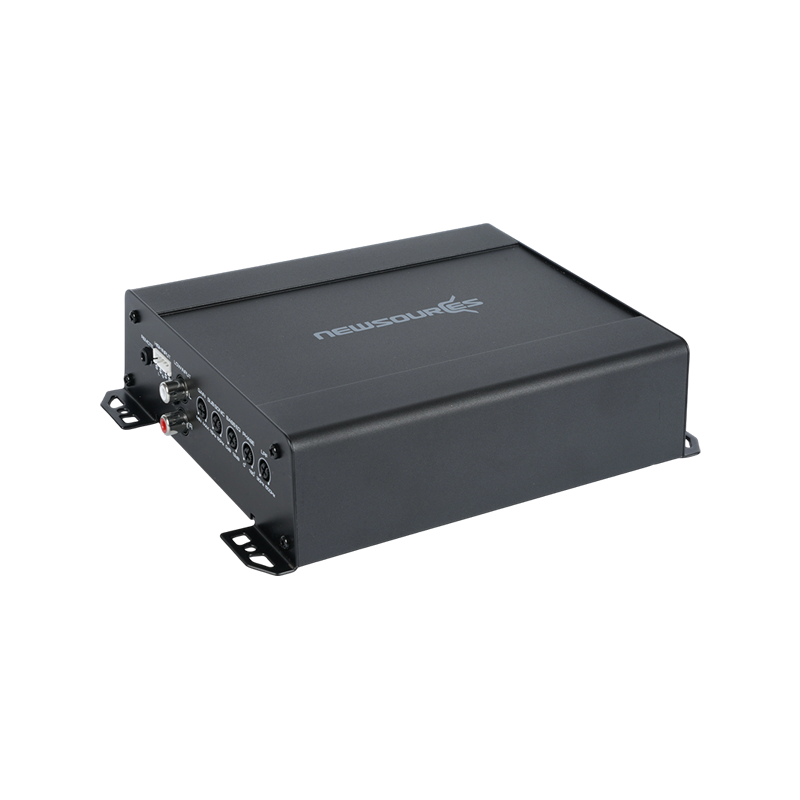
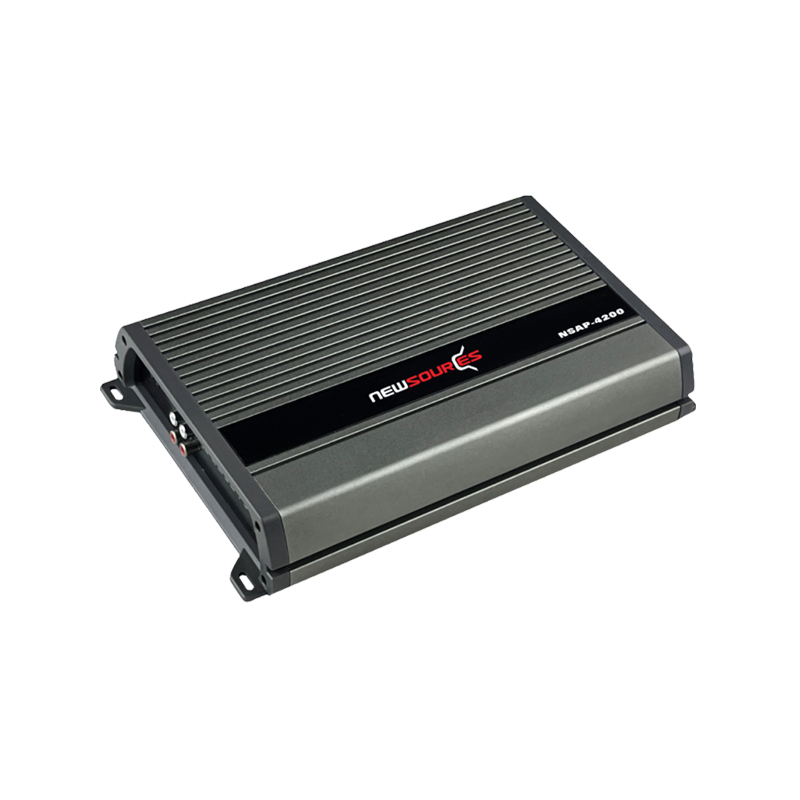 NSAP-4200 4-Channel Class D High-Power AmplifierDelivers 4 x 150W RMS at 4 ohms and 4 x 200W at 2 ohms, with 2/4-channel input, adjustable crossover and protection for multi-speaker systems.View Product →
Class A/B still has a place in builds where buyers prefer a familiar linear character, and our range includes models such as the NSMR4075. Mini amplifiers are another important category for tight installations, including the NSM2020, NSM2120, NSM4020 and AM2015.
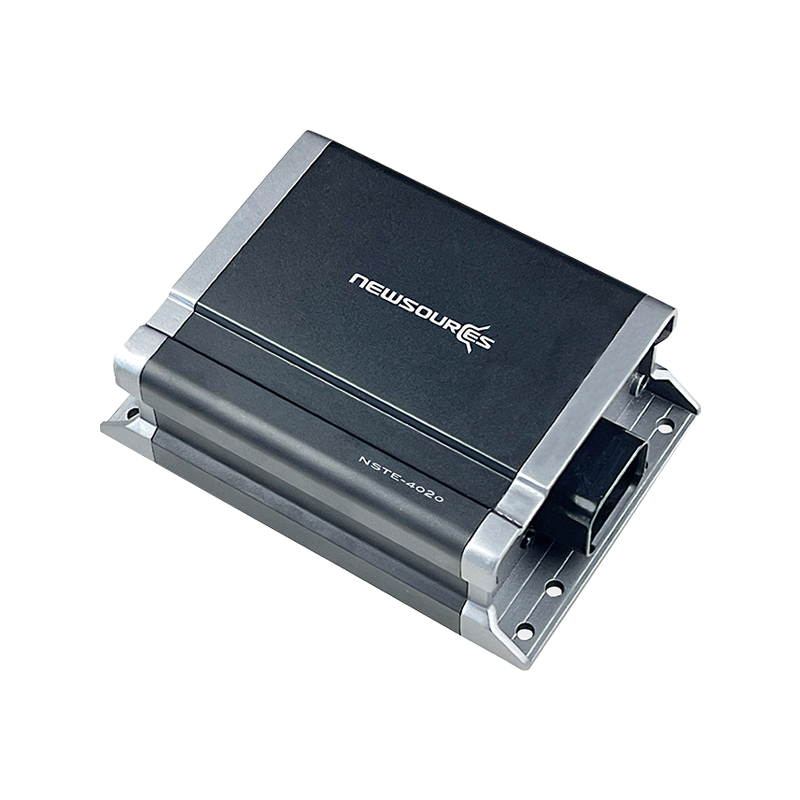
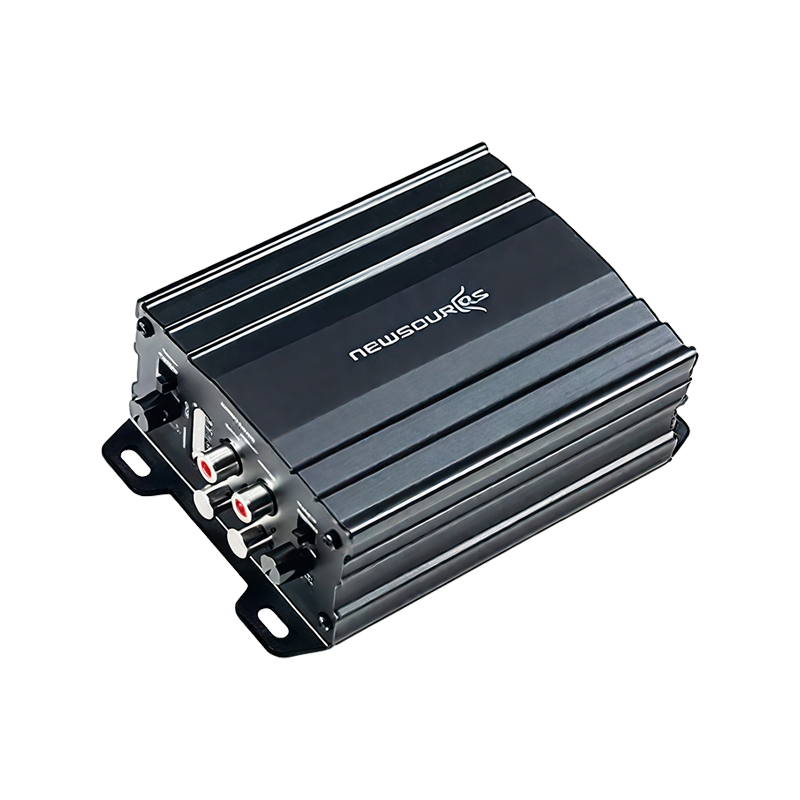 NSM-4020 4-Channel Mini Class D AmplifierCompact 4 x 20W RMS at 4 ohms with high/low-level input, adjustable HPF/LPF and signal sensing for tight vehicle installations.View Product →
Because compact amplifiers sit close to the dashboard or in tight cavities, they demand careful thermal design and noise control. If you are comparing formats, our article on mini car amplifiers versus full-size amplifiers explains the trade-offs in more detail.
From SMT to 100% Burn-In: How Quality Is Built
Amplifier quality is usually decided by ordinary process discipline, not by a single impressive machine. Buyers should look for a factory that controls each stage from incoming parts to final burn-in.
- Incoming component checks before parts reach the line.
- SMT placement with AOI inspection for solder and placement errors.
- Wave soldering and assembly with in-process checks.
- AP testing to confirm output and basic electrical performance.
- 100% burn-in to expose early failures before packing.
- Final inspection, labelling and export packaging.
Our own facilities in Hangzhou, Deqing and Cambodia give us more than 37,000 square metres of manufacturing space, with over 150 employees and more than 15 assembly lines. The numbers are useful, but the habits behind them matter more: SMT, AOI inspection, wave soldering, AP testing and 100% burn-in are part of the routine, not an optional final flourish.
We also benefit from teams with long production experience. A stable line can spot a solder issue, a noisy channel or a fit problem before it becomes a batch problem. That kind of attention is difficult to put in a brochure, but buyers feel it in defect rates and delivery consistency.
Matching Amplifiers to Real Vehicles
A car amplifier cannot simply be moved to a boat or a motorcycle and expected to last. Water exposure, vibration, salt air, heat and space constraints all change the design brief. That is why we separate car, marine and powersport families instead of treating them as cosmetic variations.
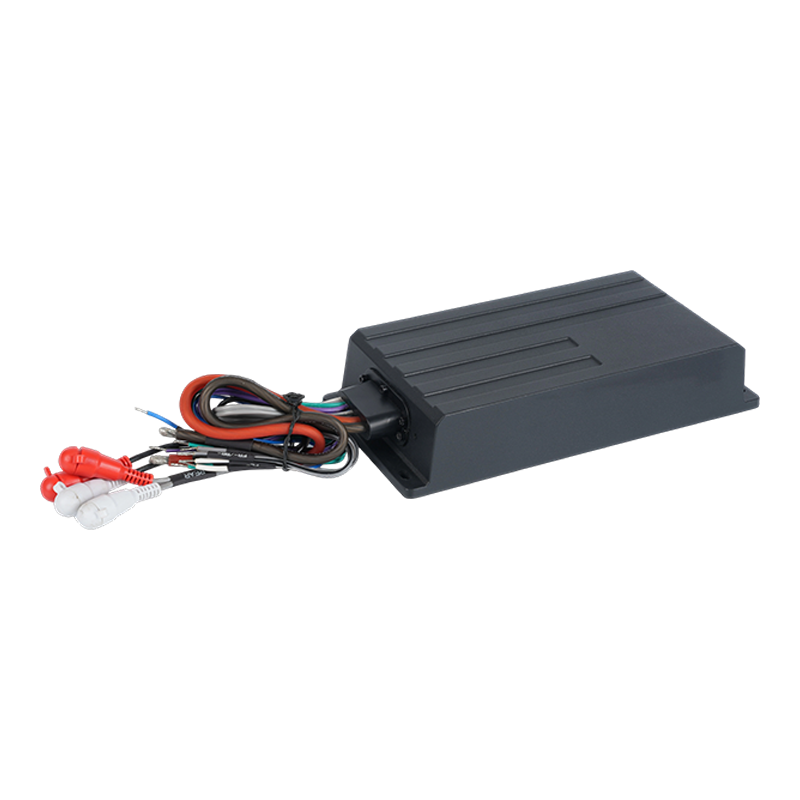
For marine systems, multichannel amplifiers and DSP marine models support multi-speaker layouts where clean power and signal control matter. For powersport and motorcycle applications, IPX5/IPX4 and IPX6/IPX7 options help buyers match the product to the level of water and dust exposure. The higher rating is not a marketing badge; it should reflect sealing, materials and test practice.
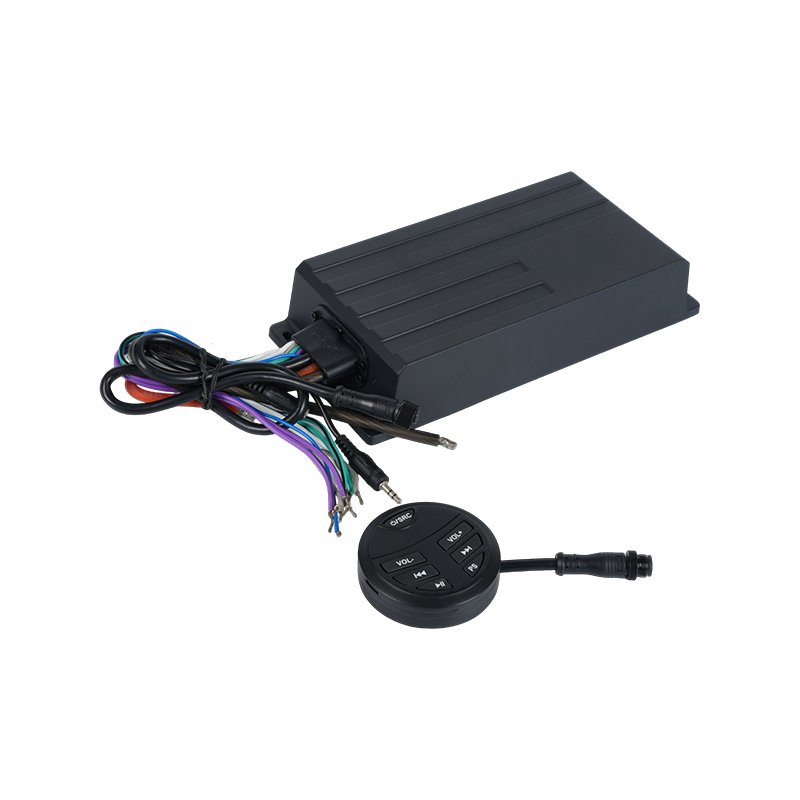
The same logic applies to Bluetooth. A Bluetooth receiver, controller or hub can bring wireless audio into an older system without replacing the head unit. When Bluetooth is built into the amplifier, the factory has to manage antenna placement, noise isolation and user controls as part of the same product. That is often where experienced manufacturing shows.
Accessories and the Signal Chain
The amplifier is the muscle, but the signal chain decides whether the system sounds clean. Line output converters, noise filters, bass processors, in-dash equalizers and passive crossovers solve practical installation problems: matching high-level outputs, reducing engine noise, restoring bass, tuning response and dividing frequencies between speakers.
These accessories are easy to overlook when buyers focus only on watts. In reality, a well-matched converter or noise filter can save an installation that would otherwise be disappointing. A factory that builds both amplifiers and accessories can test them as a system, which is more useful than treating each part in isolation.
Bluetooth accessories deserve similar attention. A compact receiver with RCA output, a controller with a built-in battery, or a hub with transmit and receive functions each serves a different use case. The right choice depends on whether the goal is a simple wireless input, a remote control point or more flexible audio routing.
What to Ask a Car Audio Amplifiers Factory Before You Commit
Before placing an order, move beyond the sample and the price list. Ask questions that reveal how the factory works when something changes.
- Which amplifier platforms are already proven, and which parts would require new tooling or validation?
- How are prototypes tested for heat, load, protection and noise before production release?
- What are the MOQ, lead time and change-control process for model variants, Bluetooth options or branding?
- How do you verify IP ratings, and what records are available for water and dust protection?
- Which tests are performed on every unit, and which are done by batch sampling?
- What packaging, documentation and warranty terms are standard for export orders?
Good answers are specific. They include test names, sample stages, approval steps and the people responsible. Vague answers are a warning sign, especially for products that will be installed in demanding environments.
Why Experience Still Matters in a Crowded Amplifier Market
Amplifiers can look similar on a specification sheet, but the differences often appear after installation: a channel that runs hot, a Bluetooth connection that picks up noise, a connector that loosens, or a finish that does not survive the season. These are not abstract concerns. They are the daily reality of audio installation, and they are why experience in a car audio amplifiers factory is still valuable.
Since 1997, Newsources has focused on car and marine amplifiers and signal processors. Our product range includes Class D and Class A/B car amplifiers, mini amplifiers, marine and powersport models, Bluetooth audio accessories, line output converters, noise filters, bass processors, equalizers and crossovers. We work as a manufacturing partner for buyers who need a practical mix of catalogue platforms and customization.
If you are planning a new amplifier line or refining an existing one, start with the installation problem, not the model number. Tell us the vehicle environment, the channels and power you need, the signal sources and the space available. That is how a factory conversation becomes a product plan—and how the right car audio amplifier is built to last beyond the first listening test.