
 EN
EN
 English
 Español
 عربى
عربىContent
You have upgraded the speakers, yet the system still sounds thin and grainy when you turn it up. The cause is rarely the speakers themselves; it is the power behind them. Most factory radios deliver between 10 and 18 watts RMS per channel, which is enough for background listening but not enough to control a 100-watt-rated aftermarket component set. An aftermarket car amplifier supplies the clean current that makes the rest of the system work.
An amplifier does more than add volume. It controls the speaker cone with stable damping, so kick drums stay tight, vocals stay clear, and the system holds together at highway speed. Before you pick a model, however, you need to work through a few specifications in the right order: channel count, power rating, amplifier class, physical size, and the signal path from your head unit. This guide covers each one in practical terms.
Start With the Power Target, Then Count Channels
Choose the amplifier the same way a system designer does: from the speakers backward. The channel count is the easiest variable, because your speaker layout dictates it.
| Amplifier channels | Typical speaker layout | Best fit for |
|---|---|---|
| 2-channel | One component set or two co-axial drivers | Front-stage upgrade, or a bridged mono feed to a subwoofer |
| 4-channel | Front components plus rear co-axial speakers | Complete interior coverage without a subwoofer |
| 5-channel | Four full-range speakers plus a subwoofer | Single-chassis system with bass control |
| Mono | One subwoofer or several woofers wired together | Dedicated bass power |
Once you know the channel count, match the amplifier's RMS rating to the speakers' RMS rating at the same impedance. A component set rated at 90 watts RMS, for example, wants an amplifier that delivers roughly the same continuous power per channel. Overpowering is safe if you set the gains properly; underpowering is what destroys speakers, because a small amplifier runs out of headroom and clips, sending distorted signal into the voice coil.
Impedance also affects the power calculation. Most car speakers come in 4-ohm or 2-ohm versions, and an amplifier that produces 100 watts into 4 ohms may produce close to 180 watts into 2 ohms. The added output is real, but it comes with more heat and more current draw from the vehicle's electrical system. For a daily-driven car, running at the amplifier's rated impedance and setting gains with a meter is the dependable route.
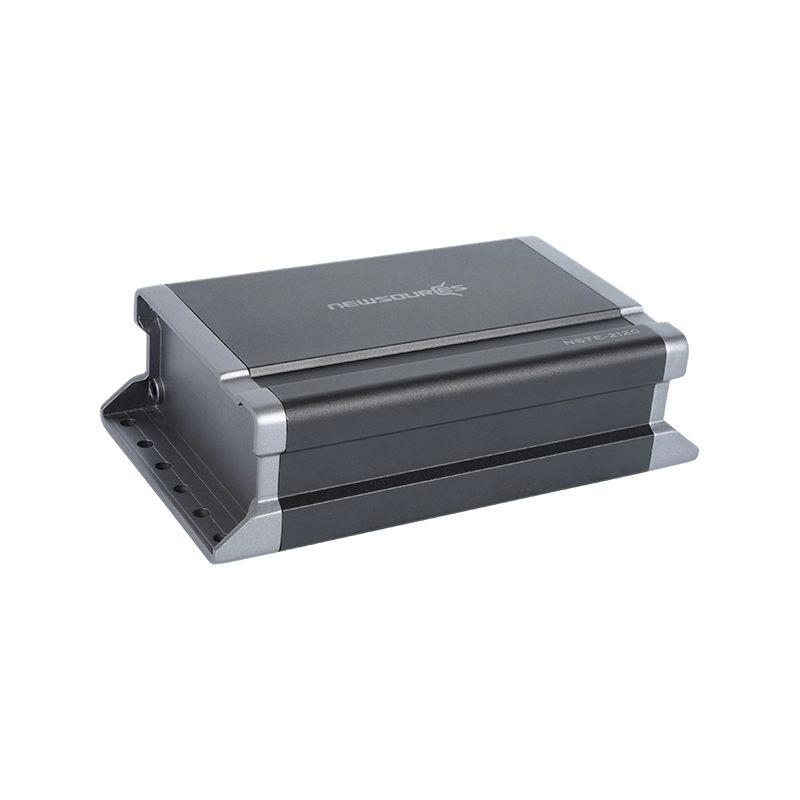
For a four-channel build on a factory radio or a standard aftermarket head unit, an entrance-level Class D model covers most setups without adding a large chassis to the vehicle. The NSXP4120 from Newsources is a typical fit for this role: a four-channel Class D amplifier in the entrance-level series that suits a front-component-plus-rear-coaxial layout.
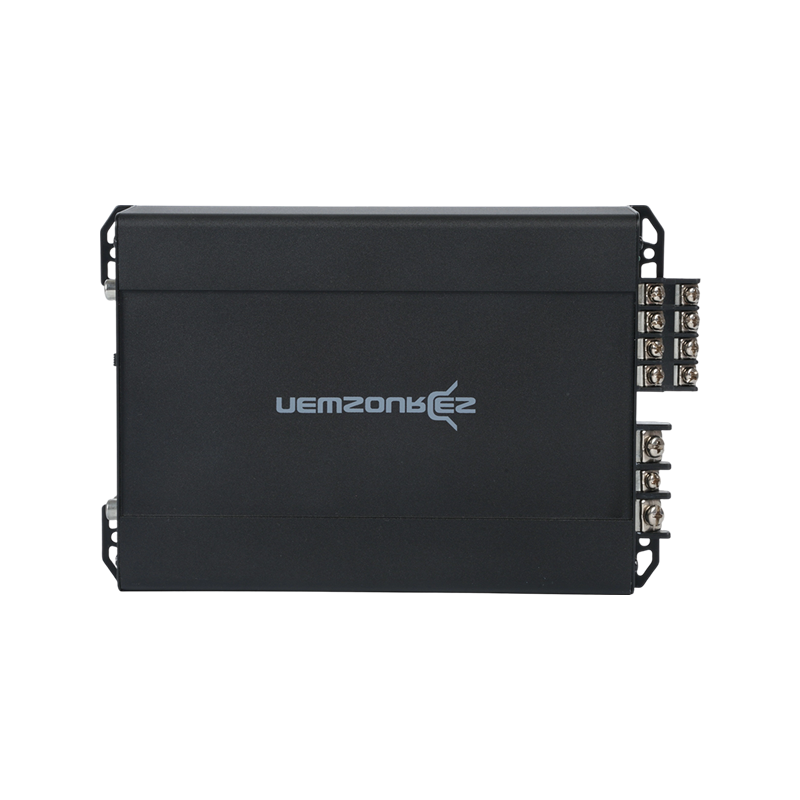 Newsources NSXP4120 4-Channel Class D Amplifier, 4x70WA compact four-channel Class D amp rated at 70W per channel into 4 ohms, with high-level inputs and adjustable crossovers, ideal for factory-radio upgrades involving front components and rear coaxials.View Product →
Class D or Class A/B: How the Amplifier Topology Affects Your Install
Class D amplifiers have become the default in aftermarket car audio for good engineering reasons. They operate at 75 to 85 percent efficiency, draw less current from the vehicle electrical system, and generate much less waste heat than Class A/B designs. For the installer, that means a smaller heatsink, a slimmer chassis, and fewer restrictions on where the amplifier can be mounted. For the vehicle, it means a lighter load on the alternator and battery, which matters at idle.
Class A/B circuits are still respected for their smooth midrange behavior, and a well-built A/B amplifier can sound superb in a low-power front-stage setup. The trade-off is measured in heat and size: at the same continuous output, a Class A/B amplifier is larger and dissipates more heat into the mounting location. Modern Class D designs have narrowed the sound-quality gap, so for most daily-driven cars, D is the more practical choice.
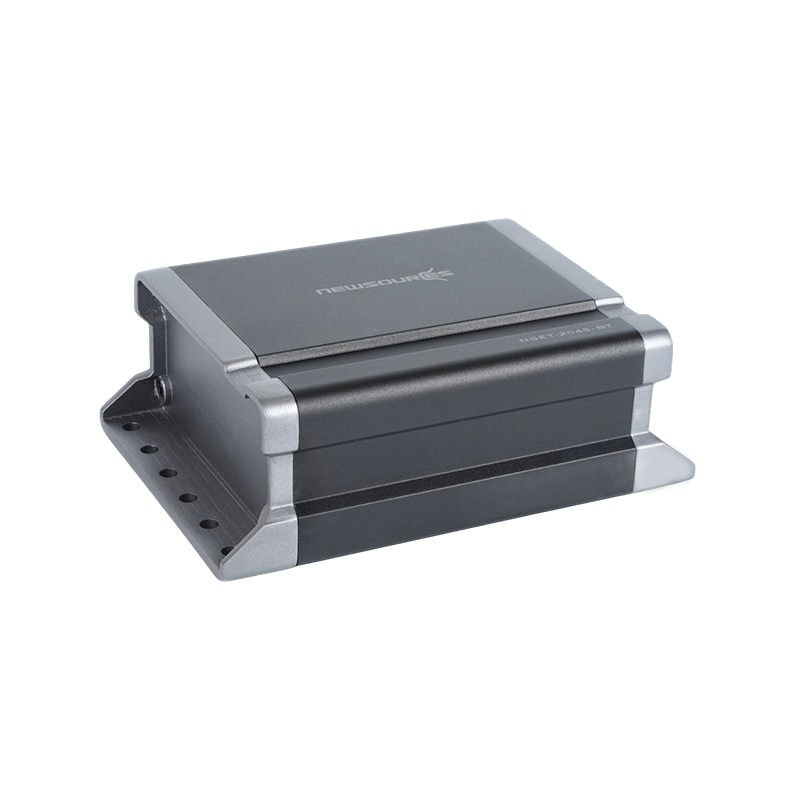
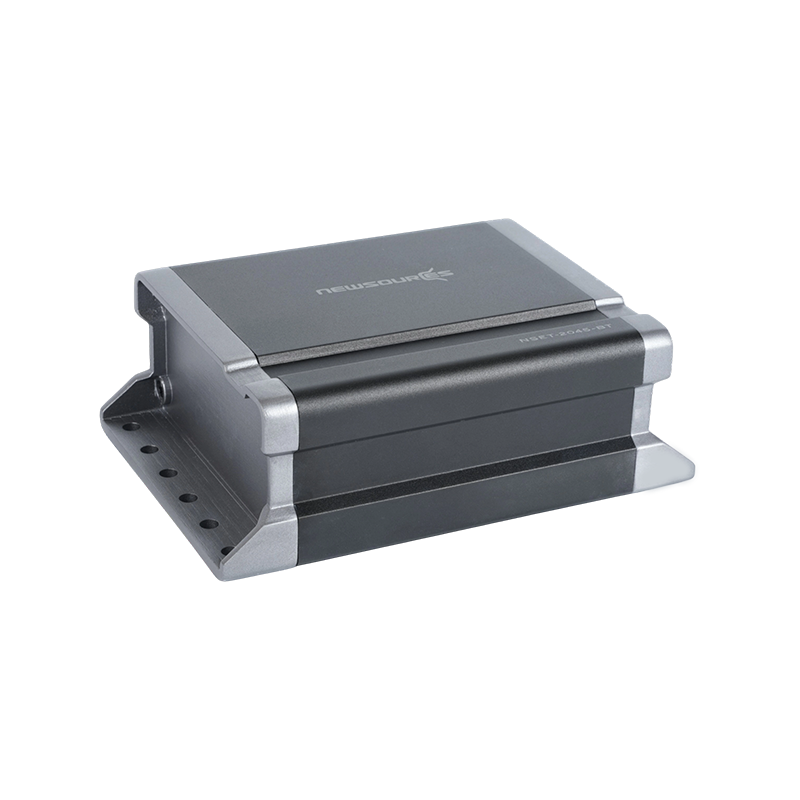
Full-range systems with high power demand are the harshest test. A four-channel amplifier running hard for extended periods needs a stout power supply and controlled heat dissipation. This is why high-power Class D models, such as the NSAP4200 from Newsources, use a substantial output stage and a chassis engineered for sustained delivery rather than a peak number printed on a badge.
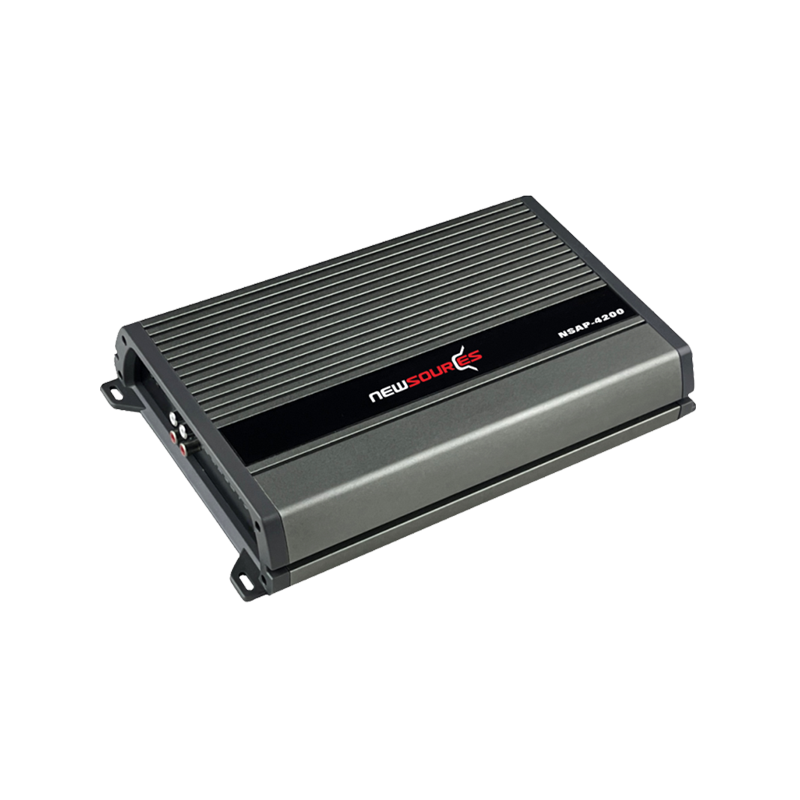 Newsources NSAP4200 High-Power 4-Channel Class D AmplifierRated at 150W per channel into 4 ohms with robust protection circuits, this amplifier is built for sustained full-range output in demanding systems requiring high power and reliable heat management.View Product →
Mini Amplifiers: When Space Is the Real Constraint
Not every aftermarket build can accommodate a full-size amplifier chassis. Modern compact cars, electric vehicles, and owners who simply refuse to give up boot space are the reason mini amplifiers now form a legitimate category rather than a compromise.
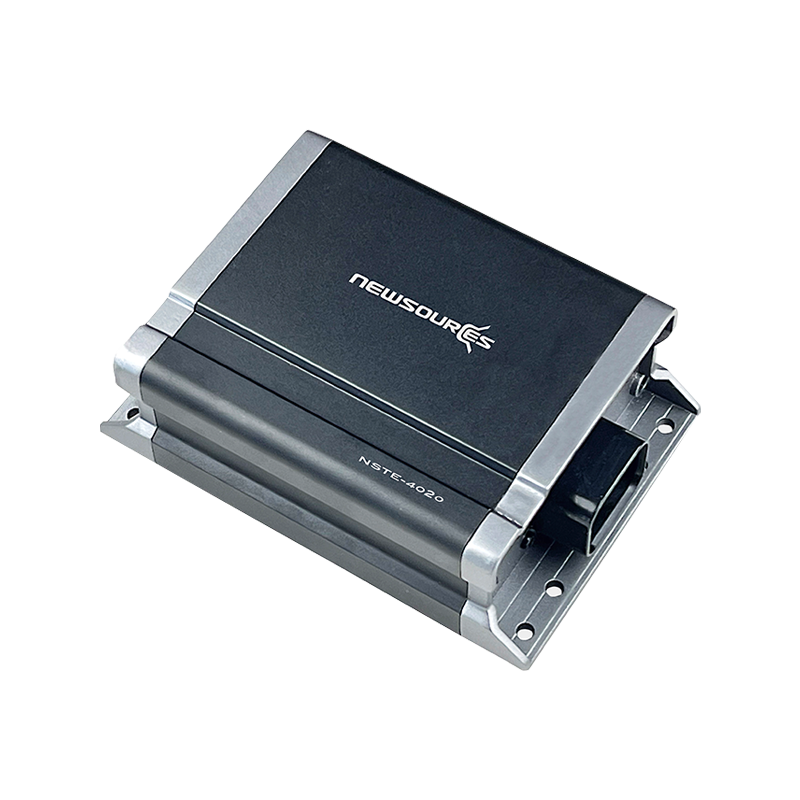
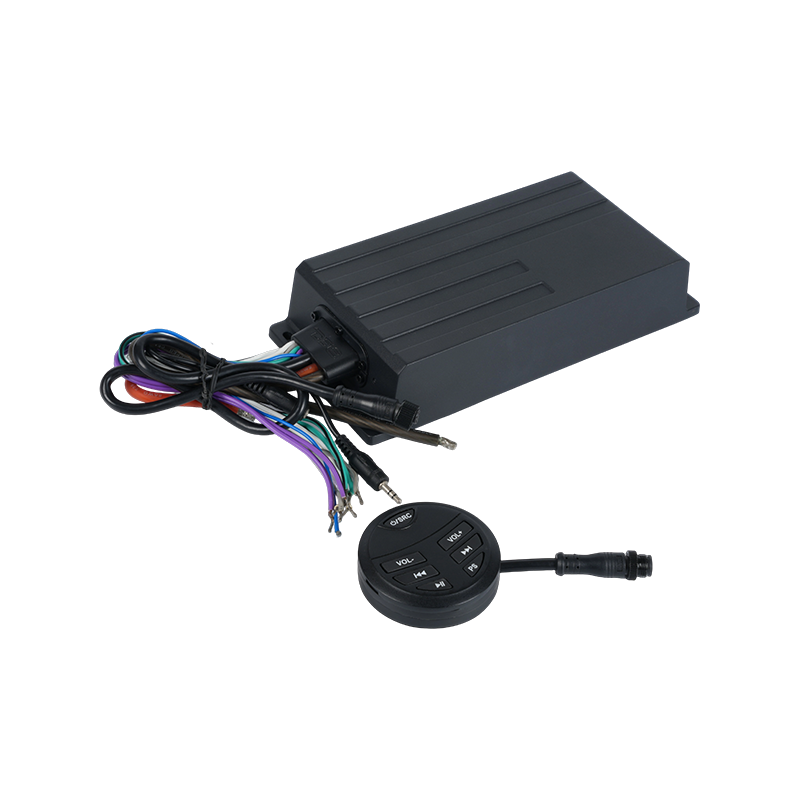
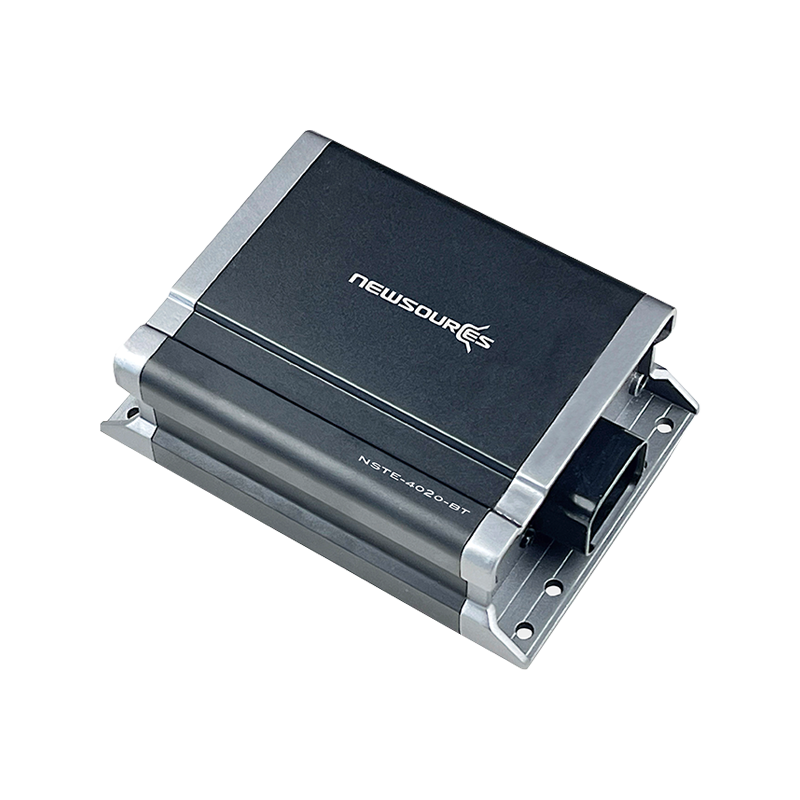
A mini Class D amplifier delivers real RMS power in a chassis that fits under a seat, inside a dashboard void, or behind a trim panel. The engineering trade-offs are a tighter power supply and a smaller heat sink, which only matter at sustained maximum output. For door speakers playing music at normal listening levels, a mini amplifier spends most of its time far from the limit. The NSM4020, a four-channel mini-size Class D amplifier from Newsources, is designed for exactly this type of installation: four channels of full-range output in a package that disappears into the vehicle.
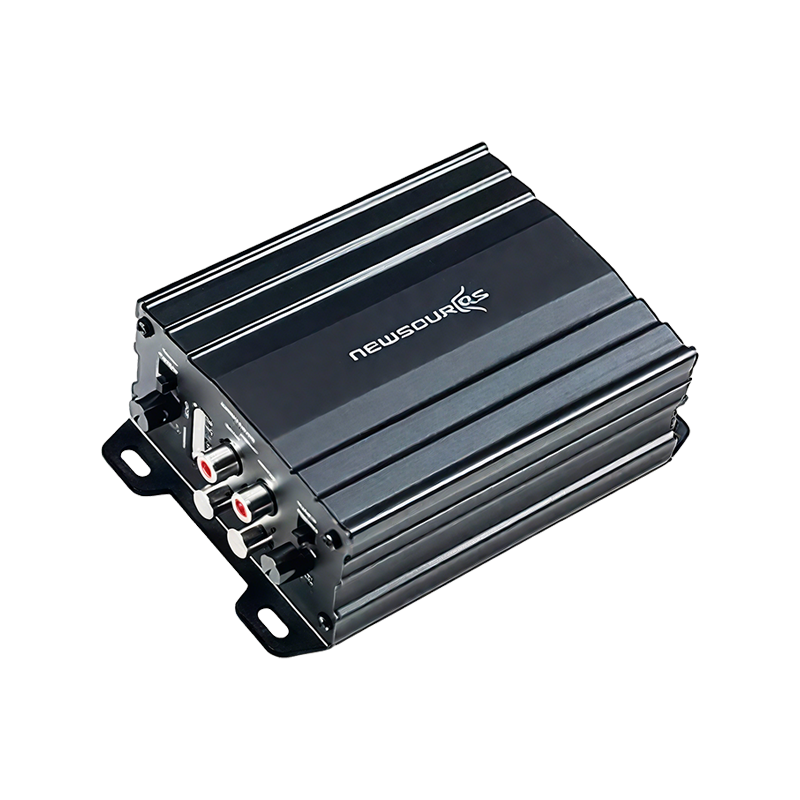 Newsources NSM4020 Mini 4-Channel Class D Amplifier, 20W x 4A compact four-channel mini amplifier delivering 20W per channel into 4 ohms, with selectable inputs and adjustable filters, designed for hidden installations under seats or behind trim panels.View Product →
Before you commit to a compact chassis, it is worth understanding how mini car amplifiers differ from full-size models, because the differences go beyond dimensions: mounting options, current draw, and heat behavior all change with the smaller footprint.
Factory Radio? Plan the Signal Path Before You Install
Amplifier power does not help if the signal arriving at its inputs is weak, noisy, or poorly matched. If your factory radio has no preamp outputs, you need a line output converter (LOC) to reduce the speaker-level signal to a level the amplifier can accept. The quality of this conversion becomes audible at high volume, so choose a converter that suits your amplifier's input sensitivity and keep the signal cable away from power wiring.
Engine noise is the other frequent complaint. Alternator whine, which rises with engine RPM, comes from ground potential differences rather than from the amplifier itself. A ground loop isolator or a noise filter in the signal path removes the hum in most cases, and connecting all audio grounds to one clean chassis point prevents it from returning. Gain setting is just as important: set it too low and the system hisses when you turn the volume up; set it too high and the amplifier clips early, producing the harsh distortion that is often mistaken for a damaged tweeter.
Factory radios also roll off bass at high volume to protect stock speakers. If the low end fades as you turn up the volume, a bass processor or in-dash equalizer restores the bass signal before it reaches the amplifier, without swapping the head unit.
A Five-Point Buying Checklist
Run through these checks before you order:
- Count the speakers you want to power and pick an amplifier with that many channels; add a mono stage if a subwoofer is part of the build.
- Match the amplifier RMS rating to the speaker RMS rating at the same impedance. A little headroom is safer than a shortage.
- Measure the mounting space under a seat, in the boot, or behind a panel, and decide whether a full-size chassis or a mini amplifier fits your vehicle.
- Identify what comes out of your head unit: if it is speaker-level signal, include a line output converter in the plan.
- Confirm remote turn-on support and the test tools you will need for gain setting and polarity checks.
An aftermarket car amplifier is the component that turns a set of speakers into an integrated sound system. Get the channel count right, match the power, and plan the signal path early, and the difference will be obvious on the first drive.