
 EN
EN
 English
 Español
 عربى
عربىContent
You have just taken delivery of a 24V truck, or you are refitting a boat with a 12V audio system, and the amplifier or head unit you plan to install is designed for a nominal 12V supply. Wire it directly to the 24V bus and you will destroy the input stage on the first power-up. A 24V to 12V power inverter, a compact DC-DC converter, steps the vehicle voltage down to a stable 12V output and makes the equipment work. The short version of this article is: choose a converter rated for your continuous 12V current, confirm the output stays regulated under load, check the protection circuits, and install it with properly sized wiring and a fuse near the battery. Each of these choices determines whether the converter runs for years or becomes the first component to fail.
What a 24V to 12V Power Inverter Actually Does
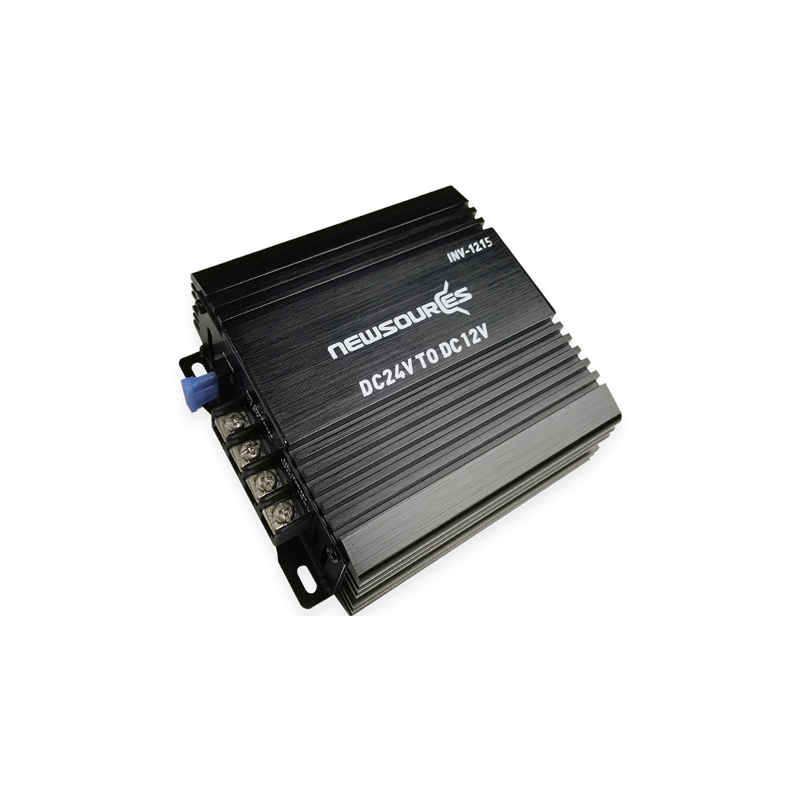
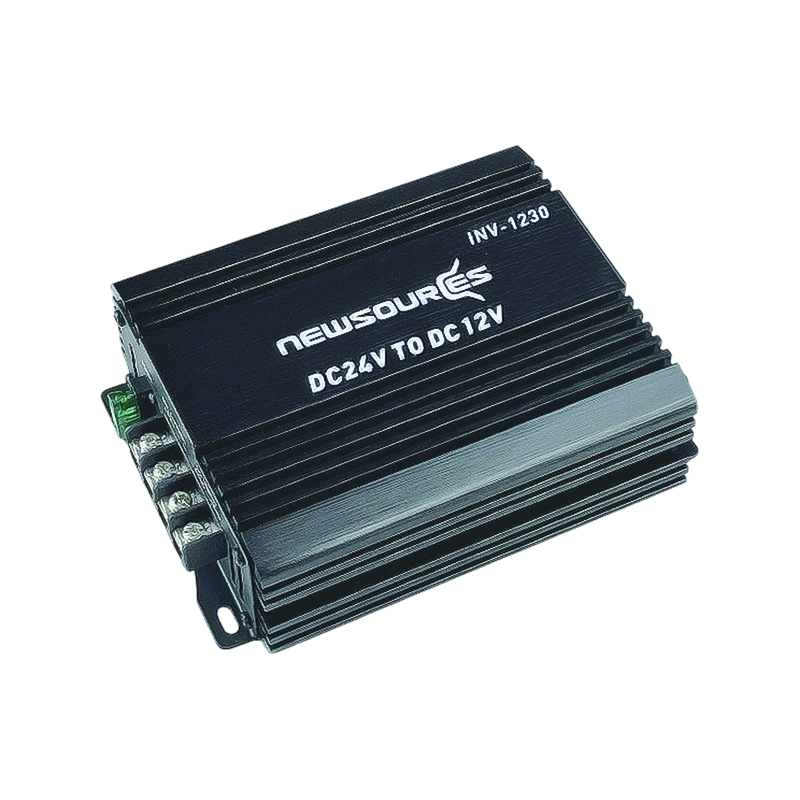
Despite the word "inverter" in the name, this device does not generate AC power. A DC-AC inverter converts 12V or 24V battery voltage into 120V/230V AC for appliances. A 24V to 12V power inverter converts 24V DC input into 12V DC output. You will also see the same product listed as a DC-DC converter, a step-down converter, or a 24V/12V reducer; they all describe the same function. The terminology overlaps in many catalogs, so confirm the input and output voltages on the label before you buy.
The output current is not the same as the input current. The converter conserves power, not voltage. If it draws 5A from a 24V battery at roughly 90% efficiency, it can deliver about 108W, which equals about 9A at 12V. The 12V side therefore always carries more current than the 24V input side.
| Input voltage | Input current | Output power | Output current at 12V |
|---|---|---|---|
| 24V | 2.5A | ~54W | ~4.5A |
| 24V | 5A | ~108W | ~9A |
| 24V | 10A | ~216W | ~18A |
| 24V | 15A | ~324W | ~27A |
This also explains why cable sizing matters. A converter with a 20A output needs 12V-side wiring sized for 20A, not the same gauge as the lighter 24V input cable. Installers who copy the input wire gauge to the output side create a voltage drop and a heat source.
Why 24V Vehicles Still Rely on 12V Equipment
Heavy trucks, buses, agricultural machinery, many diesel boats, and military vehicles use 24V electrical systems. The consumer-electronics and aftermarket-audio industries still build around a nominal 12V system. Head units, amplifiers, signal processors, communication radios, telematics, and cabin lighting almost all expect 12V.
Vehicle audio is the most demanding case. Most car amplifiers and equalizers have a 12V power stage, so feeding 24V through them destroys the internal supply. The same logic explains why amplifier platforms differ from one vehicle type to another, as we discuss in our comparison of motorcycle amplifiers versus car amplifiers: the power architecture has to match the vehicle.
A 24V to 12V power inverter is therefore not an option in a fleet or boat refit; it is the power supply for every 12V device in the vehicle. A unit that delivers clean, regulated 12V protects the equipment and prevents intermittent shutdowns that are hard to diagnose later.
 24V to 12V DC Power ConverterThis converter supplies regulated 12V power for all devices in 24V vehicles, protecting equipment from shutdowns. Its specifications, not the advertised rating, determine reliability under load.View Product →
What to Check Before You Buy
Not all 24V to 12V converters behave the same way. The advertised power rating tells you little on its own. The specifications below separate a unit that will run an audio system reliably from one that fails on the first hot day.
- Continuous current rating. The continuous 12V output rating is the only number you should use for sizing. Marketing terms such as "peak" or "maximum power" do not describe what the converter can deliver for hours.
- Voltage regulation. The output should stay between roughly 11.5V and 12.6V from no load to full load. If the voltage sags below about 11V under an amplifier's current draw, amplifier output drops and distortion appears. Output ripple should also stay low enough not to inject whine or hiss into audio circuits.
- Protection circuits. Overcurrent, overvoltage, undervoltage, reverse polarity, and thermal shutdown are the minimum set. An undervoltage cutoff also prevents the converter from draining the 24V battery below what the starter needs.
- Efficiency. A well-designed switching converter should deliver 85% to 90% efficiency. Lower efficiency means more heat in the housing and more load on the alternator.
- Environmental resistance. Truck chassis and boat compartments expose electronics to vibration, humidity, and corrosion. A sealed housing, conformal-coated circuit board, and automotive-grade connectors improve reliability considerably.
| Parameter | Why it matters | What to look for |
|---|---|---|
| Continuous output current | Determines whether the converter can supply all 12V loads without overheating | Rated on the 12V side, 20% to 30% above calculated load |
| Output voltage stability | Keeps amplifiers and radios inside their operating range | ±0.5V or better at full load |
| Protection features | Prevents damage to the converter and the battery bank | Overcurrent, overvoltage, undervoltage, reverse polarity, thermal shutdown |
| Efficiency | Reduces heat and wasted alternator power | 85% to 90% at typical load |
| Housing and sealing | Determines survival in vibration, humidity, and splash zones | Sealed metal housing, protected connectors |
How to Size and Install the Converter
Start with the load. Add the continuous current of every 12V device the converter will feed. For audio equipment, use the amplifier fuse rating or its RMS current draw, not the "max power" number printed on the packaging. Then add a 20% to 30% margin to cover transients, component aging, and hot climates.
- Calculate the total continuous 12V load in amperes.
- Multiply that number by 1.2 to 1.3 to get the minimum converter output rating.
- Mount the converter in a dry, ventilated location with air space on all sides.
- Connect the input to the 24V battery and install a fuse or circuit breaker on the 24V positive wire within 30cm (12 inches) of the battery.
- Size the output wiring for the converter's rated 12V current. For a 20A output circuit, use at least 2.5mm² (14 AWG) copper, and thicker cable if the run is long.
- Ground the converter to the same chassis point as the audio equipment to minimize ground-loop noise.
- Test under the real load: measure the 12V output while the amplifier is playing music. A stable reading above 11.5V confirms a sound installation.
One more caution: some 24V vehicles have a center tap that appears to provide 12V from halfway across the battery bank. Drawing current from the center tap is not equivalent to using a converter. The two half-banks age unevenly, and unbalanced discharge damages a 24V battery bank quickly. A proper 24V to 12V converter draws balanced current from the full bank and keeps both batteries healthy.
Matching the Converter to an Audio Amplifier
Audio amplifiers are the hardest load a converter will see. Music is a series of current bursts, and bass notes pull current in short peaks. The converter must hold the output voltage during those transients. If it responds too slowly, the amplifier clips even though the average current is far below the converter's rating.
An efficient amplifier keeps the converter budget small. A Class D amplifier draws noticeably less supply current than a Class A/B unit at the same power level, which means less heat, thinner wiring, and a smaller converter. For a two-speaker system in a truck cab, a compact 2-channel Class D amplifier plus a 24V to 12V power inverter completes the installation without a large power stage.
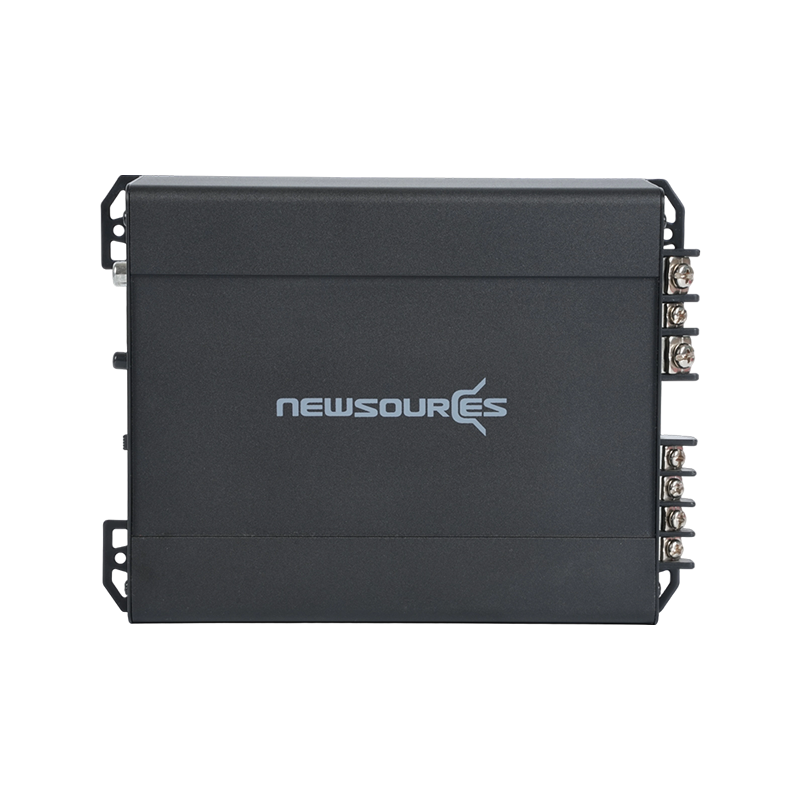 2-Channel Class D Car AmplifierThis efficient 2-channel amplifier provides 70W per channel at 4 ohms, features adjustable crossover and high input, and draws less current than Class A/B, keeping the converter small for a truck cab system.View Product →
When you pair the two, estimate the amplifier's current draw at one-third of its maximum RMS power as a realistic continuous figure, then size the converter with the 20% to 30% margin described above. This approach avoids both an undersized converter and unnecessarily heavy wiring.
A 24V to 12V power inverter looks like a simple part, but it carries the entire 12V supply of the vehicle. The correct unit provides a stable output at the current you actually need, shuts down before it damages itself, and survives the vibration and heat of a real installation. The wrong unit produces voltage sag, noise, and avoidable warranty claims. That is why the specification sheet, not the brand name, should decide the purchase for a fleet buyer, an installer, or an OEM integrating 12V equipment into a 24V platform.