
 EN
EN
 English
 Español
 عربى
عربىContent
Why Built-In Battery Matters for Mini Bluetooth Controllers
Mini Bluetooth controllers have become popular for mobile gaming, retro emulation, smart TV navigation, and compact setups where a full-size controller is impractical. One of the most important features to evaluate when shopping for one is whether it has a built-in rechargeable battery rather than relying on disposable batteries. A built-in battery, typically lithium-ion or lithium-polymer, eliminates the need to constantly buy and replace AA or AAA batteries, reduces long-term cost, and usually results in a lighter, more compact controller design since manufacturers can shape the internal battery to fit the controller's form factor efficiently.
However, not all built-in batteries are created equal. Capacity, charging speed, battery life per charge, and charging port type all vary significantly between models, and these differences directly affect how convenient the controller is for daily use. Understanding these factors helps buyers avoid controllers that look appealing on the surface but fall short during actual gameplay sessions.
Key Battery Specifications to Check
When comparing mini Bluetooth controllers, a few specific battery-related specifications make the biggest difference in real-world usability.
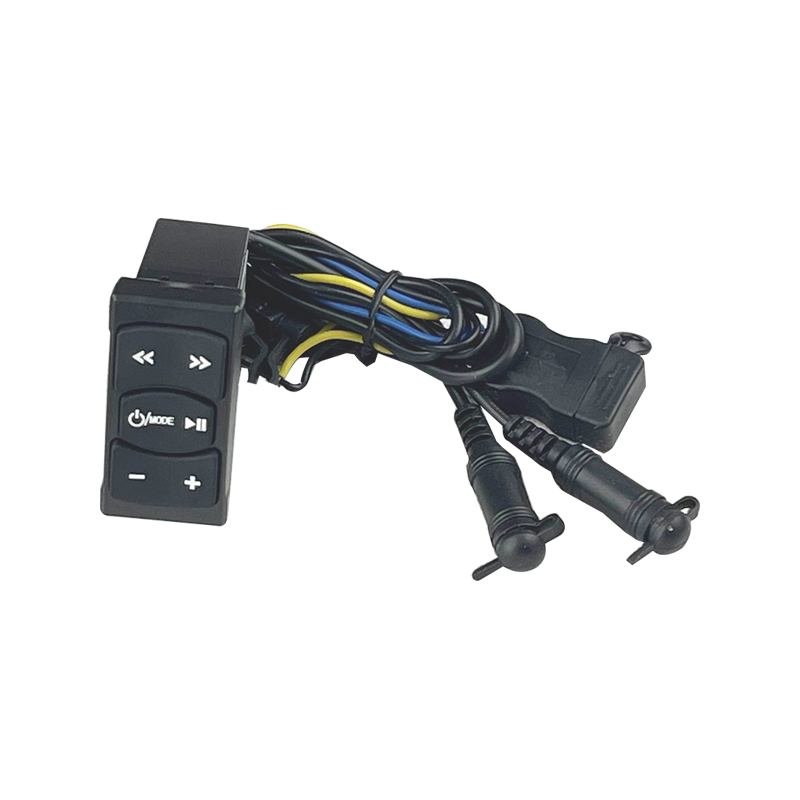
Battery Capacity (mAh)
Battery capacity, measured in milliamp-hours (mAh), determines how long the controller can run on a single charge. Most mini Bluetooth controllers range from around 300mAh to 600mAh. Smaller capacities, common in ultra-compact designs, may only last 8 to 10 hours of continuous use, while larger capacities can extend playtime to 15 hours or more. Buyers who plan on long gaming sessions or travel without easy access to charging should prioritize controllers with higher mAh ratings.
Charging Time
Charging time varies based on both battery capacity and the charging circuitry used. A controller with fast-charging support might reach a full charge in under 2 hours, while others without fast-charge features can take 3 to 4 hours. For anyone who tends to charge devices sporadically rather than overnight, a shorter charging time reduces downtime between sessions.
Charging Port Type
Most modern mini Bluetooth controllers use USB-C for charging, which offers faster charging speeds and a more durable, reversible connector compared to older Micro-USB ports. Choosing a controller with USB-C also means it can share a charging cable with most current smartphones, tablets, and laptops, reducing the number of different cables needed while traveling.
Comparing Battery Life Across Common Use Cases
Battery drain rates depend heavily on how the controller is used, since features like vibration feedback, LED indicators, and constant Bluetooth signal strength all draw additional power.
| Use Case | Typical Battery Life | Main Power Drain Factor |
| Casual Mobile Gaming | 10–15 hours | Bluetooth connection, occasional vibration |
| Retro Emulation | 12–18 hours | Minimal vibration, steady input use |
| Smart TV Navigation | 20+ hours | Low, intermittent usage pattern |
| Competitive/Action Gaming | 6–9 hours | Frequent vibration, constant input signals |
Other Features to Consider Alongside Battery Life
While battery performance is a major factor, it should be weighed alongside other practical features that affect the overall experience of using a mini Bluetooth controller.
Bluetooth Version and Connection Stability
Controllers using Bluetooth 5.0 or later generally offer more stable connections, lower input lag, and better power efficiency compared to older Bluetooth versions. Since Bluetooth radio activity is one of the biggest ongoing power draws, a more efficient Bluetooth chipset can meaningfully extend battery life even at the same mAh capacity.
Device Compatibility
Not all mini Bluetooth controllers work seamlessly across every platform. Some are optimized specifically for iOS or Android, while others support multi-platform pairing across phones, tablets, PCs, and smart TVs. Confirming compatibility with intended devices before purchase avoids connectivity issues or missing button mapping support.
Size and Grip Comfort
Mini controllers prioritize portability, but this can come at the cost of comfort during longer sessions. Checking hand size compatibility and button spacing, especially for users with larger hands, helps ensure the compact form factor doesn't lead to hand cramping during extended use.
Tips for Extending Built-In Battery Lifespan
Like all rechargeable lithium-based batteries, the battery inside a mini Bluetooth controller degrades gradually over hundreds of charge cycles. Following a few simple habits can help preserve battery health and performance over the controller's lifespan.
- Avoid letting the battery fully drain to 0% repeatedly, as deep discharges accelerate capacity loss over time
- Disconnect the controller from the charger once it reaches full charge rather than leaving it plugged in continuously overnight
- Store the controller in a cool, dry place if it won't be used for an extended period, ideally with a partial charge rather than fully depleted
- Turn off the controller when not in use instead of leaving it in standby mode, since standby still draws a small amount of power
Following these practices can help maintain a higher percentage of the original battery capacity for a longer period, delaying the gradual decline in playtime that naturally occurs with repeated charge cycles.
Choosing the Right Controller for Your Needs
For casual users who mainly play mobile games in short bursts, a mid-capacity battery around 400mAh with USB-C charging typically provides a good balance of portability and convenience. Frequent travelers or those who game for extended periods without regular access to a charger should prioritize controllers with higher-capacity batteries, ideally 500mAh or above, paired with fast-charging support to minimize downtime.
Ultimately, the right mini Bluetooth controller depends on matching battery capacity and charging convenience to actual usage habits, rather than choosing based on size or price alone. Reading verified user reviews that mention real-world battery performance, rather than relying solely on manufacturer specifications, often provides the most accurate picture of how a controller will perform in daily use.