
 EN
 English
 Español
 عربى
Content
Car audio accessories are easy to overlook when the headline purchase is a new amplifier or a set of speakers. In practice, they are the parts that decide whether the system sounds clean, stays quiet between tracks, and gives you useful control over tone. A line output converter, a noise filter, or a small equalizer can change the result of an installation more than another hundred watts ever will.
We have been building car and marine audio equipment since 1997, and most of the questions we hear from installers come down to matching: matching signal levels, matching impedance, and matching the accessory to the job the system actually needs. This guide walks through the common car audio accessory categories, what each one does, and how to choose without overbuying.
What Counts as a Car Audio Accessory?
In our catalog and in most workshops, “car audio accessory” covers the support electronics that sit between the source unit, the amplifier, and the speakers. They are not usually the first thing a customer asks for, but they solve specific installation problems.
- Line output converters turn a high-level speaker signal into a low-level RCA signal so an aftermarket amplifier can accept it.
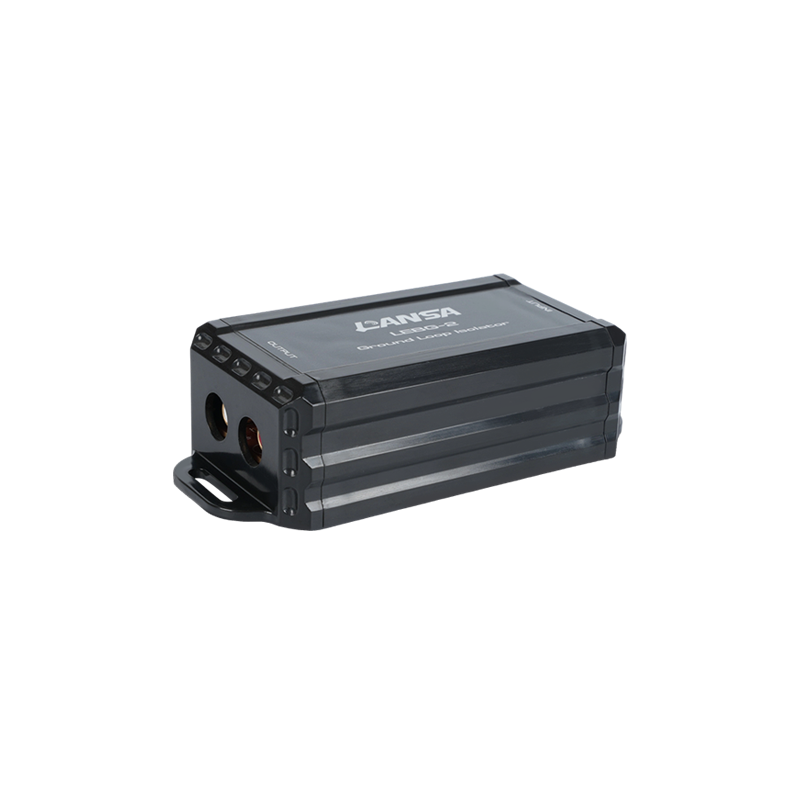
- Noise filters reduce alternator whine, ground-loop hum, and other electrical noise that gets into the audio path.
- Bass processors restore or enhance low frequencies that are lost when a factory head unit rolls off bass at higher volumes.
- In-dash equalizers give manual tone shaping and, in some models, extra input options such as aux or Bluetooth.
- Passive crossovers split the audio band so tweeters, midrange drivers, and woofers each receive the frequencies they handle best.
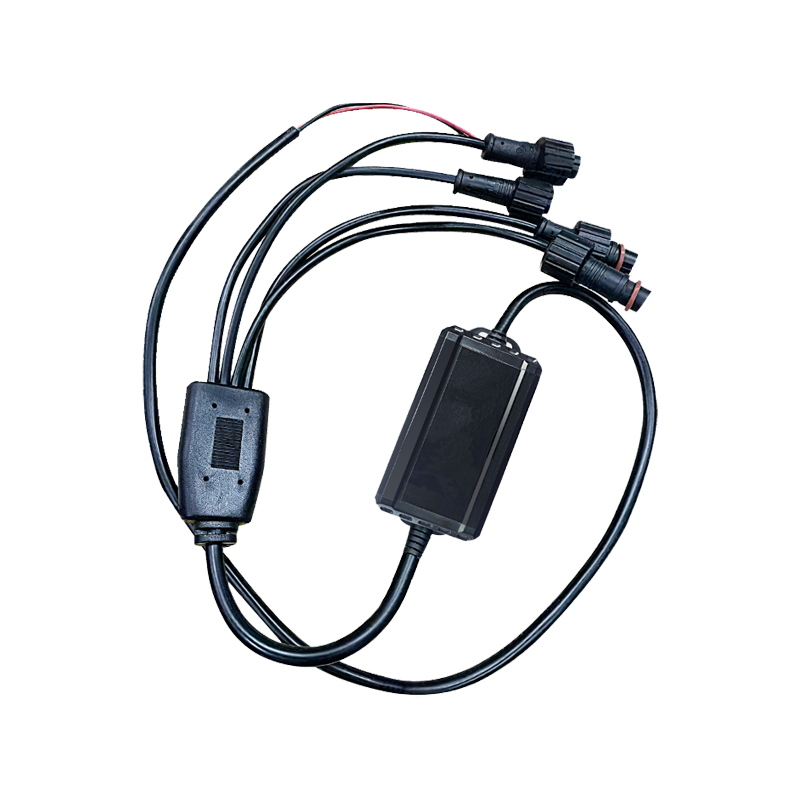
- Bluetooth receivers and controllers add wireless audio to an older amplifier or head unit without replacing the whole system.
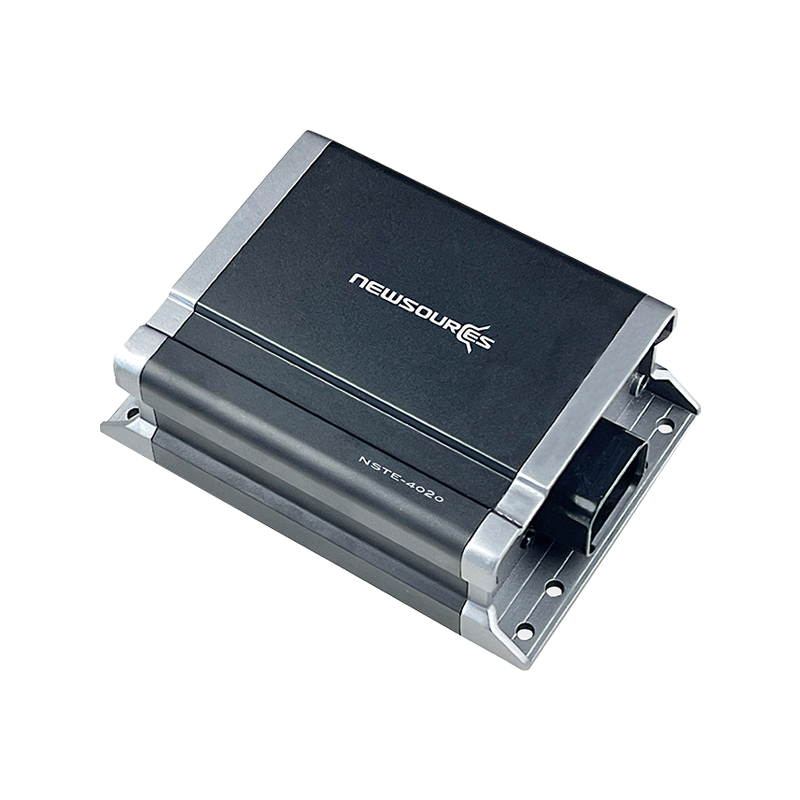
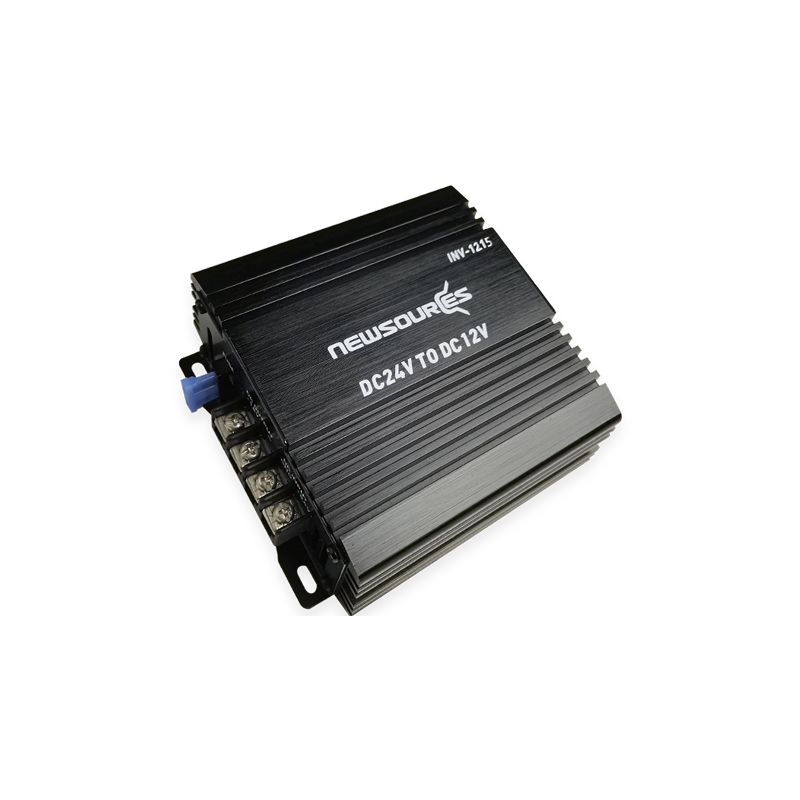
- DC power inverters convert 24 V vehicle power to 12 V for accessories that expect a 12 V supply.
You can browse our car audio accessory range to see how these categories are grouped, but the more useful question is which one your install is missing.
The Accessory Chain: From Signal to Sound
Think of the audio chain as a series of handoffs. The head unit sends a signal; the converter or interface adjusts its level; the amplifier increases power; the crossover divides the frequency range; the speakers turn electrical energy into sound. An accessory is valuable when it makes one of those handoffs more accurate or more stable.
For example, a factory head unit may produce a high-level output that an aftermarket amplifier cannot accept directly. A line output converter fixes that mismatch. If the same system also picks up engine noise, a noise filter addresses a different problem in the same chain. Adding both is not redundant; they work at different points.
Amplifier choice affects accessory choice too. If space is tight, the differences between mini and full-size car amplifiers matter because compact amplifiers often need cleaner signal levels and more careful gain setting. The accessory list should follow the physical and electrical limits of the build, not the other way around.
A Quick Comparison of Common Car Audio Accessories
The table below is a practical starting point. It is not a ranking; it is a way to match the symptom you hear to the part that usually solves it.
| Accessory type | What it solves | Key specs to check |
|---|---|---|
| Line output converter | Connects a high-level factory output to an amplifier with low-level RCA inputs. | Channel count, maximum input level, remote turn-on output, signal-to-noise ratio. |
| Noise filter | Reduces alternator whine, ground-loop noise, or ignition interference. | Current rating, isolation type, connector style, installation location. |
| Bass processor | Restores low-frequency content or adds adjustable bass enhancement. | Frequency range, boost level, Q factor, input/output configuration. |
| In-dash equalizer | Provides manual tone control and sometimes extra inputs. | Number of bands, aux or Bluetooth input, preamp voltage, dash fit. |
| Passive crossover | Divides frequencies between drivers in a multi-speaker system. | Crossover frequency, slope, power handling, impedance compatibility. |
| Bluetooth receiver or controller | Adds wireless playback to an older audio system. | Bluetooth version, output type, range, power supply, pairing behavior. |
One caution: a table can make accessories look interchangeable, but the install details matter. A converter with the right channel count can still be the wrong choice if its maximum input voltage is too low for the factory unit. A noise filter with a generous current rating is useful only if it is placed and grounded correctly.
How to Match Accessories to Your System
Start with the source signal
Before buying anything, find out what the head unit sends. Is it a fixed-level preamp output, a high-level speaker output, or a digital signal that needs a processor? If the answer is high-level, a line output converter is usually the first accessory on the list. For multi-channel systems, an 8-channel model can keep front, rear, and subwoofer channels separate instead of forcing them through a single pair of RCAs.
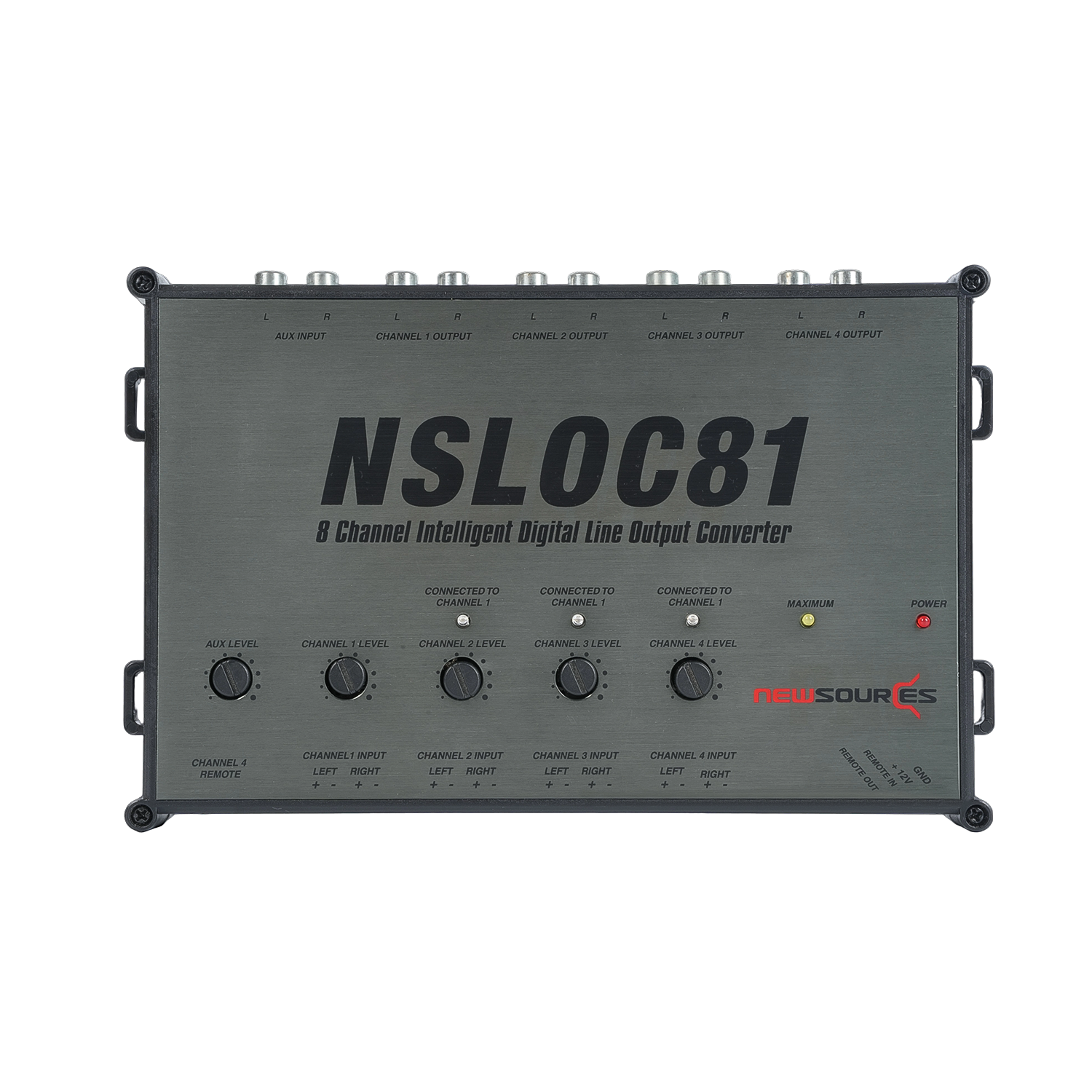 NSLOC81 8-Channel High-to-Low Converter with AUX InputThis 8-channel converter keeps front, rear, and subwoofer signals separate and adds AUX input plus independent gain adjustment for multi-channel OEM-to-aftermarket upgrades.View Product →
The NSLOC81 is an example of that approach: eight channels of high-to-low conversion with an aux input, intended for systems that need more than a basic two-channel adapter. It is not the right part for every car, but it shows why channel count and input headroom belong on the checklist.
Match levels, not just connectors
RCA plugs fit together easily; signal levels do not always match as easily. A converter with too little output can force the amplifier gain too high, which raises the noise floor. A converter with too much output can clip the amplifier input. Look for a converter with enough adjustment range and a clean, documented output voltage.
Plan for noise before it appears
Engine noise is easier to prevent than to chase. Use a solid ground at the amplifier, keep signal cables away from power cables, and choose a noise filter that addresses the specific symptom. A ground-loop isolator is not the same as an engine-noise filter, and a filter with a high current rating is not automatically better for a low-level signal line. For alternator whine that rises with engine speed, an engine-noise filter with adequate current capacity is the usual starting point.
 LEBN-15A 15-Amp Engine Noise FilterA 15-amp filter for alternator whine and electrical interference, worth checking when noise rises with engine speed after grounding and cable routing are confirmed.View Product →
The LEBN15A is a 15-amp engine-noise filter, which puts it in the range of many real-world charging and accessory circuits. The important step is still diagnosis: confirm that the noise is electrical, not a ground loop or an induced signal from a poorly routed cable.
Decide whether you need restoration or control
Bass restoration and equalization solve different problems. A bass processor can bring back low end that a factory head unit rolls off at higher volume, while an in-dash equalizer gives you deliberate control over multiple bands. If the system already has a capable DSP, adding a separate equalizer may duplicate functions. If the system is simple and the listener wants a physical knob for bass and treble, an equalizer can be the more direct answer.
 NSLC3 Two-Channel Converter with Digital Bass EnhancementCombines speaker-level conversion with bass restoration and level matching, useful when a simple factory system needs both low-frequency enhancement and amplifier integration.View Product →
The NSLC3 combines a two-channel high/low converter with digital bass enhancement, which is useful when the source needs both level matching and low-frequency restoration. Again, the point is to solve two related problems with one part only when the installation actually has both problems.
Installation Habits That Save Time
- Test the accessory on the bench or before final reassembly. It is much easier to swap a converter when the dashboard is still apart.
- Label channels. Front, rear, and subwoofer outputs are easy to mix up once the RCAs disappear behind the trim.
- Set gain with the head unit at a realistic listening level. Gain set at maximum volume is not a fair test and often introduces noise.
- Use the same ground reference for the head unit and the amplifier when possible. Different grounds are a common source of hum.
- Keep documentation for crossover frequencies and equalizer settings. A future speaker change will be easier to tune if you know the starting point.
When an Accessory Is the Wrong Answer
Not every problem needs another box. If the system has a persistent mechanical rattle, a bass processor will not fix it. If the speakers are underpowered, a line output converter will not add clean output. If the head unit already provides a low-level output and a flat signal, an extra converter may only add a connection point. The honest answer is sometimes to fix the installation, replace a worn cable, or choose a different amplifier.
That is also why we prefer to describe accessories by the problem they solve rather than by a list of features. A part that is excellent in one system can be unnecessary in another. The goal is a chain with no weak handoff, not a catalog with every option installed.
Car audio accessories are small, but they carry a lot of the installation’s success. Start with the signal, match the levels, deal with noise at the source, and add tone control only where it serves the listener. If you are planning a build and want to compare options, our team can help you think through the chain from source to speaker.