
 EN
EN
 English
 Español
 عربى
عربىContent
Bluetooth has become the default way people hand music to a sound system, yet a large share of amplifiers, marine stereos and factory radios still in service were built before wireless streaming was common. An audio Bluetooth accessory exists to close that gap. It is a small piece of hardware that sits between a phone or tablet and the input stage of an amplifier, converting a wireless stream into a clean analog signal the amplifier already understands.
At Newsources Electronics we have been building car and marine amplifiers and signal processors since 1997, and Bluetooth accessories have grown into a category customers ask about as often as the amplifiers themselves. The accessory never replaces the amplifier; it is the front door that lets modern sources into an established system.
This guide covers the three main roles these products play, where each one belongs in a signal chain, and the details that decide whether an installation sounds clean or noisy.
What an Audio Bluetooth Accessory Does
Every product in this category performs three jobs, and the differences between models come down to how well each job is handled.
- Wireless reception and decoding: the unit pairs with a phone, tablet or laptop and decodes the incoming stream.
- Analog conversion: the decoded audio becomes a line-level signal, usually on RCA jacks, that an amplifier can accept.
- Control and feedback: pairing buttons, status LEDs and app support keep the connection manageable while driving.
Because the output is a conventional analog signal, the accessory does not care how old the amplifier is. A compact receiver can bring Bluetooth to a system designed around cassette decks or auxiliary cables, and the amplifier's gain, crossover and equalizer settings keep working exactly as before.
Receivers, Controllers, and Hubs
Three product types cover most installations. They differ mainly in signal direction and in how the user interacts with them, so the first decision is which role the system actually needs.
A Bluetooth receiver is the classic answer for an amplifier or stereo that has RCA inputs but no wireless connection. The NSLBT2, for example, provides a 3V RCA output that suits the input sensitivity of most car and marine amplifiers, and it reconnects automatically to the last device it paired with.
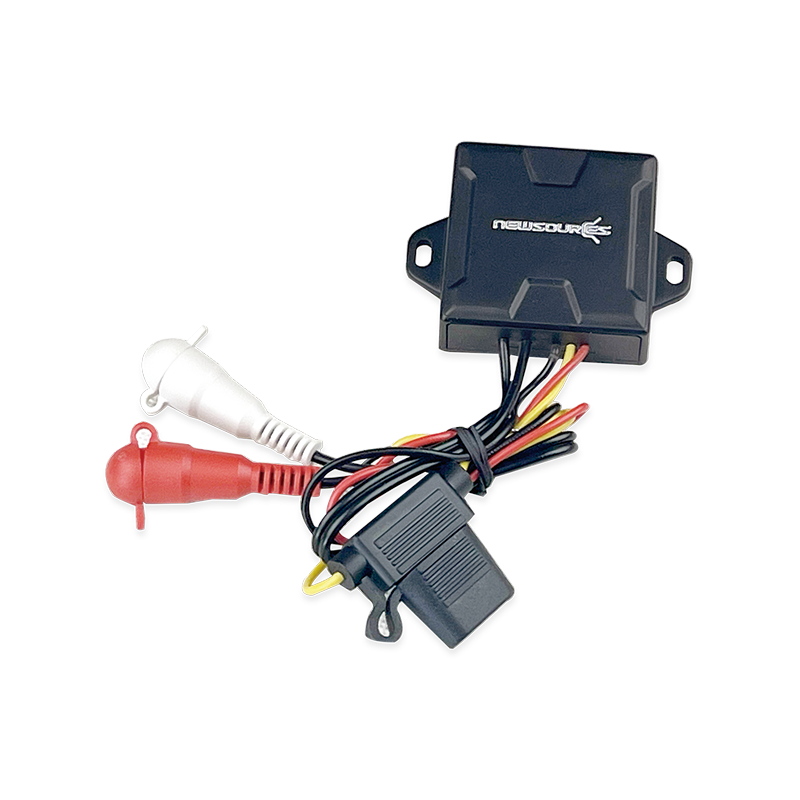 RCA Output 3V Bluetooth ReceiverInput signal sources: Bluetooth signal and head unit outputView Product →
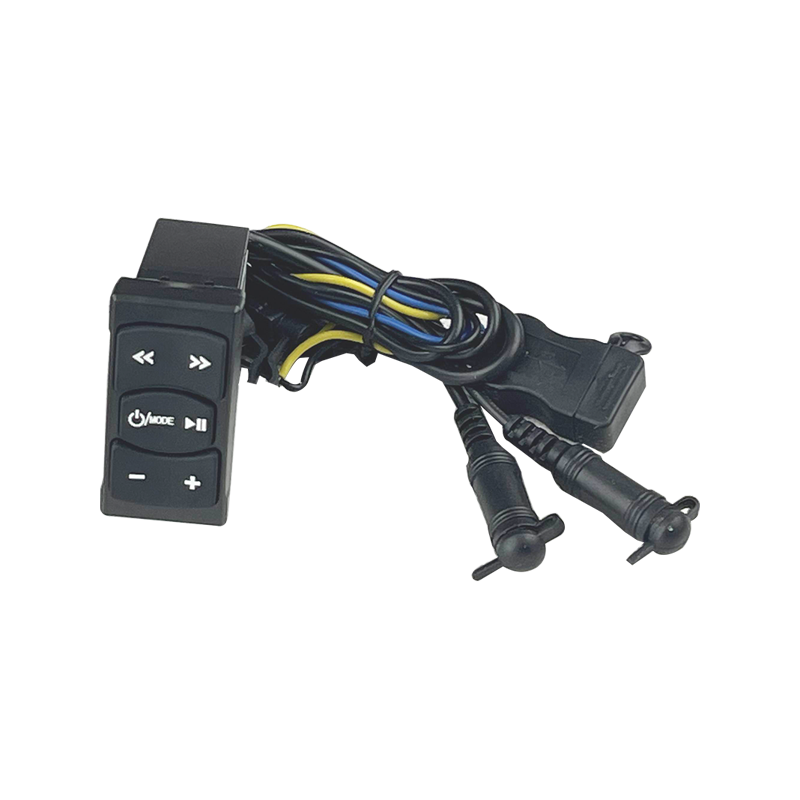
Bluetooth controllers trade the fixed installation for a physical interface. A compact controller such as the NSLBT1 puts play, pause and track buttons within reach of the driver, which matters when the phone is mounted out of easy reach.
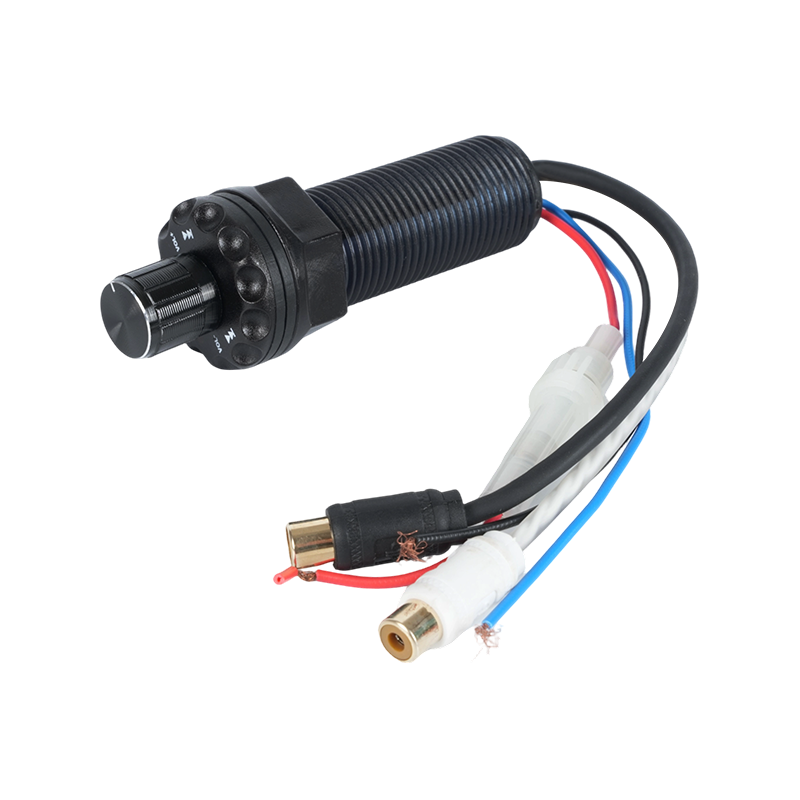 Compact Size Bluetooth ControllerOutput signal level: 4.5VView Product →
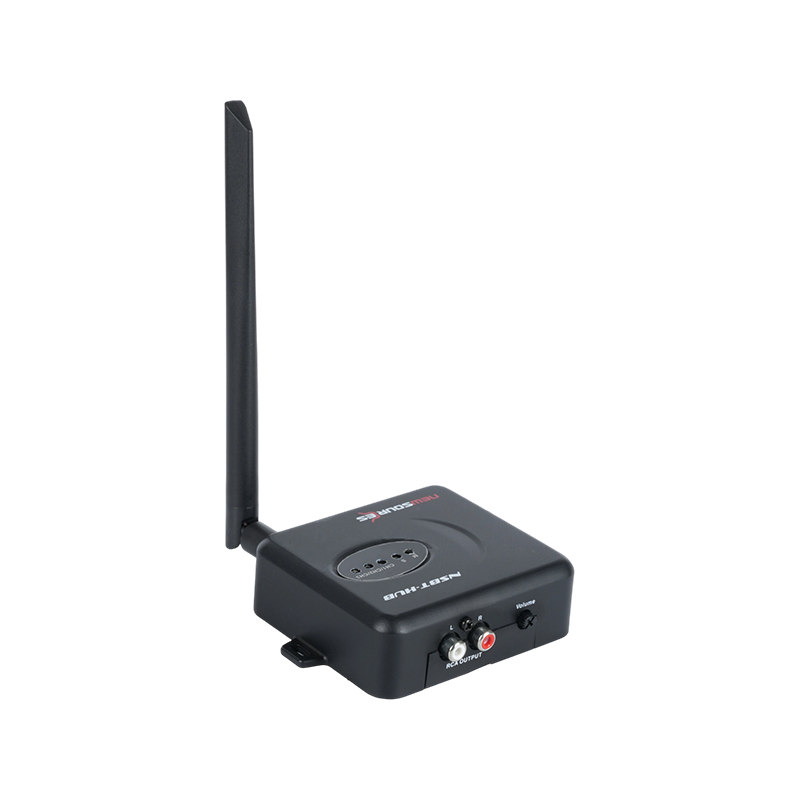
A Bluetooth hub handles both directions at once. The NSBTHUB works as a transmitter and a receiver, so one installation can pull audio from a phone and send it on to a second zone, a soundbar or a pair of wireless headphones. That bidirectional behaviour is what separates a hub from a receiver.
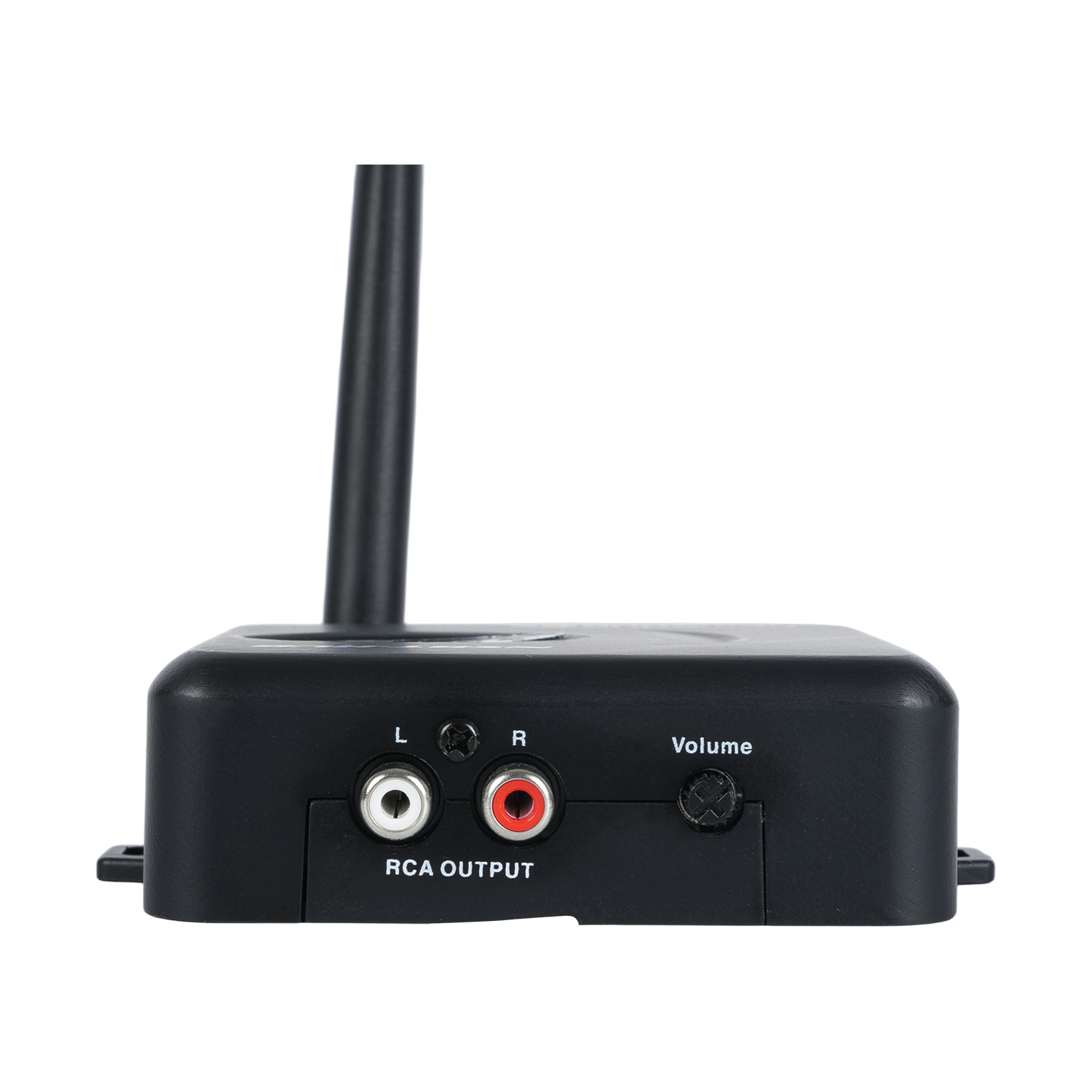 Bluetooth Transmitter and Receiver Bluetooth HUBBluetooth transmitting function on master modeView Product →
| Role | Typical location | Signal direction | Best suited to |
|---|---|---|---|
| Receiver | Behind the dash or beside the amplifier | One way, source to amplifier | Amplifiers and stereos with RCA inputs |
| Controller | Dash surface or panel, within reach | One way, with physical buttons | Drivers who want dedicated controls |
| Hub | Hidden between source and amplifier | Two way, transmit and receive | Systems feeding a second zone or headphones |
Where the Accessory Sits in the Signal Chain
Once the role is settled, placement is the next question. A typical wireless upgrade follows a fixed order, and each stage changes the signal level the next stage sees.
- The source: a phone, tablet or streaming dongle.
- The Bluetooth accessory: it pairs with the source and outputs line level.
- The signal processor: a line output converter, equalizer or bass processor when the radio has no RCA output.
- The amplifier: it raises the line-level signal to speaker level.
- The speakers, subwoofer or, on a boat, a set of zone speakers.
In a vehicle with a factory radio the order shifts slightly, because factory radios usually output a high-level signal that has to be stepped down before the amplifier input. Some amplifiers accept high-level input directly, in which case the converter can be skipped, but the accessory still feeds line level into whichever stage follows.
Noise is the second variable. Engine whine and ground loops are not caused by a Bluetooth accessory, yet they become obvious once a quiet wireless source replaces a noisy one; an engine noise filter or ground loop isolator ahead of the amplifier usually resolves it.
Matching the Accessory to the Vehicle
An accessory that works perfectly on a sedan may fail within a season on a boat or a motorcycle, so the environment should drive the choice as much as the amplifier does.
Car audio
In a car the unit lives behind the dash or near the amplifier, where size and heat matter more than appearance. Power it from a switched 12V source so it shuts down with the ignition.
Marine audio
On the water, humidity, salt spray and continuous vibration shorten the life of unprotected electronics, and systems tend to run more channels across several listening zones.
Motorcycle and powersport
Motorcycles and side-by-sides expose electronics to rain, dust and constant movement, which is why we build these amplifiers with IPX4 to IPX7 protection. If you are weighing the two categories, we covered the difference between motorcycle amplifiers and car amplifiers in a separate article.
Installation Points That Decide the Result
Five habits account for most of the sound-quality gap between one installation and another.
- Confirm the amplifier's input type before ordering, since RCA, high-level and auxiliary inputs each need a different adapter path.
- Use a switched power source so the accessory powers down with the ignition and does not drain the battery.
- Keep the pairing button and status LED visible; a device that has to be reached behind a panel rarely gets used.
- Set the amplifier gain after the Bluetooth source is paired, because the accessory's output level becomes the reference.
- Test with the engine running, since charging-system noise only appears when the alternator is active.
What OEM and ODM Buyers Ask First
Most of our Bluetooth accessories ship to importers, distributors and equipment builders rather than to individual drivers, so the questions we hear are commercial as much as technical.
- Output level and connector type, which determine the amplifiers the accessory can feed directly.
- Supply voltage range, particularly for 24V vehicle and marine platforms.
- Housing, mounting footprint and whether a remote panel is required.
- Protection level for vehicles that are washed, rained on or stored outdoors.
- Packaging and model numbering for a private-label program.
On the production side, our three plants cover 37,000 square metres across Hangzhou, Deqing and Cambodia, with more than 150 employees and over 15 assembly lines. Board assembly runs through SMT placement, AOI optical inspection and wave soldering, and finished products go through AP testing and a 100% burn-in before packing. Roughly 70% of the production team has been with the company for more than ten years, which is the part of the process that is hardest to copy.
Common Questions
Does a Bluetooth accessory reduce sound quality?
The wireless link is only one part of the chain. Modern codecs carry more than enough data for a vehicle cabin or an open deck, and the analog output stage often matters more. A well-built receiver feeding a properly set amplifier is usually indistinguishable from a wired auxiliary connection.
Can a Bluetooth accessory be added to a factory radio?
Yes, provided it feeds a stage the radio or amplifier can accept. When the factory head unit has no auxiliary input, the accessory is typically wired into an amplifier with high-level or line-level input instead.
An audio Bluetooth accessory is a small part of a system and one of the easiest to get wrong, because it sits between a modern source and an analog front end that was never designed for wireless audio. Match the role to the installation, keep the signal level predictable, and the accessory disappears into the background where it belongs.