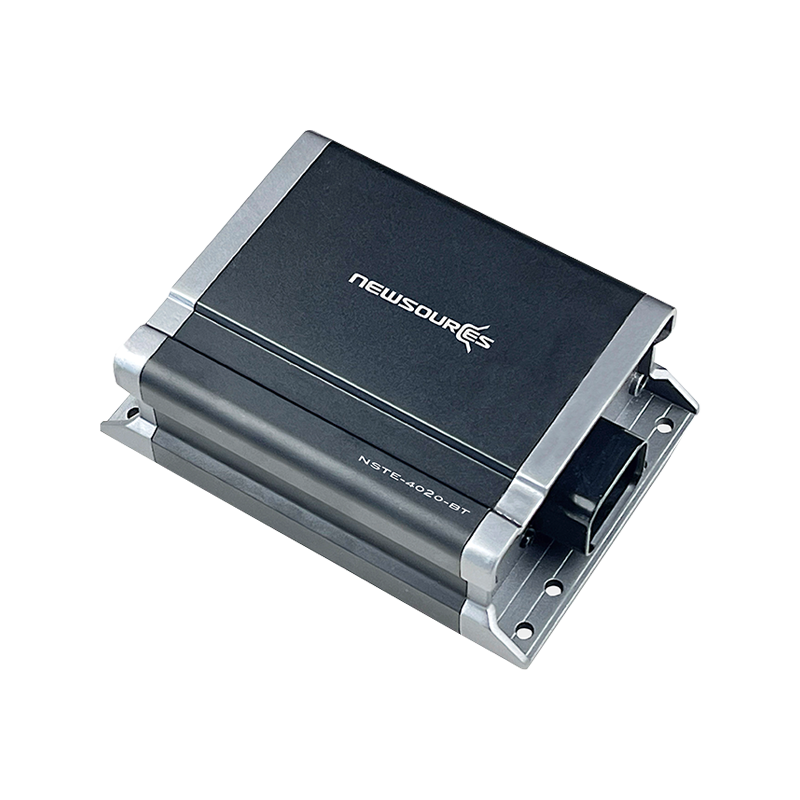

 EN
EN
 English
 Español
 عربى
عربىContent
- 1 What Is a Mini Car Amplifier and Why Does Size Matter?
- 2 How Mini Car Amplifiers Differ From Full-Size Models
- 3 Key Specifications to Compare When Choosing a Mini Car Amplifier
- 4 Common Types of Mini Car Amplifiers and Their Best Uses
- 5 Installation Tips for Getting the Best Results
- 6 Speaker-Level Input: Upgrading Without Replacing the Head Unit
- 7 Top Features to Prioritize in a Quality Mini Car Amplifier
- 8 Matching a Mini Car Amplifier to Your Vehicle and Listening Goals
What Is a Mini Car Amplifier and Why Does Size Matter?
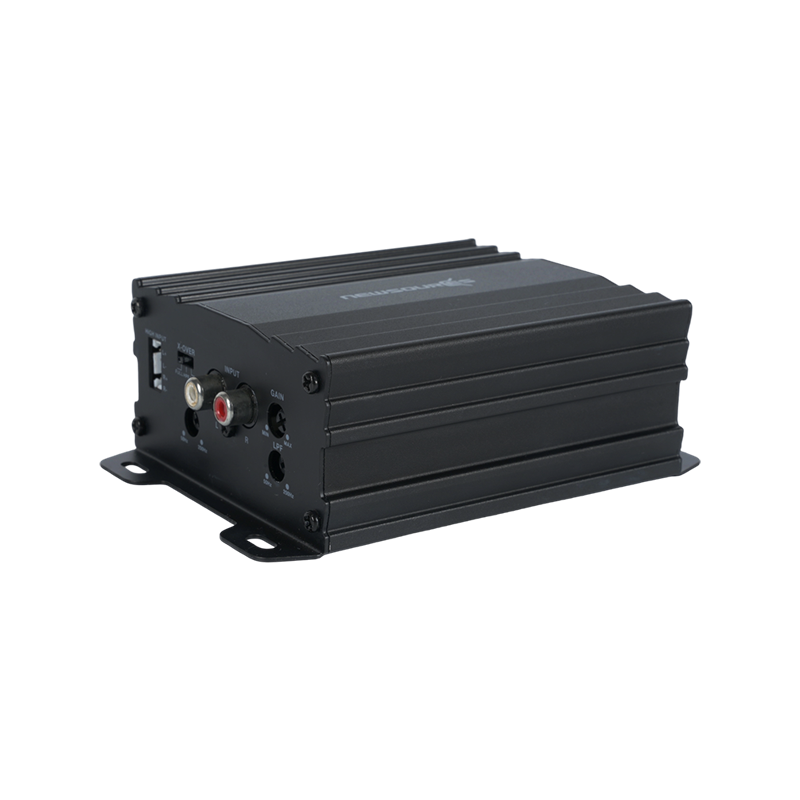
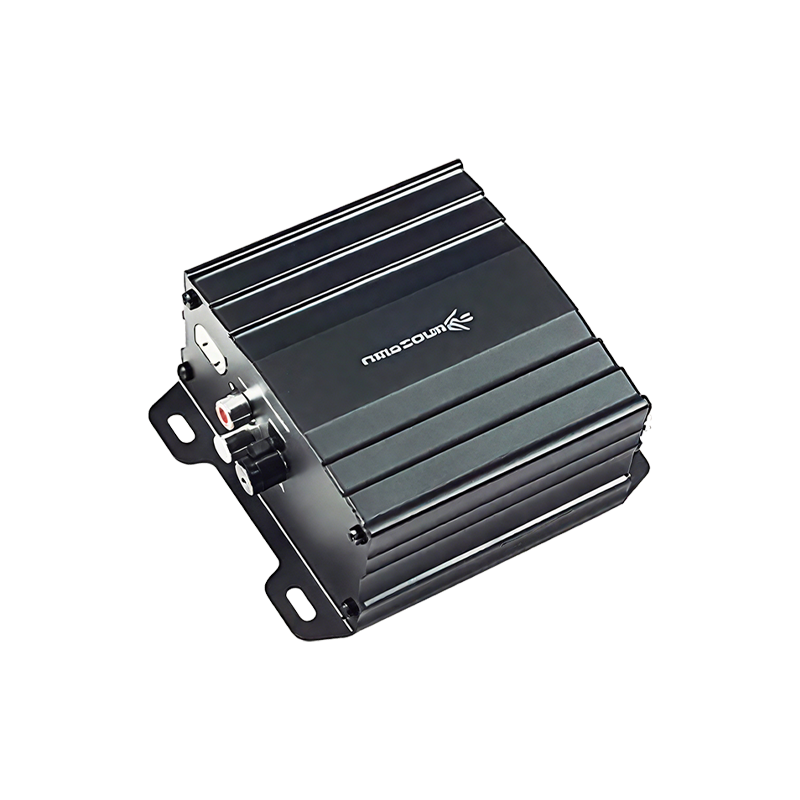
A mini car amplifier is a compact, space-efficient power amplifier designed to boost audio signals in a vehicle's sound system without requiring the large installation footprint of a traditional full-size amplifier. While conventional car amplifiers can measure 18 inches or more in length and demand dedicated mounting space under seats or in the trunk, mini amplifiers are engineered to deliver meaningful power output — often between 50 watts and 600 watts RMS — from a chassis that may be no larger than a paperback book. This makes them an ideal solution for vehicles with limited cabin space, such as motorcycles, compact cars, vans, marine vessels, and trucks where every inch of available space serves a practical purpose.
The reduction in physical size does not automatically mean a reduction in audio capability. Thanks to advances in Class D amplifier topology and surface-mount component technology, modern mini car amplifiers can achieve efficiency levels above 80 percent, produce clean power with low total harmonic distortion (THD), and drive full speaker systems including subwoofers, midrange drivers, and tweeters. For audio enthusiasts upgrading a factory sound system or custom installers working within tight spatial constraints, a mini car amplifier represents a technically sound and practically flexible choice.
How Mini Car Amplifiers Differ From Full-Size Models
Understanding the technical differences between mini and full-size car amplifiers helps buyers make an informed decision based on their actual audio goals rather than assumptions about size and performance.
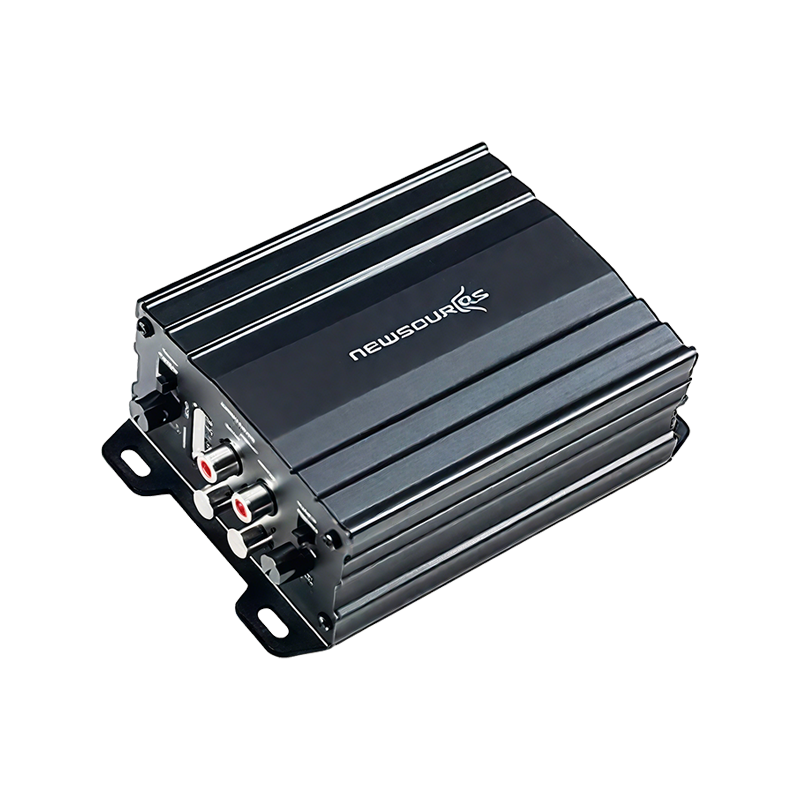
Amplifier Class and Efficiency
Most mini car amplifiers use Class D switching amplifier technology, which is inherently more efficient than the Class AB designs commonly found in larger amplifiers. A Class AB amplifier typically operates at 50 to 65 percent efficiency, meaning a significant portion of the input power is lost as heat — which is why large amplifiers require substantial heatsinking and ventilation. Class D amplifiers convert 80 to 90 percent of input power into audio output, generating far less heat and allowing the compact chassis to dissipate thermal energy without bulky heatsinks. Some premium mini amplifiers combine Class D output stages with Class A input stages for improved sonic character, maintaining efficiency while achieving lower noise floors.
Channel Configuration
Mini car amplifiers are available in mono, 2-channel, 4-channel, and even 5-channel configurations. A mono mini amplifier is typically optimized for subwoofer duty, with a built-in low-pass crossover and high current output capability in a chassis that can be mounted directly behind a speaker enclosure. A 4-channel mini amplifier can power all four door speakers in a vehicle with a single compact unit, eliminating the need for multiple larger amplifiers and simplifying installation wiring significantly.
Key Specifications to Compare When Choosing a Mini Car Amplifier
Not all mini car amplifiers are created equal, and marketing claims can be misleading. Focusing on verified specifications ensures the amplifier will deliver the performance your system requires.
| Specification | What to Look For | Why It Matters |
| RMS Power Output | Verified at 14.4V, ≤1% THD | Reflects continuous usable power, not peak burst ratings |
| Signal-to-Noise Ratio | ≥90 dB | Higher values mean less background hiss and cleaner audio |
| Total Harmonic Distortion | ≤0.1% at rated power | Lower THD means more accurate, less distorted sound reproduction |
| Input Sensitivity | 200mV – 4V adjustable range | Allows matching to both head unit preamp and speaker-level inputs |
| Impedance Compatibility | Stable at 2Ω or 4Ω per channel | Determines compatibility with your speakers and wiring configuration |
| Crossover Filters | Variable high-pass and low-pass | Enables proper frequency routing to different speakers |
Always prioritize RMS power ratings tested at or near 14.4 volts — the typical charging voltage of a running vehicle's electrical system — rather than peak or maximum power figures, which represent momentary burst capacity and are often inflated by budget manufacturers to appear more competitive on paper.
Common Types of Mini Car Amplifiers and Their Best Uses
Mini car amplifiers are designed for specific roles within a sound system. Matching the amplifier type to your audio goal prevents overspending on features you don't need and underpowering components that require more headroom.
Mono Mini Amplifier for Subwoofers
A mono mini amplifier, also called a monoblock, is purpose-built to drive a single subwoofer or a pair of subwoofers wired in parallel or series. These units typically deliver between 200 and 1,000 watts RMS into a 2-ohm load and include a variable low-pass crossover — usually adjustable from 50 Hz to 250 Hz — so only bass frequencies reach the subwoofer. A subsonic filter, typically adjustable from 10 Hz to 40 Hz, protects ported subwoofer enclosures from destructive low-frequency excursion. Mono mini amplifiers are ideal for compact spare tire enclosures, under-seat subwoofer systems, and shallow-mount woofer installations.
4-Channel Mini Amplifier for Full-Range Systems
A 4-channel mini amplifier powers all four speakers in a standard vehicle — two front and two rear — from a single compact unit. Better models in this category are also bridgeable, meaning two channels can be combined into a single higher-power output, allowing the rear channels to be bridged to drive a subwoofer while the front channels power the door speakers. This makes a 4-channel mini amplifier one of the most versatile audio investments for a vehicle upgrade, replacing both the factory head unit's internal amplifier and the need for separate dedicated subwoofer amplification in moderate-power systems.
5-Channel Mini Amplifier for Complete Systems
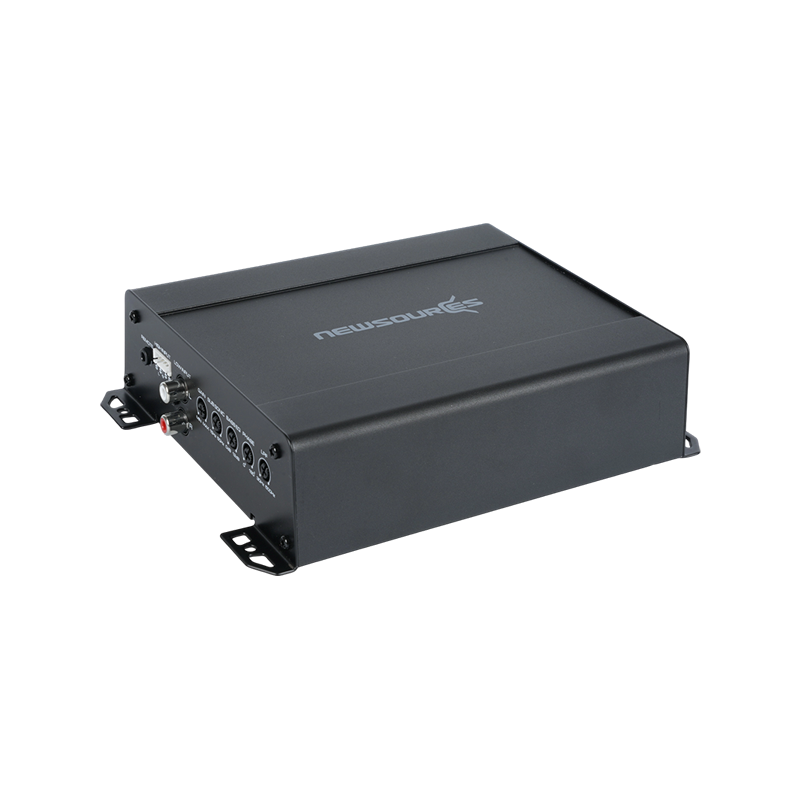
The 5-channel mini amplifier integrates a 4-channel speaker amplifier and a monoblock subwoofer amplifier into a single chassis. This dramatically simplifies wiring, reduces the number of power and ground connections required, and minimizes the total installation footprint. For a complete system upgrade in a compact car or SUV where trunk space is limited, a 5-channel mini amplifier can deliver a full, balanced audio system from a single unit roughly the size of a hardcover book.
Installation Tips for Getting the Best Results
Proper installation is as important as selecting the right amplifier. Even a high-quality mini car amplifier will underperform or fail prematurely if installed incorrectly. The following guidelines cover the most critical installation considerations.
- Power wire gauge: Match the power and ground wire gauge to the amplifier's maximum current draw. As a general rule, use 8 AWG wiring for amplifiers up to 500 watts RMS and 4 AWG for systems up to 1,000 watts. Undersized wiring causes voltage drop, thermal stress, and audible distortion at high volumes.
- Inline fuse placement: Install an inline fuse on the power wire within 18 inches of the battery terminal. The fuse rating should match or slightly exceed the amplifier's maximum fuse rating listed in the owner's manual. This protects the vehicle's wiring in case of a short circuit downstream.
- Ground connection quality: The ground wire must be connected to bare metal on the vehicle's chassis — not to a painted surface or a bolt that passes through carpet and padding. A poor ground is the single most common cause of alternator whine and noise in car audio systems.
- Signal cable routing: Route RCA signal cables on the opposite side of the vehicle from the power wiring. Running them parallel and in close proximity to power cables induces electromagnetic interference that manifests as buzzing or whining noise through the speakers.
- Ventilation clearance: Even though mini amplifiers run cool relative to full-size Class AB units, they still require airflow around the heatsink fins. Leave at least one inch of clearance around the sides and top of the amplifier chassis. Mounting directly against carpet or foam without airflow can cause thermal shutdown during extended high-volume listening.
- Gain setting procedure: Set the amplifier gain using a multimeter or an oscilloscope rather than by ear. Turn the head unit to 75 to 80 percent of its maximum volume, play a 0 dB test tone, and adjust the amplifier gain until the output voltage matches the calculated target for your speaker's impedance without clipping. Incorrect gain settings are the leading cause of blown speakers and amplifier failure.
Speaker-Level Input: Upgrading Without Replacing the Head Unit
Many modern vehicles use integrated infotainment systems that cannot be easily replaced with aftermarket head units due to CAN bus integration, steering wheel controls, and factory Bluetooth functionality. Mini car amplifiers with high-level or speaker-level inputs allow audio enthusiasts to tap directly into the factory speaker wires and use the existing head unit as the signal source, bypassing the need for any head unit replacement.
The amplifier's internal signal converter detects the speaker-level signal from the factory unit, attenuates it to line level, and feeds it into the amplifier's input stage. Some mini amplifiers include a built-in digital signal processor (DSP) alongside speaker-level inputs, allowing time alignment, equalization, and crossover adjustments to compensate for the acoustic deficiencies of the factory speaker placement — all from a single compact unit that installs invisibly behind the dashboard or under a seat.
Top Features to Prioritize in a Quality Mini Car Amplifier
With dozens of brands and models competing in the mini car amplifier market, narrowing down the choices requires focusing on features that have a direct impact on sound quality, reliability, and installation flexibility.
- Built-in crossover with adjustable frequency: A variable crossover with both high-pass and low-pass settings gives you control over which frequencies reach each speaker, reducing distortion and protecting drivers from frequencies they cannot reproduce cleanly.
- Bass boost control: A 0 to 12 dB bass boost centered at 40 to 60 Hz is useful for subwoofer channels, but should be used conservatively. Boosting bass excessively without sufficient power headroom causes clipping and woofer damage.
- Remote turn-on options: Quality mini amplifiers offer both a dedicated remote turn-on wire connection and automatic signal-sensing turn-on, which activates the amplifier when it detects an audio signal — eliminating the need to run a remote wire from the head unit.
- Protection circuits: Look for amplifiers with thermal, short-circuit, overvoltage, and subsonic protection built in. These circuits prevent damage during fault conditions and extend the service life of both the amplifier and the connected speakers.
- Certification and compliance: Reputable mini car amplifiers carry CE, RoHS, or FCC certifications, confirming that electromagnetic emissions, safety standards, and material compliance have been independently verified — important for both safety and resale value of the vehicle.
Matching a Mini Car Amplifier to Your Vehicle and Listening Goals
The most effective mini car amplifier for your situation depends on three converging factors: the speakers you are driving, the power your vehicle's electrical system can support, and the listening experience you want to achieve. Pairing a 500-watt RMS mono mini amplifier with a subwoofer rated for 300 watts RMS will damage the speaker. Conversely, pairing a 50-watt RMS amplifier with a high-excursion 12-inch woofer will result in chronic clipping distortion as the amplifier is constantly pushed beyond its linear operating range.
For a compact car with a stock electrical system, a 4-channel mini amplifier delivering 50 to 75 watts RMS per channel combined with a mono mini amplifier at 200 to 300 watts RMS for a single subwoofer represents a well-balanced system that the stock alternator and battery can support without voltage instability. If your listening habits involve extended high-volume sessions, consider upgrading to a higher-output alternator or adding a secondary lithium or AGM battery to maintain stable voltage above 13.5 volts under sustained load — the threshold below which most amplifiers begin to compress output and increase distortion. With the right matching and installation, a mini car amplifier can transform the acoustic experience of any vehicle into something genuinely impressive.